Annapurna Base Camp With Mardi Himal TrekAnnapurna Base Camp With Mardi Himal Trek

Annapurna Base Camp With Mardi Himal Trek

ABC with Mardi Himal Trekratingbased on 1 review
  • Duration14 Days
  • Difficulty Level Moderate
  • Activity Trekking/Hiking
  • Max. Altitude 4500m
  • Starts Pokhara
  • Ends Pokhara
  • Group Size 1-12
  • Best Season September to May
Group Discount Prices
  
1 paxUS$1045
2 - 3 paxUS$890
4 - 6 paxUS$845
7 - 12 paxUS$790
Annapurna Base Camp With Mardi Himal Trek Highlights
  • Enjoy a scenic drive from Kathmandu to Pokhara with beautiful views of Nepal’s countryside, terraced farmlands, flowing rivers, and distant Himalayan peaks.
  • Explore the beautiful lakeside city of Pokhara, the gateway to the Annapurna region, surrounded by hills, waterfalls, and mountain scenery.
  • Begin trekking through charming Himalayan villages and terraced landscapes while entering the Annapurna Conservation Area.
  • Walk through traditional settlements such as Sinuwa, Himalaya, and Dovan, experiencing authentic mountain life and local hospitality.
  • Discover the rich Gurung and Magar culture through traditional villages, ancient customs, monasteries, and prayer flags along the trail.
  • Trek through lush rhododendron forests, which are especially vibrant during the spring season, alongside bamboo groves and subtropical vegetation.
  • Walk across diverse landscapes ranging from terraced farmlands and dense forests to alpine meadows and high mountain terrain.
  • Witness the breathtaking Annapurna Base Camp at 4,130 meters, surrounded by a dramatic 360-degree panorama of the Annapurna massif.
  • Marvel at the stunning Annapurna Glacier and rugged moraine landscapes stretching across the heart of the Annapurna Sanctuary.
  • Stand face-to-face with some of the world’s highest peaks, including Annapurna I (8,091 meters), Annapurna South, Hiunchuli, and Dhaulagiri (8,167 meters).
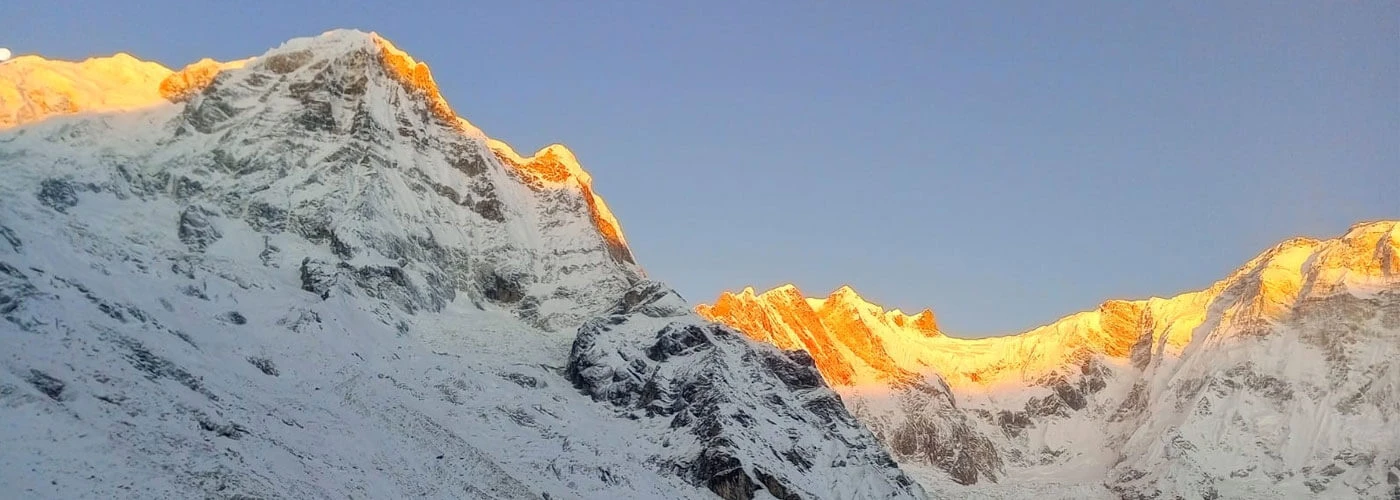
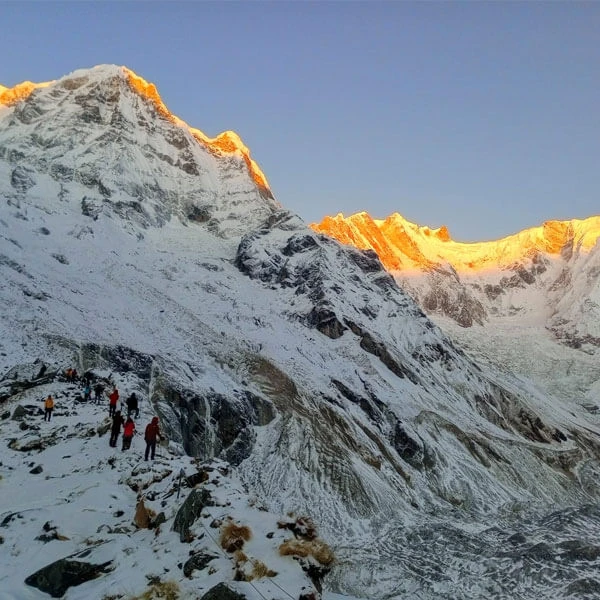
  • Experience magical sunrise and sunset views with golden light from high-altitude viewpoints.
  • Relax your tired muscles in the natural hot springs at Jhinu Danda.
  • Continue the journey toward the quieter and less crowded Mardi Himal trail.
  • Pass through scenic forest camps, alpine ridges, and settlements such as Forest Camp and Badal Danda.
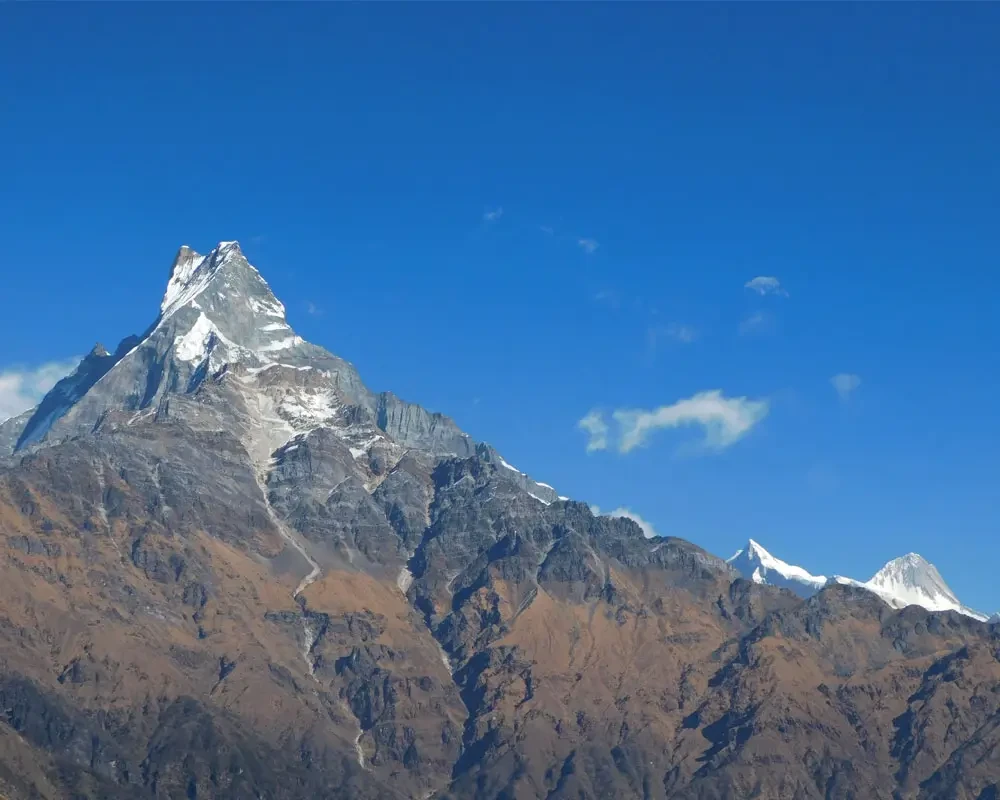
  • Enjoy spectacular close-up views of Machhapuchhre (Fishtail), which is one of Nepal’s most iconic and sacred mountains.
  • Reach the highlight viewpoint at Mardi Himal Base Camp at 4,500 meters, which offers breathtaking panoramic views of the Annapurna range.
  • Trek along hidden and less-explored trails opened only in 2012.
  • Encounter wildlife such as Himalayan langurs, mountain goats, pheasants, and a variety of birds within the Annapurna Conservation Area.
  • Stay in comfortable tea house accommodations, enjoying freshly prepared local Nepali meals and warm hospitality from mountain communities.

Annapurna Base Camp With Mardi Himal Trek Overview

The Annapurna Base Camp with Mardi Himal Trek in Nepal is a thoughtfully combined journey that brings together two of the finest trekking experiences in the Annapurna region: the classic Annapurna Base Camp (Annapurna Sanctuary) Trek and the quieter, scenic Mardi Himal Base Camp Trek. 

Instead of choosing between a legendary route and a hidden gem, this trek lets you experience both in one continuous adventure. During this journey, you should expect dramatic mountain scenery, rich culture, changing landscapes, and a sense of progression from lively villages and forests to high alpine ridges and glacial amphitheaters.

This particular Annapurna adventure begins with a scenic drive from Kathmandu to Pokhara, which is one of Nepal’s most beautiful road journeys. As the road follows river valleys and rolling hills, you will pass terraced farmlands, roadside villages, and winding rivers, with occasional glimpses of distant Himalayan peaks. 

Pokhara itself feels like a gentle pause before the adventure with lakeside calm, fresh air, and mountain views. From here, the real trek begins with a walk toward Jhinu Danda, which is a welcoming village best known for its natural hot springs. You will follow the stone-paved trails through forests and small settlements.

As the trail leads deeper into the Annapurna Sanctuary, you will also pass villages like Sinuwa, Himalaya, and Dovan. Later, the trek builds steadily through lush rhododendron forests, bamboo groves, misty valleys, and cascading streams. Finally, you will reach the Annapurna Base Camp at an altitude of 4,130 meters. From here, you will get a vast mountain amphitheater surrounded by giants such as Annapurna I, Machhapuchhre, Hiunchuli, Annapurna South, and Gangapurna. 

After soaking in sunrise views and the raw beauty of the Annapurna Glacier, you will descend back through Dovan to Jhinu Danda, where you will get a chance to soak in the hot springs. From here, the adventure takes a different tone as the route shifts toward the Mardi Himal trail, which was officially opened for trekking in 2012 and is still one of the Annapurna region’s most rewarding, quieter routes. 

The path here climbs through Forest Camp, Badal Danda, and High Camp, trading deep forests for airy ridgelines and ever-expanding views. This side of the trek feels more intimate and wild, with fewer trekkers and a stronger sense of solitude. From Mardi Himal Base Camp at 4,500 meters, you will stand face-to-face with Machhapuchhre, with views of other mountains such as Annapurna South, Hiunchuli, Annapurna I, Annapurna III, Gandharwa Chuli, and Gangapurna. 

Sunrises and sunsets at the Mardi Himal Base Camp are surreal as they paint the Himalayas in shades of gold, crimson, and soft pink. Throughout the trek, you will walk through the Annapurna Conservation Area Project (ACAP), Nepal’s first and largest protected region, home to diverse flora and fauna. 

During this journey, you will also have an opportunity to encounter wildlife such as Himalayan tahr, langur monkeys, mountain goats, and the colorful Danphe, Nepal’s national bird. The villages along the route are mainly inhabited by Gurung and Magar communities, who are known for their deep-rooted traditions, hand-carved wooden houses, and warm hospitality. 

Daily life in the Annapurna Region revolves around farming, herding, and hosting trekkers. You may also get to witness local festivals such as Dashain, Tihar, Lhosar, and local Buddhist ceremonies. Weather-wise, this trek lets you experience it all, from subtropical warmth at lower elevations to crisp alpine air and, in winter or early spring, even snow near the base camps.

Now, if you are torn between doing Annapurna Base Camp or Mardi Himal separately, this combined route answers that dilemma beautifully. You can also explore each journey on its own, but together they create a richer, more complete Himalayan experience.

What Makes The Annapurna Base Camp & Mardi Himal Trek In Nepal Unique?

Explore Pokhara Valley, The Gateway to the Trekking Route

Nestled in the western part of Nepal, Pokhara Valley is one of the country’s major cities. It is a peaceful base between bustling Kathmandu and the high Himalayas. Often called the gateway to Annapurna Region treks, Pokhara is a destination in its own right before or after your Annapurna Base Camp with Mardi Himal Trek.

Surrounded by lush hills and framed by the snow-capped Annapurna range and Machhapuchhre (Fishtail), the valley sits beside the shimmering Phewa Lake, which is Nepal’s second-largest lake and the heart of the city’s relaxed vibe. Here, you can stroll along the lakeside cafés, sip a cup of local coffee while watching the mountains glow at sunrise, or rent a bright wooden boat or even kayak across the calm water.

Now, while you are in the valley, there are plenty of side adventures too, from panoramic sunrise views at Sarangkot and paragliding over the mountains and lakes, to visiting the World Peace Pagoda, exploring limestone wonders like Gupteshwor Mahadev Cave, or checking out local culture at markets and temples.

Thus, with all these activities you can do, Pokhara is an unforgettable part of the Nepal trekking experience.

Enjoy Tranquil Boating & Relax By The Scenic Phewa Lake

One of the highlights of any stay in Pokhara is spending time at Phewa Lake, which is the centerpiece of this beautiful valley. Phewa Lake is a serene freshwater lake in Pokhara, famous for its calm waters, reflections of the snow-capped Himalayan peaks, and the small island temple of Tal Barahi nestled in its middle. Here, you can slow down, breathe deeply, and enjoy a different kind of peace before or after days on the trail.

Boating on Phewa Lake is a simple and joyful way to experience the scenery up close. You will see colorful wooden rowboats and paddle boats lining the lakeside, and you can choose to row yourself or relax while a boatman gently guides you across the water. 

For a more active experience, kayaks are also available, letting you paddle at your own pace as you explore corners of the lake and chase reflections of Machhapuchhre (Fishtail) and the Annapurna range on still mornings. Hourly boating fares vary depending on boat type, such as shared rowboats and paddle boats, which are often around NRs 300 to 800 per hour, while private or full-day options and kayaks can be slightly higher.

The best times to float are early morning and late afternoon. In the quiet of dawn, the water often lies glass-smooth, mirroring mountain silhouettes and offering magical photo moments. Similarly, at sunset, the golden light makes the peaks and lakeshore glow, which is perfect for lovers, photographers, or anyone who just wants to soak in the view.

Moving on, you can also enjoy a stroll along the water’s edge, popping into cozy cafes and restaurants with mountain views, sipping coffee or Nepali tea, and sampling local foods. You will also see street vendors and shops with shaded benches.

Walk Into The Annapurna Sanctuary At Annapurna Base Camp

The Annapurna Sanctuary is a hidden glacial basin nestled deep within the Annapurna range. It is a natural amphitheater shaped by ancient glaciers and towering peaks, protected today under the Annapurna Conservation Area Project (ACAP), Nepal’s first and largest protected area. 

This sanctuary was historically a sacred realm for local Gurung and Magar communities and was later designated as a conservation zone to preserve its unique biodiversity and cultural heritage. Your trek to the Annapurna Base Camp takes you on a journey through changing landscapes. 

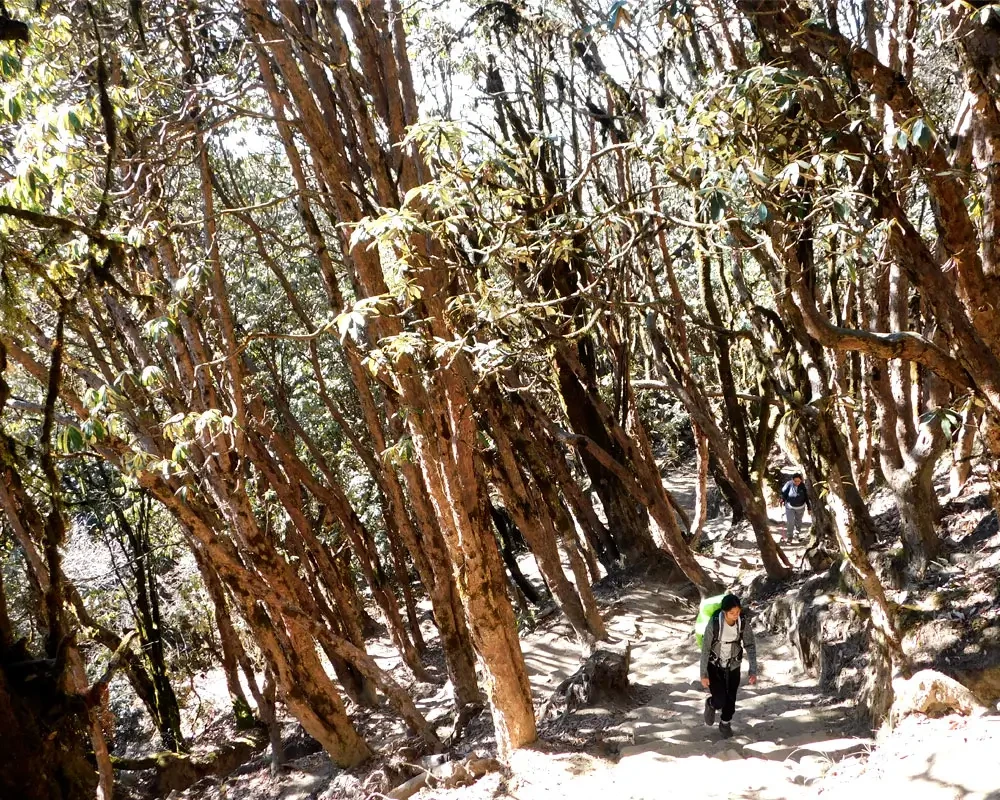
Starting from lower elevations of terraced farmlands and subtropical forests, the trail gradually moves into dense rhododendron and bamboo groves, which are fragrant with wild blossoms in spring. 

As you climb higher, the air sharpens, the trees thin out, and alpine meadows open up, revealing uninterrupted views of jagged ridges and waterfalls. The path itself is a mix of wide stone-paved trails, rocky sections near streams, and well-built switchbacks.

At 4,130 meters, Annapurna Base Camp sits at the heart of this sanctuary. It offers you an awe-inspiring 360° panorama of the Annapurna massif. From here, you will see Annapurna I dominating the skyline, along with Annapurna South, Hiunchuli, Gangapurna, and Machhapuchhre (Fishtail). On clear mornings, sunlight washes the peaks in gold and pink.

Wildlife and flora are part of the journey too. The Annapurna Sanctuary is home to species like the Himalayan tahr, barking deer, langur monkeys, and colorful birds such as the Danphe. If you are traveling in spring and autumn, you will also notice the forest floors and hillsides dotted with flowering rhododendrons.

The base camp itself has a communal energy. While here, you will see trekkers resting on boulders, guides sharing stories over warm tea, and the constant backdrop of mountains. 

Admire Sacred Himalayan Peaks At Machhapuchhre (Fishtail) Base Camp

As your combined Annapurna Base Camp with Mardi Himal journey unfolds, one of the most atmospheric stops along the Annapurna Sanctuary trail is Machhapuchhre Base Camp. You will reach here before you push onward to Annapurna Base Camp. 

Situated at about 3,700 meters in the heart of the sanctuary, this alpine spot sits directly beneath the sacred Machhapuchhre (Fishtail) peak. It is a striking mountain revered by the local Gurung people and famously never climbed out of respect for its spiritual significance.

The trail to Machhapuchhre Base Camp is part of the classic Annapurna Sanctuary route. You will leave behind dense forests and cascading waterfalls around Sinuwa and Deurali, and as you climb higher, the landscape gradually shifts to open alpine terrain. From here, you can see snow-capped giants like Annapurna South, Hiunchuli, Gangapurna, and even glimpses of Annapurna I in the distance.

You should expect crisp, cool air and a real sense of height as you arrive. The terrain here is rugged and windswept, with the landscape opening up dramatically compared to the forested lower sections of the trek. 

You will find simple tea houses, where you will have a chance to rest, sit with a warm cup of tea, and soak in the views before continuing toward Annapurna Base Camp. Sunrise and sunset at this base camp are especially magical.

Relax In Natural Hot Springs At Jhinu Danda After Trekking

One of the most satisfying and rejuvenating moments on your ABC and Mardi Himal Trek comes when you reach Jhinu Danda. It is a quiet mountain village tucked into the lush Modi Khola valley, around 1,780 meters above sea level. It is famous for its natural hot springs that feel like nature’s own spa after days of trekking.

As you descend from higher elevations toward Jhinu Danda, you will notice the sound of rushing river water, the scent of the forest, and a sense of calm. The hot springs themselves are nestled right on the banks of the mighty Modi Khola, surrounded by tall trees and cool mountain breezes. 

You will reach these hot springs by a short 20 to 30-minute walk downhill through rhododendron and bamboo forest. Once you arrive, you will find several stone-built thermal pools filled with warm, mineral-rich water that locals and trekkers alike believe help soothe sore muscles, ease joint stiffness, and boost circulation after long days on the trail.

The experience here is uniquely Himalayan. You will step out of your trekking boots, slip into the warm, gently bubbling water, and hear the Modi Khola roar nearby while you relax. For this experience, you should bring flip-flops, swimwear, and a towel. Now, the hot spring is almost a social hub where trekkers swap stories and rest together.

Hike To Mardi Himal Base Camp For Quiet Trails & Panoramic View

The section that takes you up to Mardi Himal Base Camp feels like discovering a beautiful secret in the heart of the Annapurna Conservation Area. Unlike the more traveled Annapurna Sanctuary paths, this route stays quiet and serene, letting you immerse yourself in natural mountain wilderness almost all the way to the high alpine ridges. 

Mardi Himal Base Camp is situated at around 4,500 meters and is one of the most rewarding viewpoints you will encounter on the combined journey, offering spectacular panoramas of the Annapurna range and beyond. The trail toward Mardi Himal Base Camp leaves the busy main trekking highways behind as it climbs gradually through dense rhododendron and oak forests, moss-covered paths, and peaceful ridgelines.

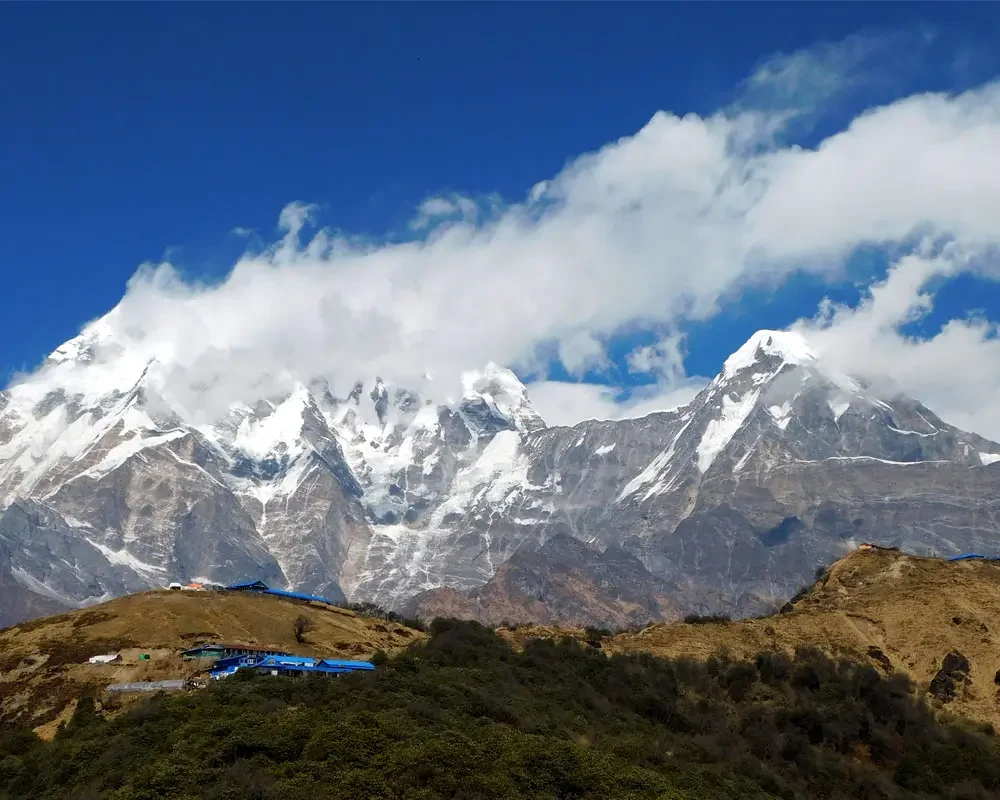
Close to Forest Camp and High Camp, the trail opens up to reveal clearer mountain vistas. Here, you will get the first glimpses of Machhapuchhre and Annapurna South, and later the grand panorama of peaks like Hiunchuli, Annapurna I, and distant summits.

What makes this hike special and a standout part of the combined trek is the feeling of solitude and connection with the mountains. You will pass through calm stretches, and as you rise above the forest line, the views just keep getting bigger and better. 

By the time you reach the base camp viewpoint at 4,500 meters, you will be rewarded with what feels like one of the cleanest, most unobstructed views in the Annapurna region. Even though the terrain at higher elevations can feel raw with rocky patches and exposed ridges, the gradual ascent and well-defined trail make it accessible for trekkers with moderate fitness. 

In fact, many people say the sunrise or sunset light from Mardi Himal Base Camp is among the most memorable of the entire journey.

Useful Information

Annapurna Base Camp With Mardi Himal Trekking Cost Breakdown

For a standard Annapurna Base Camp with Mardi Himal Trek, you can expect to spend around USD 990 per person for a well-organized trekking package. 

This cost usually covers the essentials that matter most on the trail: daily meals, tea house accommodation, required trekking permits, and the support of a licensed local trekking guide who knows the terrain, culture, and altitude inside out. On top of it, the transportation between Kathmandu and Pokhara, typically by comfortable tourist bus, is also included.

That said, a few optional expenses are worth planning for. If you would rather save time or travel in comfort, you can upgrade to a private jeep or a domestic flight between Kathmandu and Pokhara at an additional cost. Hiring a porter, offering tips, or paying small fees for hot showers, charging devices, or Wi-Fi in mountain tea houses are personal choices and not part of the standard package. 

Therefore, it is smart to carry an extra USD 200 to 300 as a buffer. This easily covers a cozy hotel stay in Pokhara after the trek, souvenirs, minor medical needs, or any unexpected situations along the way.

If you are trekking in peak seasons like spring or autumn, booking early is key, as it ensures better accommodation, smoother logistics, and helps you avoid last-minute surprises while keeping your trekking budget comfortably under control.

Trekking Guide & Porter Cost And Benefits

Hiring a licensed trekking guide and a porter for the Annapurna Base Camp with Mardi Himal Trek is important. 

A guide keeps you on the right trail, manages altitude and daily pacing, handles permits and logistics, and adds real value by explaining local culture, villages, and mountain landscapes you might otherwise walk past without noticing. 

A porter, meanwhile, helps you carry the bulk of your luggage. The porter lets you trek lighter, enjoy the scenery more, and reduce physical strain, especially on long uphill days and high-altitude sections. 

In Nepal, the average cost of a trekking guide is around USD 35 per day, while a porter costs about USD 25 per day. These rates generally include their accommodation, meals, and insurance. 

However, tips are not included and should be given separately at the end of the journey. A common guideline is 10 to 15% of your total payments, or more if you feel their service truly elevated your experience.

At Nepal Trekking Experts, we strongly recommend trekking with guides and porters, for your own safety, comfort, and also because it supports local mountain communities. 

What Are The Permits Required For ABC With Mardi Himal Trek?

Before you set foot on the trails of the Annapurna Base Camp with Mardi Himal Trek, there’s one crucial thing to know: official trekking permits. 

These permits help protect the environment, local communities, and ensure your safety while trekking in Nepal’s protected areas. Without them, you simply cannot legally enter the Annapurna Conservation Area or trek in the region.

Here are the two main permits you will need:

TIMS Card (Trekkers’ Information Management System): This card keeps track of all trekkers in Nepal for safety and record purposes. It costs around NRs 2,000 (about USD 15).

Annapurna Conservation Area Permit (ACAP): This allows access to the Annapurna Conservation Area and helps fund the protection of the mountains, wildlife, and villages along the trails. It costs NRs 3,000 (approximately USD 22).

You can obtain both permits at the Nepal Tourism Board offices in Kathmandu or Pokhara before your trek. However, if you book with a licensed trekking company like Nepal Trekking Experts, we will take care of all the paperwork and permit processing for you. 

Mardi Himal & Annapurna Base Camp Trekking Difficulty

If you are wondering whether the Annapurna Base Camp with Mardi Himal Trek is tough or doable, let me break it down for you. This combined route sits comfortably in the moderate to moderate-challenging difficulty category. The trails are well-defined and marked, but you will climb through rocky sections and deal with changing weather and terrain that require good walking stamina and mental grit.

The beauty is that this trek is accessible even to determined beginners as well as seasoned trekkers. If you have walked 5 to 7 hours a day with a backpack before, kept a steady pace, and trained for elevation gain, you will find it very doable. Having said that, you must be prepared with cardio, leg strength, and endurance before you go.

As for the trail conditions, they also vary. Below Jhinu Danda, paths are often gentle, well-stepped, and shaded by rhododendron and oak forests. As you move higher toward Annapurna Base Camp and Mardi Himal Base Camp, the terrain becomes rockier with a few steeper pitches and scree patches. 

During this Annapurna adventure, you should expect an average of 5 to 7 hours of walking per day. Moving on, the highest point of this journey is the Mardi Himal Base Camp at around 4,500 meters. This sort of altitude means you will feel thinner air, cooler temperatures, and possibly more fatigue than at lower levels. 

It’s one of those things you don’t notice until you notice it, and the best defense is slow, mindful walking, plenty of water, good sleep, and listening to your body. Altitude sickness is uncommon on this trek if you ascend sensibly, but it’s wise to be aware of altitude symptoms like headache, nausea, or shortness of breath and communicate with your guide if anything feels “off.”

Now, with Nepal Trekking Experts, this journey is completely manageable. With our professional trekking guides who know these trails intimately, support staff who understand altitude and pacing, and careful itinerary planning that builds in acclimatization and rest, many of the tougher bits become memorable highlights instead of stress points. 

Our team keeps an eye on weather shifts, adjusts the pace to match the group’s energy, and ensures you are well-supported from the valleys of Pokhara up to Mardi Himal’s ridges and Annapurna’s sanctuary.

Best Season And Months For Annapurna Base Camp With Mardi Himal Trek

The best time to do the Annapurna Base Camp with Mardi Himal Trek is during Spring (March to May) and Autumn (September to November), when the weather is stable, the skies are clear, and mountain vistas are at their most spectacular. 

These seasons offer comfortable trekking conditions, excellent visibility, and lively village culture on the route. Thus, these seasons are ideal for both first-time and experienced trekkers. 

Spring: Best Season For Rhododendron Forests & Mild Weather

Spring (March to May) is one of the most magical times to do the Annapurna Base Camp with Mardi Himal Trek, as the trails come alive with blooming rhododendron forests, wildflowers, and lush greenery that contrast beautifully with snow-capped peaks. 

During these months, the weather is generally mild and stable with clear skies and comfortable temperatures, making mountain views of Machhapuchhre, Annapurna South, and Hiunchuli especially vivid and photogenic. 

Daytime trekking feels pleasant without extreme heat or cold, and lower elevation villages feel alive with color and fresh growth, while higher sections offer crisp air and excellent visibility.

March: Early Blooms & Pleasant Trails

  • March marks the official start of spring in the Annapurna region. After Winter, the trekking trails become more accessible and inviting.
  • With most of the winter snow melting away on lower and mid-elevation paths, the trail conditions are generally dry and pleasant. Though you may still spot some icy patches higher up near Machhapuchhre Base Camp.
  • You will see the buds of rhododendron and other flowers starting to appear.
  • Daytime weather is usually mild with clear skies and excellent visibility. 
  • You will get stunning views of peaks like Machhapuchhre, Annapurna South, and Hiunchuli as you gain altitude.
  • March trails tend to be less crowded than peak spring months.

April: Peak Rhododendron Season

  • April is widely regarded as the heart of spring with milder weather and crystal-clear skies.
  • Rhododendron forests are at their most vibrant, painting the trail in bold reds, pinks, and whites, especially around mid-elevation sections.
  • Daytime temperatures are comfortably warm at lower elevations, with cool but refreshing air higher up. 
  • You will enjoy long daylight hours and excellent visibility of ranges like Machhapuchhre, Annapurna South, and Hiunchuli.
  • The trail conditions are generally stable and dry.
  • It is one of the most memorable months on the entire trek, which is perfect for photographers, nature lovers, and anyone who wants clear peaks without extreme cold.

May: Warm Days & Expansive Views

  • May brings warmer daytime temperatures and longer walking windows, helping you cover ground comfortably while soaking in the mountains and vibrant landscapes before the monsoon arrives.
  • At lower and mid-elevations, afternoons are pleasantly warm, while higher zones remain cool and crisp.
  • The alpine meadows and valley vistas feel especially alive.
  • While the monsoon’s distant influence may begin late in the month, mornings typically stay clear and spectacular. You will still face dramatic cloud shadows over the Annapurna and Machhapuchhre ranges in the afternoon.
  • It is ideal if you want a slightly warmer spring trekking experience.

Autumn: Peak Season For Clear Mountain Views 

Autumn (September to November) is widely regarded as the top season to do the Annapurna Base Camp with Mardi Himal Trek, especially if crystal-clear mountain views and stable weather are what you are after. After the summer monsoon, the air turns clean and dry, giving you panoramic vistas of peaks like Annapurna I, Machhapuchhre, Hiunchuli, and the surrounding ranges under deep blue skies. 

This season brings comfortable trekking conditions with warm, sunny days at lower elevations and crisp, cool nights higher up. Additionally, the trails tend to be dry and well-packed, making hiking smoother and more enjoyable. Autumn also coincides with vibrant local festivals in Nepal.

September: Fresh Post-Monsoon Landscapes

  • It marks the beginning of the autumn trekking season, right after the monsoon clears the dust from the air.
  • Hillsides and forests look lush, green, and freshly washed, especially along lower Annapurna trails.
  • Mountain views start improving as the skies open up, though occasional clouds may still drift in.
  • Fewer trekkers compared to October.

October: Best Month Of The Year

  • It is considered the best month overall for the Annapurna Base Camp with Mardi Himal Trek.
  • You will get to enjoy exceptional mountain visibility, with sharp, uninterrupted views of Machhapuchhre, Annapurna I, Hiunchuli, and surrounding peaks.
  • Stable weather, dry trails, and comfortable daytime temperatures.
  • Lively atmosphere along the route as villages buzz with trekkers and major festivals like Dashain and Tihar.

November: Crisp Air & Fewer Crowds

  • November is late autumn, and it brings cooler temperatures and crystal-clear skies.
  • Higher sections near Annapurna Base Camp and Mardi Himal may see light snowfall.
  • Trails are quieter than in October, offering a more relaxed and intimate trekking experience.
  • It is best suited for trekkers who enjoy cooler weather, sharp visibility, and fewer crowds. 

Off-Season ABC With Mardi Himal Trekking: Can I Travel During Monsoon Or Winter?

When we talk about off-season trekking in Nepal, we are referring to the months outside the classic spring and autumn windows, specifically monsoon (June to August) and winter (December to February). Each of these off-seasons brings its own flavour and challenges. 

In the monsoon, you will experience heavy rain that sweeps up from the Bay of Bengal, turning the hills lush and green but making trails muddy, slippery, and occasionally risky from landslides and leeches. This season often hides those Himalayan views we came for. 

Winter, on the other hand, greets you with cold, crisp air and snow-kissed landscapes, serene trails, and fewer trekkers. Here, temperatures may plunge, and snow can make higher camps harder to reach.

So is the Nepal Annapurna Base Camp & Mardi Himal Trek possible in the off-season? Yes, but it depends on what kind of trekker you are. If you are seeking solitude, lush rainy forests, or a quieter mountain experience, and you have the right gear and flexibility, trekking in the monsoon can be rewarding despite the unpredictability. 

Likewise, winter offers spectacular sky clarity and peaceful trails if you are properly equipped for cold, snowy conditions and an itinerary that can adapt to weather shifts. For most people, though, these months aren’t recommended as the first choice because trail conditions, weather, and visibility make it far more challenging and sometimes unsafe without experience.

At Nepal Trekking Experts, we tailor support to whatever season you choose. For off-season trekking, our experienced guides help you navigate slippery monsoon paths or snowy high camps and ensure tea house and logistics options are realistic. 

Between the two, we generally recommend winter over monsoon for those determined to trek off-peak. The days can be cold, but the skies are often clearer, and with the right preparation, you will enjoy calm trails and snow-dusted panoramas rather than persistent rain and cloud-covered mountains.

Preparation Tips For Nepal Annapurna Base Camp & Mardi Himal Trekking

  • Get physically ready well in advance. Start cardio and strength training (like running, cycling, hiking with a light pack, stair climbing, squats, and lunges) at least 2 to 3 months before your trek.
  • Train with a loaded backpack to simulate real trekking conditions. It makes carrying your gear feel easier once you are on the mountain trails.
  • Drink 3 to 4 liters of clean water every day during the trek to help your body adjust to altitude.
  • Plan for acclimatization. Your body needs time to adapt as you gain elevation, so take rest days, slow your pace on ascent days, and watch for altitude symptoms.
  • Pack smart instead of packing more. Bring essential layers, sturdy broken-in boots, trekking poles, a first-aid kit, water purification tablets, sun protection, and a reliable sleeping bag for cold nights.
  • Hire a guide and porter. The guide will help with navigation and cultural insights. A porter lightens your load so you enjoy the trek more and reduce fatigue.
  • Book early and bring enough cash. Tea houses fill up fast in peak seasons (spring/autumn), and trail villages don’t have ATMs, so carry sufficient Nepali Rupees.
  • Sort your permits and documents ahead of time. 
  • Take your travel insurance seriously. Ensure it covers high-altitude trekking, medical emergencies, and helicopter evacuation if needed.
  • Listen to your body. Slow your pace if you feel tired, take breaks tastefully, and don’t be afraid to rest or descend if altitude symptoms get stronger.

Meals And Accommodation On Annapurna Base Camp & Mardi Himal Trek

Meal & Food Options

One of the surprisingly delightful parts of trekking the Annapurna Base Camp with Mardi Himal is the food along the way. It is far from basic and will actually keep you excited for every meal. With Nepal Trekking Experts’ package, you get three hearty meals a day: breakfast, lunch, and dinner, plus tea or coffee.

Breakfasts include options such as pancakes, Tibetan bread, omelets, porridge, boiled eggs, chapati with jam, to the traditional Tsampa porridge. Lunch and dinner focus on local favorites, including dal bhat (Nepal’s staple), fried noodles, chowmein, pasta, momo, macaroni, and even Sherpa stew or thukpa. Here, Dal bhat is the classic trekking fuel that keeps you going strong across challenging trails.

Now, even if you are vegan, vegetarian, gluten-free, or dairy-free, just let your guide know, and they will coordinate with tea house kitchens to ensure your meals are tailored just for you. 

As for the drinks, you will also enjoy hot lemon, black tea, masala or ginger tea, instant coffee, soft drinks like Coke or Fanta, and bottled juices. And if you want a true local experience, try Chyang (millet beer) or Raksi (local moonshine).

Tea House Accommodations

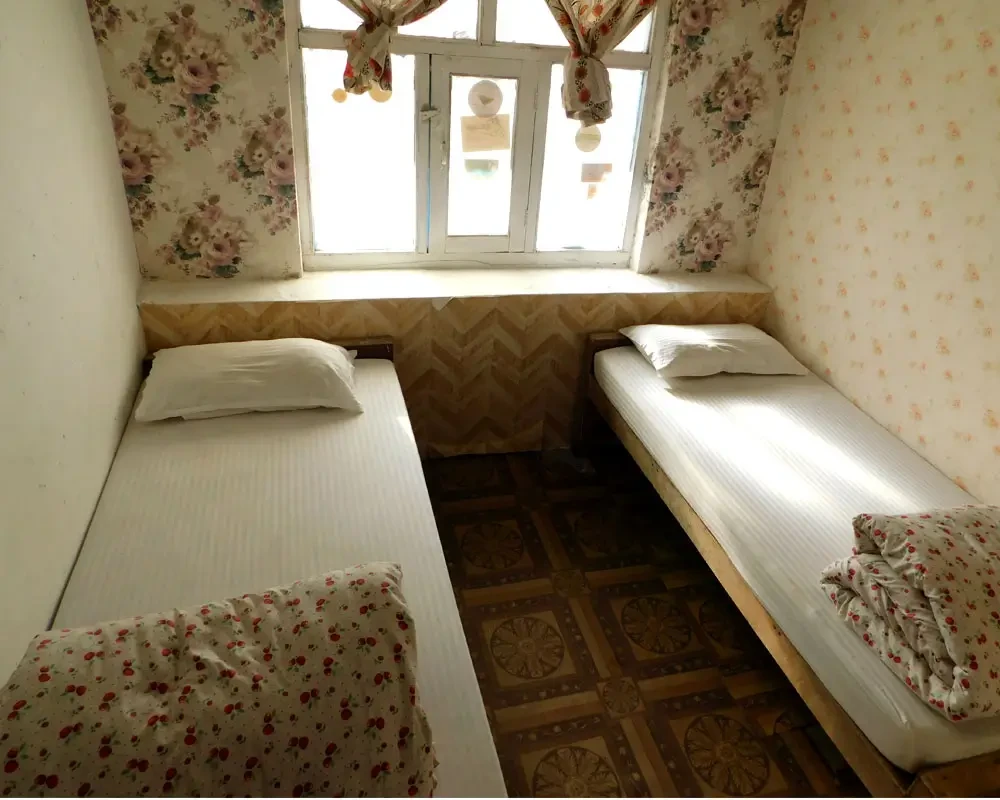
During the Annapurna Base Camp with Mardi Himal Trek, you will be staying in tea houses, which are simple, family-run lodges that dot the trail. These accommodations are basic but cozy, giving you a genuine Himalayan trekking experience. 

Most rooms here are twin-sharing, with a simple bed, pillow, and plenty of heavy blankets to keep the chill out at night. As you climb higher, especially near High Camp, rooms may get snug, with 3 to 4 beds sharing a single space, giving you that authentic trekkers’ hostel vibe.

As for the bathrooms, they are usually shared, ranging from squat toilets to simple Western-style setups, depending on the village. Nightly rates are very reasonable, usually around USD 5 to 15, varying by altitude and season. 

Now, the heart of every tea house is its communal dining area, which is often warmed by a central stove or heater. In this area, you will have the opportunity to meet other trekkers as well and swap stories, relax, and enjoy meals.

Most tea houses in Annapurna offer bucket-style hot showers, which are usually heated by gas. At lower villages, you will find proper shower stalls with hot running water, but above 3,000 meters, you should expect warm bucket showers. 

A hot shower generally costs just a couple of hundred Nepali rupees (USD 2 to 3). Additionally, it is also smart to carry a dry towel and wet wipes, especially for chilly or damp days.

At such local tea houses, you will get to enjoy local hospitality, share laughter with fellow trekkers, and experience the trails of the Annapurna Sanctuary and Mardi Himal in the most immersive way possible.

How To Stay Hydrated With Safe Drinking Water On Annapurna Base Camp & Mardi Himal Trek?

Finding safe drinking water along the trail can sometimes be tricky. Most tea houses do offer bottled water, which is convenient but expensive and creates a lot of plastic waste. Boiled water is another option you will have, and it is usually available for a small fee, but over a 14-day trek, costs can quickly add up.

Therefore, the smartest and most eco-friendly approach is to use natural water sources like streams, springs, and taps, but only after proper purification. To stay safe and hydrated, Nepal Trekking Experts recommend carrying at least two reusable water bottles and a reliable purification method, such as water tablets or a portable filter. 

This way, you can sip safely, save money, and reduce plastic waste, all while enjoying the crisp, fresh mountain water along your journey.

Transportation During ABC With Mardi Himal Trek

Getting to and from the Annapurna Base Camp with Mardi Himal Trek is part of the adventure itself, and with Nepal Trekking Experts, travel logistics are dialed in so you don’t have to sweat the details. Your journey typically begins with a tourist bus from Kathmandu to Pokhara, which is a scenic ride of about 205 km through Nepal’s diverse landscapes. 

The tourist bus picks you up right from your hotel, offers comfortable cushioned seats, and gives you a relaxed chance to soak in rural Nepal before the real trekking begins. If you prefer more comfort, flexibility, and speed, you will have other great alternatives as well. 

A private jeep is perfect if you want air conditioning, spacious seating, extra legroom, and the freedom to stop for photos or roadside chai whenever something catches your eye. The Kathmandu to Pokhara private jeep costs around USD 240  in total, and continuing from Pokhara to Jhinu Danda by jeep is about USD 80 in total.

However, if you want a bird’s-eye experience of Nepal, a short flight from Kathmandu to Pokhara is a fantastic option. These flights typically run around USD 105 per person one-way, slash several hours off your road travel, and serve up stunning aerial views of the Himalayan range as you ascend toward Pokhara.

Packing List For Mardi Himal And Annapurna Base Camp Trek

Clothing:

  • Moisture-wicking base layers (thermal tops and bottoms)
  • Fleece or insulated mid-layer
  • Down or synthetic jacket 
  • Waterproof and windproof outer shell (jacket and pants)
  • Quick-dry trekking pants
  • Warm hat, sun hat, or cap
  • Gloves (lightweight and insulated)
  • Comfortable clothes for evenings 

Footwear:

  • Trekking socks (wool or synthetic)
  • Well-broken-in trekking boots (water-resistant with good ankle support)
  • Lightweight sandals or camp shoes

Trekking Gear & Equipment:

  • Backpack (40 to 50 L) or daypack
  • Trekking poles
  • Sleeping bag (rated for sub-zero temperatures for higher camps)
  • Headlamp with spare batteries
  • Reusable water bottles (at least 2 liters capacity)
  • Water purification tablets or a portable filter
  • Sunglasses with UV protection
  • Quick-dry towel

Personal Items:

  • Sunscreen and SPF lip balm
  • Basic toiletries and wet wipes
  • Personal medications and a small first-aid kit
  • Hand sanitizer
  • Power bank and charging cables
  • Snacks like energy bars or trail mix

Wi-Fi, Mobile Network, & Electricity On ABC With Mardi Himal Trek

Wi-Fi Connection

In the lower villages and early stops, you will usually find a reasonably stable Wi-Fi connection in tea houses. It typically comes at a small extra cost, often a couple of hundred Nepali rupees per night, and it’s good enough for messaging family or light browsing.

As you climb higher, especially above 3,000 meters, things get unpredictable. The Wi-Fi can slow to a crawl, drop out without warning, or vanish completely, depending on altitude, weather conditions, and how many trekkers are trying to connect at the same time.

If you want the most reliable option, grab a Nepal Telecom (NTC) SIM card in Kathmandu or Pokhara, top it up with a data package, and activate roaming before hitting the trail. 

Mobile Network Connection

Staying connected on the Annapurna Base Camp with Mardi Himal Trek is absolutely possible, just don’t expect city-level bars all the way. As you move deeper into the mountains and gain altitude, mobile networks naturally get weaker. 

In lower and mid-altitude villages, calls, texts, and basic data usually work fine. But once you are higher up, especially near Annapurna Base Camp, the connection can turn patchy, slow, or drop altogether. This is pretty normal in the Himalayas and something worth mentally preparing for.

When it comes to SIM cards, Nepal has two main options: Ncell and NTC (Nepal Telecom). While both work, NTC generally offers better coverage across the Annapurna region. 

You can easily purchase a SIM card in Kathmandu or Pokhara before the trek begins. Just remember to carry a passport copy and a valid Nepal visa, as they are required for registration. 

Electricity & Charging Availability

In the lower villages along the trail, electricity is fairly reliable, and many tea houses even offer charging ports right inside your room. It feels surprisingly convenient after a long day of trekking. 

As you climb higher, though, things change. Most lodges at higher elevations rely heavily on solar power, which means electricity can be limited, especially during cloudy afternoons or overcast days.

Higher up the trail, charging is usually done in the communal dining hall rather than private rooms, and there is typically a small fee per device. This setup works fine if you plan ahead and charge during meal times when power is available.

You can also carry one or two power banks, and if you want to be extra prepared, a portable solar charger can be a real lifesaver. 

Travel Insurance For The Annapurna Base Camp With Mardi Himal Trek

At Nepal Trekking Experts, we strongly recommend comprehensive trekking insurance before joining the ABC with Mardi Himal route. Travel insurance is one of the smartest decisions you will make. 

Trekking in the Himalayas means changing weather, high altitude, remote trails, and limited medical facilities. While most treks go smoothly, travel insurance is your safety net when things don’t.

When buying trekking insurance for Annapurna Base Camp and Mardi Himal, make sure it clearly covers high-altitude trekking up to at least 5,000 meters. This is the number-one detail people miss. 

Your policy should also include emergency helicopter evacuation, medical treatment, hospitalization, trip cancellation or interruption, and coverage for lost or delayed baggage. If your trek gets delayed due to weather or landslides (which can happen), insurance helps absorb those unexpected costs instead of draining your travel budget.

While purchasing your policy, don’t just choose the cheapest option and move on. Read the fine print and actually search for phrases like “high-altitude trekking,” “emergency evacuation,” and “Nepal trekking coverage.” Make sure adventure activities are not excluded. Once you have bought it, keep a digital and printed copy of your policy and emergency contact numbers. 

Currency In Nepal: ATM, Card Payments, & Cash Tips For Trekkers

When you are trekking to Annapurna Base Camp with Mardi Himal, understanding how money works in Nepal will save you a lot of small but annoying headaches later. Nepal uses the Nepali Rupee (NPR / NRs), and the exchange rate usually hovers around 1 USD = 135 to 140 NRs. 

You can easily exchange USD, EUR, or GBP at banks and licensed money exchange counters in Kathmandu and Pokhara. Once you leave these cities and hit the trail, though, it’s a different story, as the trekking route is strictly cash-only, so whatever you need up there should already be in your pocket.

In cities, life is easier. ATMs are also widely available in Kathmandu and Pokhara, and generally accept international debit and credit cards. Just be aware of the fine print: each withdrawal usually comes with a fee of around USD 5, and daily limits are commonly NRs 25,000 per transaction, depending on your bank. 

Here, the card payments are accepted at hotels, restaurants, and trekking offices, but they often carry a 3 to 4% surcharge. That’s why it is important to withdraw enough cash before departure instead of relying on cards.

Once you are on the Annapurna trail, there are no ATMs. Cash is used for everything along the way. A smart move is to carry small denominations in Nepali rupees, as tea houses rarely have change for large notes. Also, keep your cash split between your backpack and daypack, just in case.

Nepal Entry Visa Requirements For Trekking Travelers

Getting your Nepal entry visa for trekking is refreshingly simple and usually one of the easiest parts of planning your Annapurna Base Camp with Mardi Himal adventure. Most travelers opt for a visa on arrival at Tribhuvan International Airport (TIA) in Kathmandu. 

The process is straightforward: fill out the electronic form at the kiosk, head to the payment counter (cash in USD is often faster than cards), and you are good to go. It’s efficient, but during peak trekking seasons, queues can build up.

If you prefer everything sorted before you land, you can also apply for a Nepal tourist visa in advance at a Nepalese embassy or consulate in your home country. Either way, make sure your passport is valid for at least six months beyond your arrival date and has at least one blank page. Nepal offers 15-day, 30-day, and 90-day tourist visas.

One small but important tip many people overlook: keep printed copies of your visa and passport, as they are often handy for permits, hotel check-ins, or SIM card registration. 

How To Book Annapurna Base Camp With Mardi Himal Trek With Nepal Trekking Experts?

Booking your Annapurna Base Camp with Mardi Himal Trek with Nepal Trekking Experts is simple, transparent, and refreshingly human. You will be trekking with local guides and porters born and raised in the Annapurna region, people who know the trails, weather moods, and village culture. 

With over a decade of hands-on trekking experience across Nepal, we are fully government-certified by TAAN, the Nepal Tourism Board, and NMA, and our team is professionally trained in high-altitude safety, first aid, and emergency response, so your health and security always come first.

Additionally, what really sets us apart is how flexible and thoughtful the process is. We design custom itineraries with ideal pacing and proper acclimatization, whether you want a relaxed private trek or a lively group experience. Similarly, we have long-standing relationships with local tea houses; thus, we are able to secure the best available accommodations for you, even in busy seasons or remote villages. 

To make planning easier, we also offer free rental of essential trekking gear like sleeping bags, down jackets, trekking poles, and even crampons if conditions demand it. From your first inquiry to the final descent, communication with us will always be fast, clear, and honest. 

All in all, we are also 5-star rated on TripAdvisor by real trekkers. In short, if you want a well-paced, safe, and deeply local Annapurna Base Camp with Mardi Himal trekking experience, booking with Nepal Trekking Experts is the smart choice.
Annapurna Base Camp With Mardi Himal Trek Itinerary
  • Overnight Altitude:1400 meters/4593 feet
  • Accommodation:3 star hotel

Welcome to Kathmandu, the lively starting point of your Annapurna trekking adventure in Nepal. As soon as you land at Tribhuvan International Airport, a friendly Nepal Trekking Experts representative will be waiting to greet you and escort you to your comfortable 3-star hotel in the heart of the city. 

After the long flight, this day is all about easing in. You will get to stretch your legs, sip your first masala tea, and let the rhythm of Kathmandu settle you in. If you are up for it, you can also take a short walk around the neighborhood, watch daily life unfold, or simply rest up.

  • Overnight Altitude:1400 meters/4593 feet
  • Meals:Breakfast
  • Accommodation:3 star hotel

Today is your buffer day. You will start slow with a relaxed breakfast at your 3-star hotel in Kathmandu, then meet your Nepal Trekking Experts guide and porter for a proper pre-trek catch-up. This is when everything clicks into place: you will double-check your packing list, fine-tune your gear, and make sure those trekking boots feel trail-ready. Your guide will walk you through the Annapurna Base Camp with Mardi Himal trek itinerary, share safety and altitude tips, and offer local insights that only come from years on these trails.

Once the logistics are sorted, the rest of the day is yours. You can wander through the Kathmandu Valley, explore ancient temples, colorful markets, or simply enjoy the city’s laid-back chaos with a cup of coffee. If you would like to mark the occasion, we can also arrange a welcome dinner at a local restaurant.

  • Overnight Altitude:820 meters/2690 feet
  • Meals:Breakfast
  • Accommodation:3 star hotel

Today, the mountains start feeling real. You will roll out of Kathmandu on a comfortable tourist bus and watch the city slowly fade into rivers, hills, and open skies. The 205 km drive takes around 6 to 7 hours, passing through terraced farmlands, roadside villages, and the flowing Trishuli and Gandaki River valleys. On clear stretches, you might even catch distant glimpses of snow-capped peaks.

By afternoon, you will arrive in Pokhara, Nepal’s laid-back lakeside town and the gateway to the Annapurna region. After checking into your 3-star hotel, take a breather, then head out if energy allows. A stroll along Phewa Lake, reflections of Machhapuchhre (Fishtail) on the water, and your first close-up views of the Annapurna range make this more than just a travel day.

  • Overnight Altitude:2360 meters/7743 feet
  • Meals:Breakfast, Lunch and Dinner
  • Accommodation:Tea house

Today is where road travel slowly hands things over to the trail, and it’s a great transition. After breakfast in Pokhara, you will hop into a private jeep and drive toward Jhinu Danda, a journey that usually takes 3.5 to 4.5 hours, depending on road conditions. 

The first stretch is smooth and scenic, passing green hills, rivers, and villages, before turning into a bumpy mountain road that feels rugged but adventurous. Along the way, you will see terraced farmlands, suspension bridges, and daily village life unfolding just off the roadside.

From Jhinu Danda, the trekking finally begins. The trail to Sinuwa takes around 4 to 5 hours. You will cross suspension bridges over the roaring Modi Khola, climb steady stone staircases, and walk through lush forests filled with bamboo, rhododendron, and oak. The trail alternates between gentle sections and short uphill pushes, offering beautiful river views.

By the time you reach Sinuwa, a peaceful Gurung village tucked into the hillside, the atmosphere feels calm and grounded. Stone houses, prayer flags, and forested surroundings give it a cozy mountain vibe. 

Sinuwa is loved for its tranquility, fresh mountain air, and natural setting, making it a perfect overnight stop before heading higher. As the evening settles in, you will enjoy a warm meal at a local tea house, share stories from the trail, and fall asleep to the sounds of the forest.

  • Overnight Altitude:2920 meters/9580 feet
  • Meals:Breakfast, Lunch and Dinner
  • Accommodation:Tea house

The day begins quietly in Sinuwa, with crisp mountain air, the sound of birds in the forest, and a warm breakfast to fuel the climb ahead. As you step onto the trail, the surroundings quickly pull you in. 

This section of the Annapurna Base Camp trek feels more intimate and immersive. You will descend briefly through dense bamboo and rhododendron forests before the trail gradually rises again, following the course of the Modi Khola deep into the Annapurna Sanctuary.

The trek to Himalaya usually takes around 6 to 7 hours, and the scenery keeps changing just enough to keep things exciting. You will pass through places like Bamboo, walking under tall trees draped in moss, with sunlight filtering softly through the canopy. 

During this section, you may encounter wildlife such as langurs, colorful Himalayan birds, and occasionally deer. While mountain views are still mostly hidden by forest, the feeling of trekking deeper into a protected alpine valley is unmistakable. 

By late afternoon, you will arrive at Himalaya, which is a small, quiet settlement tucked beneath steep valley walls. It’s not a traditional village but more of a compact tea house stop, serving trekkers heading toward Machhapuchhre and Annapurna Base Camp. The surroundings feel dramatic and slightly raw, with rushing river sounds and towering cliffs nearby. 

After a long but rewarding day, you will settle into a cozy lodge, enjoy a hot meal, and let your legs rest.

  • Overnight Altitude:4130 meters/13550 feet
  • Meals:Breakfast, Lunch and Dinner
  • Accommodation:Tea house

This day kicks off early with a crisp mountain morning as you leave the serene Himalaya village behind. The trail gradually ascends through lush rhododendron and oak forests, dotted with colorful wildflowers and occasional chirping Himalayan birds. 

You will pass small streams and terraced fields, catching your first panoramic glimpses of Machhapuchhre, Annapurna South, and Hiunchuli along the way. The terrain can be rocky and steep at times, but it’s well-marked and absolutely worth the effort.

Midway through your trek, you will reach the Machhapuchhre Base Camp. It is a spectacular stop where the Fishtail Peak rises dramatically above the valley, reflecting in the nearby moraine streams and offering incredible photo opportunities. The base camp is a quieter, less crowded spot than ABC, giving you a closer perspective of Machhapuchhre’s jagged ridges and glacial slopes. Additionally, it is also a fantastic place to rest, hydrate, and marvel at the snow-capped peaks before continuing toward Annapurna Base Camp.

Continuing onward, the trail opens into the Annapurna Base Camp. The air here is crisp and invigorating, with hardy alpine shrubs and occasional sightings of Himalayan monal. At ABC, you will find cozy tea houses to rest and enjoy hearty meals while soaking in the 360-degree panoramic views of Annapurna South, Hiunchuli, and Machhapuchhre in the distance. Sunset and sunrise here are magical.

This day is truly the highlight of the trek. Overnight at ABC gives you time to fully absorb the majesty of the Annapurna region and prepare for your return journey the next day.

  • Overnight Altitude:2600 meters/8530 feet
  • Meals:Breakfast, Lunch and Dinner
  • Accommodation:Tea house

Today, you will wake up with a breathtaking sunrise at Annapurna Base Camp. Imagine the golden sun spilling over the jagged peaks of Annapurna South, Hiunchuli, and Machhapuchhre while the cool morning air fills your lungs. After a hearty breakfast at the tea house, you can take a short hike around the base camp amphitheater, explore nearby viewpoints, and snap photos of glaciers, alpine streams, and the rugged Himalayan landscape.

The trail here is mostly well-trodden but rocky in parts, so trekking poles and careful footing are essential. Along the way, you might spot high-altitude birds, occasional Himalayan monal, and the resilient alpine flora thriving in this extreme environment.

After fully soaking in the majesty of ABC, you begin your descent toward Dovan, retracing steps through rhododendron forests, lush oak groves, and terraced valleys. The trail gradually becomes gentler, allowing you to enjoy the panoramic views without the morning’s rush. 

Dovan village is a serene mountain settlement, famous for its peaceful atmosphere and as a popular resting spot for trekkers. The tea houses here offer cozy beds, warm meals, and a chance to reflect on your journey through the Annapurna sanctuary. This day perfectly balances the awe of reaching ABC with the calming descent through some of the region’s most beautiful natural landscapes. 

By the time you reach Dovan, you will feel a mix of accomplishment and tranquility. The contrast between the high Himalayan peaks and the forested valleys on the way down gives a completely different perspective of the region.

  • Overnight Altitude:1780 meters/5840 feet
  • Meals:Breakfast, Lunch and Dinner
  • Accommodation:Tea house

Today feels different in the best way possible. After the high-altitude magic of Annapurna Base Camp, you will wake up in Dovan with lighter legs, fuller hearts, and the quiet satisfaction of having reached the sanctuary. The trail now gently leads you downhill, retracing parts of the route through familiar forests, but everything feels softer and more relaxed. 

You should expect around 6 to 7 hours of trekking, mostly descending through bamboo groves, lush rhododendron forests, and river valleys carved by the Modi Khola. Along the way, you will pass stone staircases that feel easier going down, with birdsong, waterfalls, and the occasional langur sighting. Mountain views also peek through now and then.

The real highlight waits at the end. By late afternoon, you will reach Jhinu Danda. After checking into your tea house, a short downhill walk takes you to the riverside pools, where you can sink into warm, mineral-rich water with the sound of the rushing river beside you. 

It’s pure bliss for tired muscles and a perfect way to reflect on the days spent deep inside the Annapurna Sanctuary. Jhinu feels relaxed and welcoming, with a mix of trekkers sharing stories and laughter.

  • Overnight Altitude:2600 meters/8530 feet
  • Meals:Breakfast, Lunch and Dinner
  • Accommodation:Tea house

The day begins gently in Jhinu Danda, often with relaxed muscles thanks to last night’s soak in the natural hot springs. After breakfast, you will lace up your boots and start climbing again, as today marks your transition from the Annapurna Base Camp route toward the quieter Mardi Himal trail. 

The trek usually takes around 6 to 7 hours, and while it starts with a steady uphill through stone steps and forested ridges, the surroundings quickly make you forget the effort. You will pass through lush rhododendron and oak forests, cross small streams, and walk under thick green canopies. If you are lucky, you might spot langurs or colorful Himalayan birds.

As you gain altitude, the air feels cooler, and the trail grows quieter, with fewer trekkers around, which is a refreshing contrast to the busier ABC section. With the occasional clearings along the way, you will also get glimpses of Machhapuchhre peeking through the trees. 

By late afternoon, you will arrive at Forest Camp. It is a small, remote settlement tucked deep inside dense woodland. It’s not really a village in the traditional sense but more as a peaceful cluster of tea houses surrounded by towering trees and misty silence. After checking in, the evening is simple and grounding with a warm meal and quiet conversations by the dining stove.

  • Overnight Altitude:3250 meters/10663 feet
  • Meals:Breakfast, Lunch and Dinner
  • Accommodation:Tea house

Today’s walk from Forest Camp to Badal Danda is where every step gives you a bit more elevation, fresh mountain air, and expanding views of the Annapurna and Machhapuchhre ranges. You will wake up surrounded by tall rhododendron and oak trees, enjoy a solid breakfast, and head out as the forest begins to come alive with birds and small wildlife. 

The trek typically takes 5 to 6 hours, and much of it is a steady climb up stone staircases and dirt paths that wind through lush woodland and open clearings. The trail here is quieter than the more traveled sections near Annapurna Base Camp. 

As you ascend, patches of forest will open up to give glimpses of Machhapuchhre, Annapurna South, and other snow-tipped peaks. You will also notice the forest floor transitioning into more open terrain with hardy shrubs and alpine grasses, especially as you approach Badal Danda.

When you reach Badal Danda in the afternoon, the first thing you will notice is how elevated and open the landscape feels compared to the deep forest you left behind. Badal Danda is situated on a ridge with sweeping views of the mountains and valleys beyond. 

It’s the kind of place where you can sit back with a warm drink on the terrace and watch clouds drift over distant peaks.

  • Overnight Altitude:3550 meters/11647 feet
  • Meals:Breakfast, Lunch and Dinner
  • Accommodation:Tea house

From the cozy ridge of Badal Danda, you will wake to expansive mountain views, often with Machhapuchhre and the Annapurna range glowing in the morning light. After breakfast, the trail climbs more steeply compared to previous days, with switchbacks that wind upward through alpine grasslands, scrub forests, and patches of stone path. You will typically spend 5 to 6 hours on the trail today.

As you gain elevation, the flora shifts and becomes sparser, but what you lose in greenness you gain in panoramic mountain views. On clear days, snow-tipped peaks frame your every step, and the air feels crisper. You might spot Himalayan birds, hardy shrubs, and occasional glimpses of distant valleys below. This section feels more open, with the horizon pulling wider as you get closer to High Camp.

When you arrive at High Camp in the afternoon, it’s hard not to take a moment just to breathe it in. High Camp is the perfect launching point for tomorrow’s big Marl Himal Base Camp push. You will settle into your room, recharge your devices if there’s power, and enjoy the sense of arrival that comes with being properly high in the Himalayas.

  • Overnight Altitude:820 meters/2690 feet
  • Meals:Breakfast and Lunch
  • Accommodation:3 star hotel

This day starts before sunrise, and honestly, that’s part of the magic. You will step out of High Camp while the sky is still deep blue, with headlamp on, and breath visible in the cold mountain air. The trail to Mardi Himal Base Camp is short but thrilling. 

It is a steady uphill walk along narrow alpine ridges. As daylight slowly spills in, the Himalayas reveal themselves layer by layer. Machhapuchhre rises impossibly close, while Annapurna South, Hiunchuli, Annapurna I, Gangapurna, and Gandharva Chuli line the horizon. At around 4,500 meters, this viewpoint feels raw, dramatic, and deeply rewarding.

After soaking in the views and snapping photos, you will retrace your steps back to High Camp for a well-earned breakfast. The descent afterward feels lighter, both physically and mentally. The trail toward Siding drops steadily through alpine meadows into lush forests, where rhododendrons, moss-covered trees, and birdsong slowly replace rocky ridgelines. 

This section is gentler on the lungs and easier on the legs, offering a quiet, reflective end to the trekking journey. The village is tucked away and less visited. Here, you will see stone houses, terraced fields, and warm local smiles welcoming you back to lower elevations.

From Siding, you will then take a scenic drive back to Pokhara. The road winds through rural hills and river valleys, gradually returning you to comfort and civilization. By the time you reach Pokhara, the lakeside air feels warmer, the pace slower, and the sense of accomplishment very real.

  • Overnight Altitude:1400 meters/4593 feet
  • Meals:Breakfast
  • Accommodation:3 star hotel

Today marks your return to Kathmandu, easing you out of the mountains and back into city life. After breakfast in Pokhara, you will board a comfortable tourist bus and begin the scenic drive back to the capital. The journey takes around 6 to 7 hours, but it rarely feels long. 

The road follows river valleys and rolling hills, passing small towns, terraced farmlands, and roadside tea stops where you can stretch your legs and sip a warm cup of chai. It’s a relaxed ride with cushioned seats, wide windows, and just enough time to reflect on everything you have experienced over the past two weeks.

As the landscapes slowly shift from open hills to busier roads, you will feel that quiet transition from trek mode back to everyday rhythm. By the time you arrive in Kathmandu, the familiar buzz of the city greets you once again. After checking into your hotel, the evening is yours.

  • Meals:Breakfast

Today, you will enjoy a relaxed morning with breakfast at your hotel before your farewell transfer to Tribhuvan International Airport. If you are seeking to extend your adventure, there’s also the opportunity to join another of Nepal Trekking Experts’ programs, exploring more of Nepal’s majestic landscapes and cultural treasures.

Got a question about this tour?

Or looking for customize trip, reach out to our travel experts.

Customize Trip

Note

This is just the guideline; if you are not satisfied with our tailor-made itinerary, please feel free to customize it the way you prefer. We are extremely happy to organize the way you are looking for.

What's Included
Cost Includes
  • Complimentary airport pick-up and drop-off
  • Complimentary welcome dinner
  • Three-night 3-star hotel in Kathmandu with breakfast
  • Two-night 3-star hotel in Pokhara with breakfast.
  • All necessary trekking permits, such as the Annapurna Conservation Area Permit, the TIMS Card, etc.
  • All accommodations during the trek
  • Three meals a day during the trek
  • Three cups of tea or coffee during the trek
  • If and when available, fresh fruit would be provided
  • Complimentary duffel bag, trekking map, down jacket, and sleeping bag during the trek
  • Professional English-speaking government-registered and first-aid-trained local guide.
  • First-aid kit
  • Return travel by tourist bus between Kathmandu and Pokhara
  • Pokhara to Jhinudanda by a private jeep
  • Return travel by a shared jeep from Sidding to Pokhara
  • Staff insurance, meals, accommodations, equipment, transportation, etc.
  • Rescue arrangements, if necessary
  • Agency service charge and government tax or VAT
  • Certificate of achievement, if needed
Cost Excludes
  • International airfare and Nepal visa fee
  • Lunch and dinner in Kathmandu/Pokhara
  • Porters to carry your backpacks (we provide porters on request)
  • Personal insurance, personal expenses, loss of property, theft, etc.
  • Sightseeing costs in the city (temples, monasteries entrance fees, etc.)
  • All beverages, snacks, and additional expenses such as laundry, hot showers, battery charging, wifi, etc.
  • Tips for staff
Route MapDownload Map
Annapurna Base Camp With Mardi Himal Trek map
Dates & Availability
Start:SaturdayFeb 21, 2026
End:FridayMar 06, 2026
PriceUS$1045
StatusGuaranteed
Start:SaturdayFeb 28, 2026
End:FridayMar 13, 2026
PriceUS$1045
StatusGuaranteed

Note

Apart from the fixed departure date, we organize private date as well for your conviniance.

Photos & Videos
FAQs for Annapurna Base Camp With Mardi Himal Trek
  • The trek is moderate in difficulty, suitable for trekkers with basic fitness and some hiking experience.

  • The highest point is Mardi Himal Base Camp (around 4,500 meters).

  • The best seasons are Spring and Autumn, offering clear mountain views, stable weather, and comfortable trekking conditions.

  • Prior experience is helpful but not mandatory. Even as a first-time trekker, you can complete this trek with proper preparation and a steady pace.

  • Yes, altitude sickness can occur above 3,000 meters, but proper acclimatization, hydration, and slow ascent greatly reduce the risk.

You may also like
Related Packages
1Travelers' Reviews
  • TripAdvisor
    rating star

    Best Annapurna Base Camp with Mardi Himal Trek

    I’ve also done the Manaslu Circuit, Mardi Himal and Annapurna Base Camp with this company and Ganesh as my guide and loved every single one! I can’t recommend them enough.

    Annapurna Base Camp With Mardi Himal Trek was special because I went during off season (January 2023). It’s one of the regions of Nepal that is open all year round for trekking. With fewer foreigners it felt more culturally immersive than other treks. It was also unique to be trekking through villages where people lived, not just from teahouse to teahouse built for trekkers.

    The landscapes are stunning but the terrain is not as challenging as some of the other options. You’ll see so many gorgeous animals, both wild and domesticated.

    As always there is lots of flexibility with the schedule which you’ll sort out with your guide as you go. I loved my guide, Ganesh, who was endlessly motivating, knowledgeable and helpful. You can put in a special request for him if you want someone super lovely and accommodating.

    I’ve done some treks with a porter and others without. If you’re on the fence at all, I’d recommend using a porter to support the local economy and be able to enjoy your trek instead of just endure it. All of the guides and porters working for Nepal Trekking Experts are top class people and work so hard.

    Enjoy your trek!

    C
    ChrisMay 29, 2023Canada
Call us on WhatsApp+977 9841917136OrChat with us
Consult with a Travel Expert

Do you have any questions about the trips? Contact our travel experts in various countries.

Plan Your TripJoin Our Newsletter