What Trekking Permits Do I Need For The Manaslu Round Trek With Serang Gompa?
If you are dreaming about the Manaslu Circuit Trek with Serang Gompa, one thing you absolutely cannot skip is the trekking permits. Permits are the key to exploring one of Nepal’s most remote and protected regions. With the latest rule, solo travel is permitted under guidance.
Here’s a breakdown of the essential permits you need:
- Manaslu Restricted Area Permit (MRAP): If you trek between September and November, it costs USD 100 for the first 7 days and USD 15 per extra day. From December to August, the fee is slightly lower at USD 75 for the first 7 days and USD 10 per extra day. It is issued by the Nepal Immigration Office (Kathmandu or Pokhara).
- Manaslu Conservation Area Permit (MCAP): It costs NRs 3,000 per person and is issued by the Nepal Tourism Board in Kathmandu or Pokhara.
- Annapurna Conservation Area Permit (ACAP): Even if you are mainly in Manaslu, parts of the route cross into the Annapurna Conservation Area, so this permit is required. It also costs NRs 3,000 per person and is issued by the Nepal Tourism Board.
Permits are strictly checked at multiple checkpoints along the trail, so you need to carry them at all times. To obtain these permits, make sure you have two passport-size photos and a copy of your passport for both the application and on-trail verification. All permits must be arranged through a registered trekking agency in Nepal; you cannot get them on your own.
Is The Manaslu Circuit Trek With Serang Gompa Beginner-Friendly?
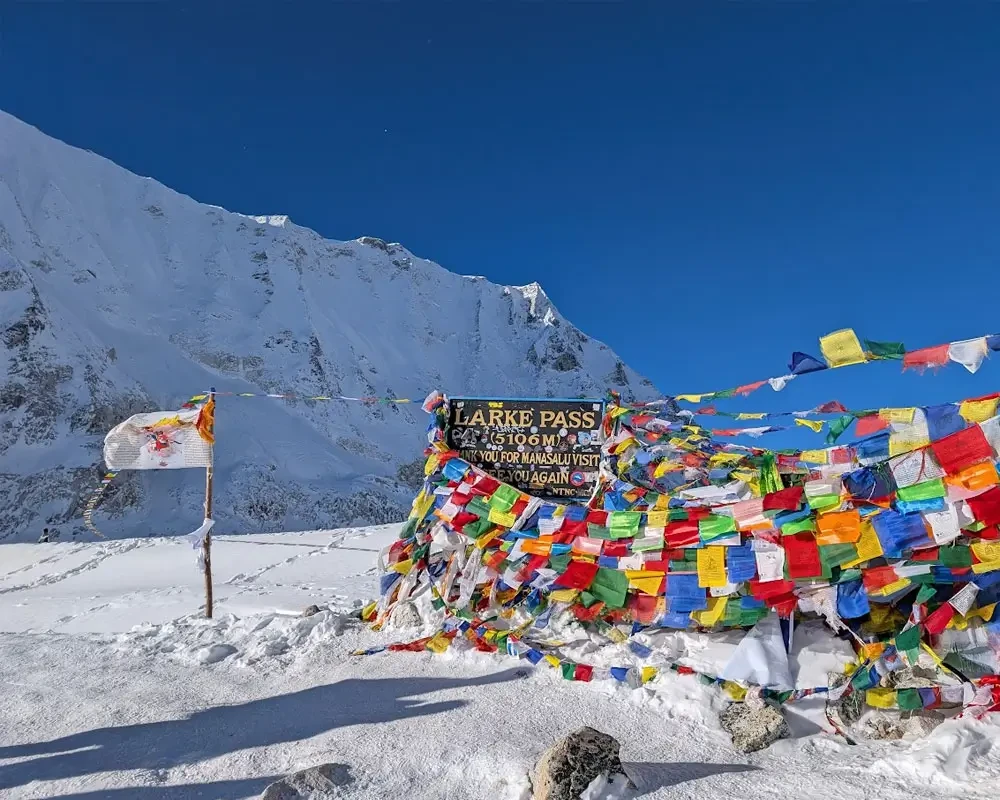
When people ask, “Is the Manaslu Circuit Trek with Serang Gompa beginner-friendly?” The honest answer is: yes, but with important preparation and respect for what the trail demands. This trek is a high‑altitude, multi‑day, remote Himalayan adventure that crosses rugged terrain and the challenging Larkya La Pass (5,106 meters).
For that reason, it’s best suited for trekkers with good physical fitness, strong endurance, and some prior trekking experience. It is not impossible for true beginners, but jumping in without preparation would not be wise.
Why is this trek considered strenuous? First, the altitude gain is significant. You are living and walking above 3,000 meters for much of the journey, which means your body needs time to acclimatize properly. The trail itself includes long days of walking, uneven terrain, river crossings, steep ascents and descents, and variable weather, all of which demand stamina, balance, and resilience.
When you combine such conditions with the remoteness of the Manaslu region and its restricted area status (meaning fewer lodges and limited facilities compared to trails like Everest Base Camp), you can see why guided support and training are recommended.
That said, beginners can do this trek if they prepare smartly. Here’s how:
- Start physical training several months in advance with a blend of cardio (walking, hiking, cycling), strength training (legs and core), and endurance workouts.
- Invest in good boots, layers for cold and wind, trekking poles, and a proper sleeping bag rated for sub‑zero temperatures.
- NTE strongly recommends hiring both a licensed guide and a porter. A guide helps you with navigation, acclimatization, altitude symptoms, and logistics, which are all critical for safety. A porter helps carry gear so you can preserve energy for the trail.
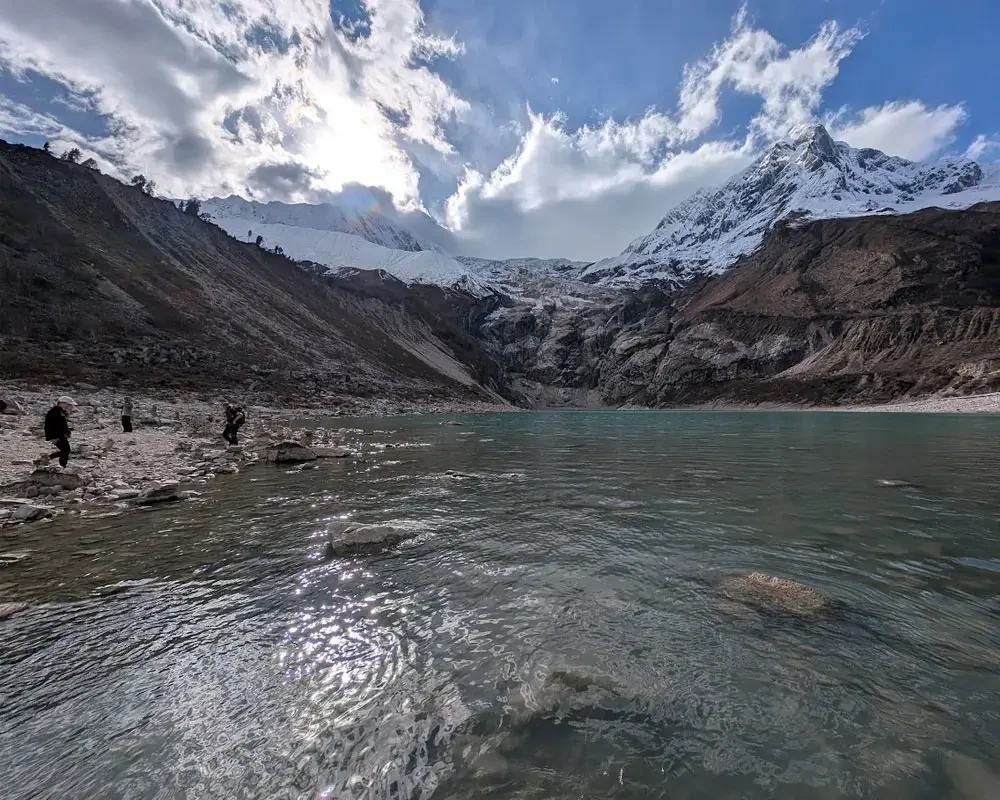
- Build acclimatization days into your itinerary (e.g., hikes to Manaslu Base Camp or short explorations around Samagaun) to help your body adjust.
- You must also be flexible, as the altitude affects everyone differently, so your guide may adjust the schedule if needed.
- Begin hiking regularly, maintain hydration, practice slow and steady walking, and get comfortable with walking 6 to 8 hours a day with a daypack.
So, who is this trek actually for? It is perfect for adventurers who want a high‑value, remote Himalayan experience, with real culture, high passes, and authentic villages. If you enjoy physical challenges, have a curious mindset, and embrace unpredictability, you thrive here. Even as a beginner, you can do this, but you must be cautious and committed to preparation, respect for high‑altitude trekking, and proper support.
Serang Gompa With Manaslu Circuit Trekking Preparation Tips
- Begin your high-altitude acclimatization early by gradually increasing your daily walking distances and elevation.
- Focus on cardiovascular fitness, including hiking, running, cycling, or swimming, to prepare your lungs and heart for thin air.
- Strengthen your legs, core, and back muscles to handle long treks with a daypack and uneven terrain.
- Familiarize yourself with multi-day trekking logistics, including pacing, hydration, and nutrition strategies.
- Test and break in trekking boots well before the trek to prevent blisters and discomfort.
- Prepare layered clothing suitable for sub-zero temperatures, wind, and sudden weather changes in high-altitude environments.
- Bring essential gear, including trekking poles, headlamp, water purification tablets, sleeping bag, and personal first aid kit.
- Learn to pack efficiently, carrying only what’s necessary.
- Stay updated on weather forecasts and trail conditions to plan your trek and rest days effectively.
- Get vaccinations and medical check-ups recommended for Nepal and high-altitude trekking.
- Practice mental preparation and mindfulness techniques to stay calm during challenging sections and high passes.
- Arrange all permits, guides, and porter services in advance to ensure a smooth and legal trekking experience.
- Keep emergency contacts, maps, and navigation tools handy in case of unexpected situations.
- Carry sufficient cash in Nepalese Rupees for small purchases, tea houses, or unforeseen expenses.
- Research and carry information on altitude sickness symptoms and remedies to stay safe at high elevations.
- Ensure that your travel insurance covers high-altitude trekking and emergency evacuation if necessary.
- Build flexibility into your itinerary to accommodate weather delays, rest, and acclimatization days.
- Familiarize yourself with local customs, festivals, and etiquette to respect the communities along the trail.
The Best Time, Season, & Month For The Manaslu Circuit With Serang Gompa Trek
Choosing the best time, season, and month for the Manaslu Circuit with Serang Gompa trek can make a huge difference in how you experience this incredible Himalayan journey. The ideal windows are Autumn (September to November) and Spring (March to May), when the weather is stable, the skies are clear, and the trails are at their most welcoming.
Trekking in these ideal seasons means you enjoy crisp mountain views, vibrant landscapes, and more reliable weather patterns. They are also perfect for photography, cultural encounters, and comfortable trekking conditions that keep the high altitudes thrilling.
Autumn Season (September To November)
Autumn is widely considered the best season for the Manaslu Trek with Serang Gompa, and for good reason. After the monsoon retreats, the skies clear out beautifully, leaving behind fresh air, vivid snow-capped peaks, and incredibly stable weather throughout most of the day. Trekking in autumn feels like walking with crystal clarity all around you, which is ideal for those sweeping views of Mt. Manaslu, Himlung Himal, and Annapurna II.
September:
- Mild and gradually cooling, with occasional post-monsoon showers early in the month.
- Good visibility, though a few clouds may linger over high peaks.
- Safe and solid trails after monsoon drainage; rivers are full but crossable.
- Fresh greenery from the monsoon; trails are lush with river valleys flowing strongly.
- Wildlife sightings of langur monkeys, Himalayan monals, and pheasants.
- Views of Manaslu, Himlung Himal, and Cheo Himal are partially veiled in clouds early in the month.
October (The Best Month)
- Stable weather, sunny days, and cold nights; the best month for trekking clarity.
- Excellent visibility with unobstructed views of Manaslu, Annapurna II, Cheo Himal, and surrounding peaks.
- Dry, firm, and perfect trails for long trekking days.
- Clear skies allow breathtaking photography at sunrise and sunset.
- Forests start to lose monsoon moisture; yaks grazing in high meadows.
- Stunning, unobstructed panoramic views of glaciers and snowfields.
November:
- Cooler temperatures, especially in higher altitudes; morning frost is common.
- Excellent visibility, crisp, and dry; perfect for glacier and high mountain shots.
- Stable, less crowded than October; snow may start appearing at high passes.
- High passes become dramatic with early snow.
- Alpine plants are still visible in the lower meadows; occasional red panda sightings in the forests.
- High-altitude peaks fully clear; Manaslu Base Camp and Larkya La Pass spectacular.
Spring Season (March To May)
Spring is another fantastic season for the Manaslu Circuit Trek with Serang Gompa. The trail comes alive with the burst of rhododendrons, wildflowers, and greenery. Temperatures are gradually warming up, and though spring can occasionally bring some afternoon cloud build-up, the overall trekking experience feels lively and energizing. It is especially rewarding if you love colorful mountain rhododendron forests and blooming valleys.
March:
- Cold weather at high altitudes, but warmer than winter; occasional snow or rain showers.
- Clear mornings, occasional afternoon clouds.
- Firmer trails, snow lingering at higher passes; some rivers swollen from melting snow.
- Quiet trails with fewer trekkers; serene monastery visits.
- Early rhododendron blooms; possible sightings of Himalayan tahr and blue sheep in alpine zones.
- Manaslu and the surrounding peaks are partially veiled by melting snow clouds.
April:
- Warming trend; pleasant days, cold nights; ideal trekking temperatures.
- Very good visibility, especially in early mornings.
- Dry trails with manageable river crossings; ideal for high passes like Larkya La.
- Rhododendron forests in full bloom, juniper and fir at the higher altitudes; Himalayan monals are more visible.
- Crystal-clear views of Manaslu, Himlung Himal, and Cheo Himal.
May:
- Warm days, cooler nights; occasional pre-monsoon clouds in lower valleys.
- Excellent visibility in the mornings, clouds may develop by the afternoon.
- Dry and comfortable trails; some higher passes may begin to see light snow melt.
- Ideal for trekking with fewer crowds; rich flora in full bloom, and the fauna is active.
- Peak clarity for photography; Manaslu Base Camp and Larkya La views are spectacular.
Is The Serang Gompa Trek In Manaslu Doable In The Off-Seasons?
Short answer: yes in winter, no in monsoon. The off-seasons for the Manaslu Circuit Trek with Serang Gompa are winter (December to February) and monsoon (June to August), and they offer very different realities on the trail.
Winter brings cold temperatures, snow at higher elevations, harsher winds, and shorter daylight hours, especially above Samagaun and toward Larkya La Pass. That said, winter, particularly December, can still be surprisingly rewarding if you are well prepared. The skies are often razor-clear, the mountains feel closer, trails are quiet, and the experience around Serang Gompa feels deeply raw and spiritual.
Having said that, you need proper winter gear, flexibility in your itinerary, and a strong guide, and it’s important to note that crossing Larkya La Pass is generally not recommended in peak winter due to heavy snow and safety risks. Many winter itineraries focus on reaching Serang Gompa, Samagaun, or Pungen Gompa and returning the same way, and that alone is incredibly fulfilling.
Monsoon, on the other hand, is a different story. While the Manaslu region does sit in a rain-shadow compared to eastern Nepal, the lower sections of the trek, especially Machha Khola, Jagat, and Deng, are highly vulnerable to heavy rain, landslides, slippery trails, leeches, and road disruptions. Cloud cover often blocks mountain views, river crossings become risky, and delays are common.
Even though the landscapes turn lush and green, the overall trekking experience is compromised, and access to remote areas like Serang Gompa can be unreliable. Unless you genuinely don’t mind trekking in constant rain with limited views, the monsoon season is not recommended at all for the Manaslu Circuit with Serang Gompa.
Altogether, if your schedule leaves no other option, winter, if handled smartly and conservatively, is still the far better off-season choice, offering solitude, clarity, and a deeply atmospheric Himalayan journey.
Manaslu Serang Gompa Trekking Gear List
Clothing:
- Moisture-wicking base layers (thermal top and bottom)
- Lightweight trekking shirts (quick-dry)
- Insulating mid-layer (fleece or down jacket)
- Waterproof and windproof jacket (Gore-Tex or similar)
- Trekking pants (convertible or insulated, depending on season)
- Warm insulated pants
- Thermal underwear for cold nights
- Warm hat/beanie and sun hat
- Neck gaiter or buff
- Lightweight gloves and insulated winter gloves
- Comfortable sleepwear
Footwear:
- High-quality waterproof trekking boots (well broken-in)
- Lightweight sandals or camp shoes for evenings
- Warm trekking socks (wool or thermal)
Gear & Equipment:
- Backpack (40 to 60 liters) or duffel bag for porter
- Daypack (20 to 30 liters)
- Trekking poles
- Sleeping bag (rated to at least -10°C for higher altitudes)
- Headlamp with extra batteries
- Reusable water bottles or hydration bladders
- Water purification tablets or a filter
- Sunglasses with UV protection
- Sunscreen (SPF 30+), lip balm with SPF
- Quick-dry towel
- Rain cover for backpack
- Power bank and charging cables
- Camera or a smartphone
Personal Items:
- Basic first-aid kit (band-aids, blister care, pain relief, altitude medication if prescribed)
- Personal medications and prescriptions
- Toiletries (toothbrush, toothpaste, biodegradable soap, wet wipes)
- Hand sanitizer
- Toilet paper
- Passport copies and trekking permits
- Cash in Nepalese rupees (ATMs are not available on the trail)
- Earplugs
- Snacks and energy bars
Transportation Availability For The Serang Gompa Manaslu Trek & Its Cost
Getting to and from the Manaslu Circuit Trek with Serang Gompa is very much part of the adventure, and transportation in this region reflects the raw, remote nature of the journey. Our standard trekking packages include transportation by local bus, which is the most cost-effective way to reach the trailhead at Machha Khola from Kathmandu and return from Besisahar after the trek.
Local buses are widely used by both trekkers and locals, but if you have never traveled by public bus in Nepal, it’s good to know what you are signing up for. The rides are long, roads can be rough and unpredictable, and buses tend to be overcrowded, especially during festival seasons. They also stop frequently in villages along the way to pick up and drop off passengers. It is not the most comfortable option, but it does offer an authentic, immersive glimpse into everyday life in rural Nepal.
If comfort, flexibility, and reliability matter more to you, especially after a long trek, upgrading to a private jeep is highly recommended. Private jeeps allow you to travel on your own schedule, avoid unnecessary stops, and handle rough road conditions far better than buses.
A private jeep from Kathmandu to Machha Khola costs around USD 200, while the return journey from Dharapani to Kathmandu costs approximately USD 250. This option is particularly valuable during the monsoon or winter months when road conditions can change quickly.
Accommodations, Hot Shower, Meals, & Drinking Water Facilities During The Trek To Manaslu Serang Gompa
Tea House Accommodation
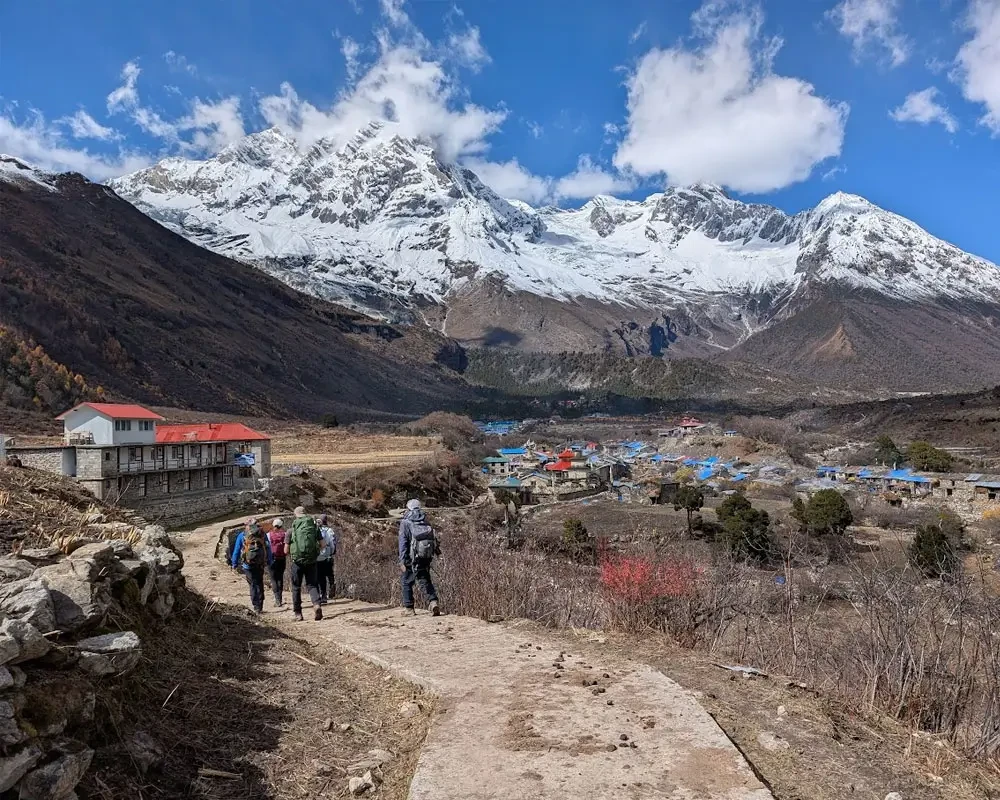
Accommodation on the Serang Gompa Trek in the Manaslu region is all about simplicity, warmth, and genuine local hospitality. Along the trail, you stay in traditional tea houses run by local families, especially in villages like Jagat, Deng, Lho, Samagaun, and Samdo. When you are traveling with NTE, you get a private room and a private bathroom, if and when available.
These rural lodges typically offer twin-sharing rooms with simple wooden beds, foam mattresses, clean sheets, pillows, and basic furniture such as a small table or hooks for your gear. The rooms are cozy but unheated, particularly as you gain altitude, so a good-quality sleeping bag is essential for staying warm at night.
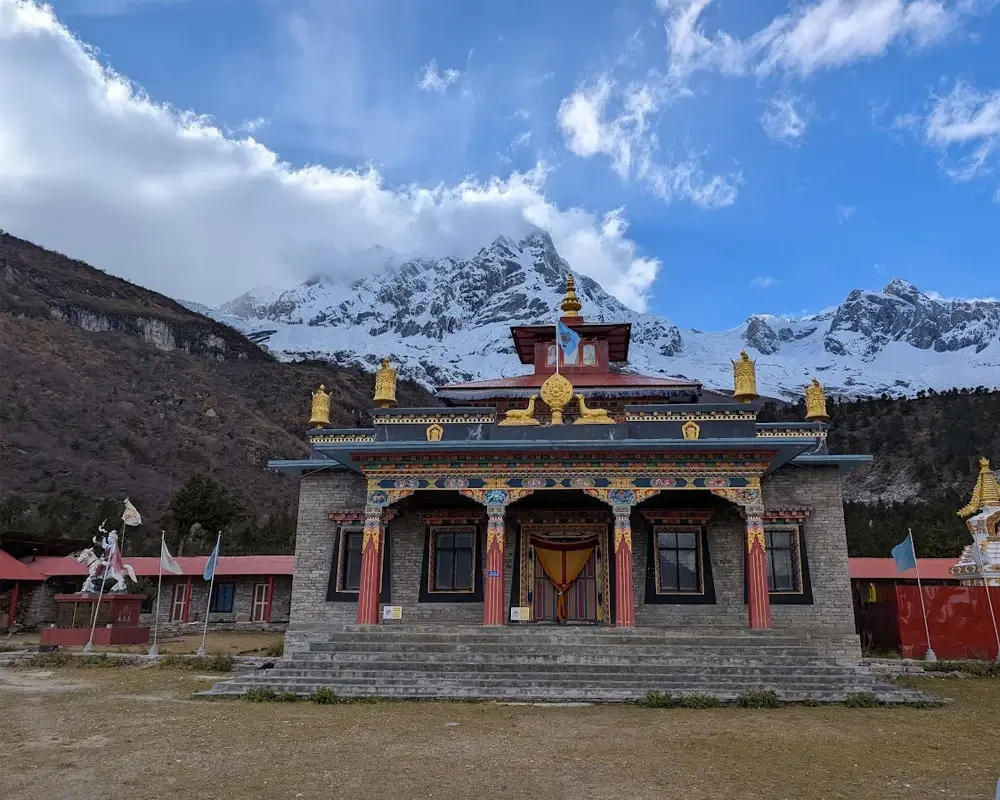
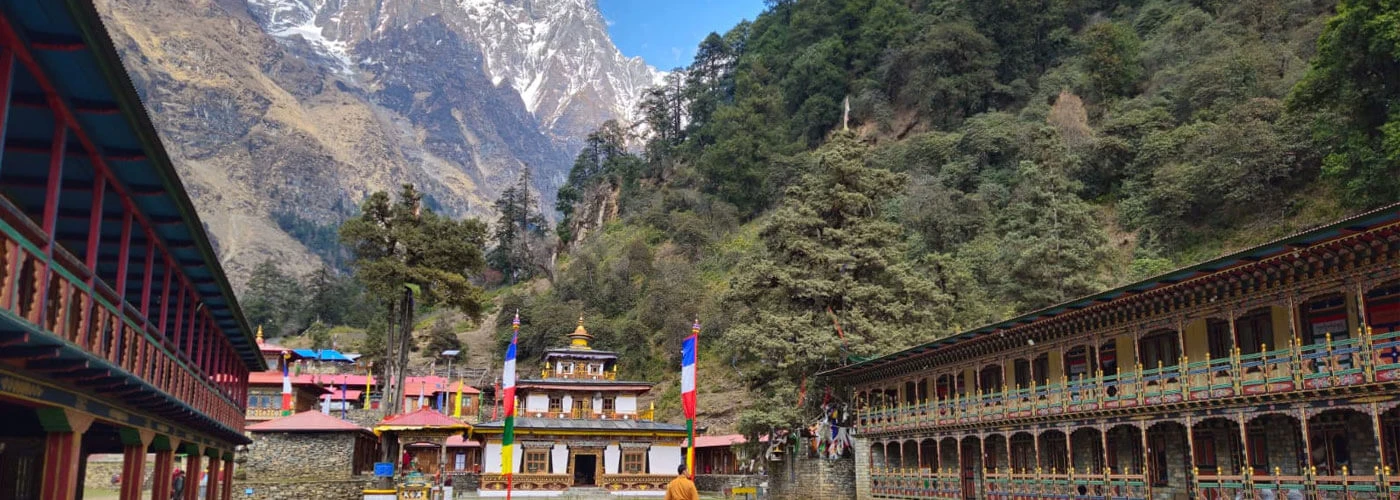
Bathrooms are usually shared and range from basic Asian squat toilets to simple Western-style toilets in larger villages, with limited water pressure and cold temperatures in the mornings. The highlight, however, is the overnight stay at Serang Gompa, which feels entirely different from a standard teahouse night. Accommodation at the monastery is modest, quiet, and deeply atmospheric.
Rooms are simple, often dormitory-style or basic private rooms. Without luxury, but rich in character. You are likely provided with a mattress, blanket, and shared space. You should expect very basic bathroom facilities, usually shared and without hot showers.
The evenings are calm, filled with prayer chants, flickering butter lamps, and the distant sound of monks going about their routines. It’s the kind of place where time slows down, and even the cold feels secondary to the moment. If you come prepared with warm layers, an open mind, and respect for monastic life, the tea houses, and especially the monastery stay, become one of the most memorable parts of the Manaslu Serang Gompa trekking experience.
Hot Shower Availability
Hot water is available at many tea houses along the route, but it’s far from guaranteed everywhere. Most hot showers are powered by solar heaters or gas systems, and because fuel and energy are limited in these remote areas, you usually pay a small extra fee, somewhere around USD 3 to 5 per shower (in Nepalese rupees).
In some places, especially lower down or in smaller settlements, hot water may only be available at peak sun hours when solar panels have had time to heat up. In the highest and most remote tea houses, you might find only bucket showers with cold water, or no shower at all. Here, washing up becomes a quick rinse, often in cold alpine water, which is part of the rugged charm (and challenge) of high-altitude trekking.
Meals & Food Items
Food on the Manaslu Circuit Trek with Serang Gompa is simple, hearty, and exactly what your body needs after long days on the trail. Meals are served at local tea houses, and while the menus may look modest, they are surprisingly satisfying and well-suited for high-altitude trekking.
Breakfast usually sets the tone with comforting options like porridge, Tibetan bread, eggs, pancakes, toast, and plenty of tea or coffee. For lunch and dinner, you quickly notice familiar favorites such as dal bhat (Nepal’s classic lentil soup with rice), alongside momo (Tibetan dumplings), thukpa (noodle soup), and chowmein.
In larger villages like Namrung and Samagaun, the menu expands a bit, and you may even spot Western-style dishes like fried rice, pasta, or pizza, which feel oddly comforting in the middle of the Himalayas.
If you are curious about local flavors, this trek is a great place to try traditional Tibetan-influenced foods such as tsampa porridge, yak cheese, and butter tea, especially around Serang Gompa and higher villages. Additionally, tea houses are generally flexible and happy to prepare custom meals, so vegetarian, vegan, or gluten-free diets can usually be accommodated, as long as you let your guide know in advance.
Between meals, warming up with ginger tea, lemon tea, or butter tea becomes a daily ritual, especially in colder altitudes. To keep your energy steady on steep climbs or long stretches between villages, it’s smart to carry high-energy snacks like trail mix, protein bars, dried fruits, or chocolate.
At Nepal Trekking Experts, we go a step further by providing seasonal fruits and chocolates along the way, plus complimentary tea or coffee during the trek. And once the journey wraps up or before we begin the journey, we organise a welcome or farewell dinner in Kathmandu to share good food, stories, and a proper celebration of your Himalayan adventure.
Safe Drinking Water Options
Staying hydrated on the Manaslu Serang Gompa Trek is non-negotiable, and the good news is that drinking water is available throughout the route; you just need to be smart about how you consume it. Along the trail, you find water from village taps, natural mountain streams, and tea houses, as well as options to buy bottled mineral water or request boiled water.
Bottled water is convenient, especially at lower elevations, but it becomes increasingly expensive as you go higher and adds to plastic waste in this remote Himalayan region. The most practical and eco-friendly approach is to carry refillable bottles and treat water using purification tablets, UV filters, or by boiling it.
Tea houses are usually happy to provide boiled water for a small fee, and treated natural water sources are generally safe when purified properly. You should expect the cost of drinking water to range from NPR 100 to 400 per liter, depending on altitude and remoteness.
Wi-Fi, Mobile Network, & Electricity Availability In Manaslu Serang Gompa Adventure
Wi-fi Availability
Wi-Fi on the Manaslu Circuit Trek with Serang Gompa exists, but just barely, and never in a way you should depend on. In this remote, restricted region of Nepal, internet access is rare and often unreliable, especially as you move higher into the mountains.
Some tea houses in larger villages like Namrung, Samagaun, and occasionally Samdo offer Wi-Fi for a small additional fee, usually payable in local rupees. The connection, when available, is typically powered by solar energy or limited satellite service, which means it can be slow, unstable, and easily affected by weather conditions.
Thus, it is important to go in with the right mindset: expect several days without any connection at all. Even when Wi-Fi is advertised, power cuts, weak signals, or heavy cloud cover can knock it out completely.
If staying in touch is essential, downloading offline maps, saving important documents, and letting family know in advance about limited connectivity is a smart move.
Mobile Network Service
Mobile network coverage on this trek has improved in recent years, but it’s still best described as patchy and unpredictable. Most villages along the route now have some level of phone reception, especially in lower and mid-elevation areas, but the signal strength can fluctuate wildly depending on terrain, weather, and altitude.
The two main SIM providers in Nepal are NCELL and Nepal Telecom (NTC), and while both work to an extent, Nepal Telecom is generally more reliable in the Manaslu region.
If you plan to use mobile data or make calls during the trek, it’s a good idea to purchase a local SIM card in Kathmandu upon arrival and activate a data or call package before heading out. That said, don’t expect consistent service; there are stretches where the signal disappears entirely.
Even when reception exists, data speeds are often slow and better suited for messages rather than heavy browsing.
Electricity Availability
Even though you are trekking deep into the remote Manaslu region with Serang Gompa, electricity is more available than many first-time trekkers expect. Most tea houses along the Manaslu Circuit operate on hydropower or solar energy, especially in villages like Namrung, Samagaun, Samdo, and Bhimthang.
Depending on the lodge, you may be able to charge your devices in your room, but in many places, charging is only available in the main dining hall and comes with a small extra fee, usually a few dollars paid in local rupees. Prices tend to increase as you gain altitude due to limited power supply.
At higher elevations and around Serang Gompa, electricity is more limited and often solar-dependent, which means charging may only be possible during certain hours, and sometimes not at all on cloudy days. Power cuts are common, and sockets can be scarce, so planning ahead really pays off.
This is why carrying a reliable power bank is highly recommended. A headlamp also becomes essential once the lights go out early in the evening.
Travel Insurance For Serang Gompa Trek In Manaslu, Nepal
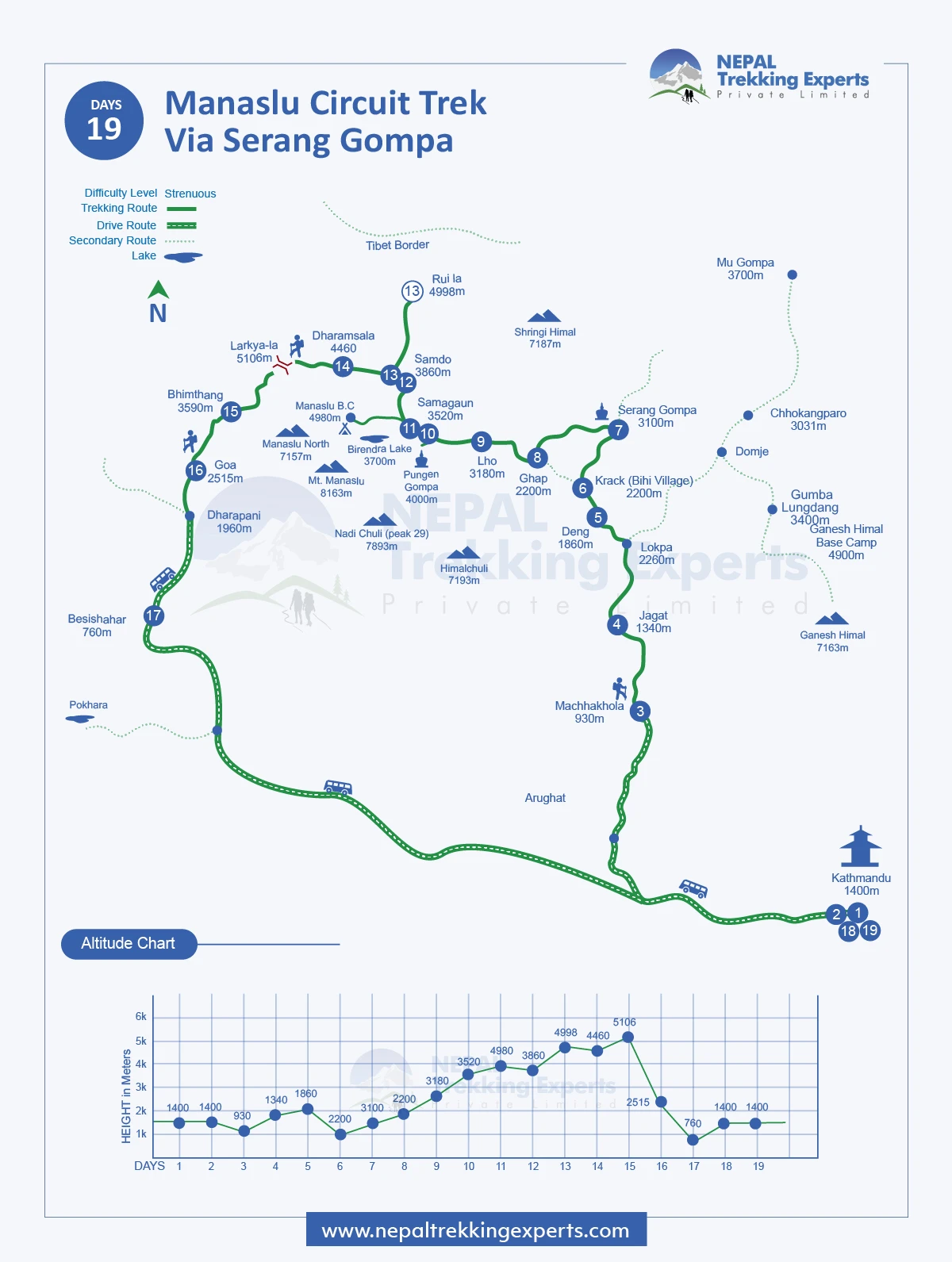
Trekking in Nepal is incredible, but it comes with real risks: remote terrain, high altitude, unpredictable weather, and limited medical facilities. Thus, a robust policy is your safety net. With the Serang Gompa Trek in Manaslu, Nepal, you trek from around 930 meters all the way up to 5,106 meters at Larkya La Pass, which is why you must ensure your insurance covers high-altitude trekking up to at least 6,000 meters.
Because the Manaslu region is a restricted trekking area, your policy must include adventure activity coverage, plus protection for theft, personal liability, and emergency evacuation. Additionally, altitude sickness is a genuine risk, and helicopter evacuations in Nepal can cost thousands of dollars, so having the right coverage is essential.
Most hospitals in Nepal require upfront payment, or at least approval from your insurer, so choose a plan that either pays bills directly or guarantees quick reimbursement. Also, compare altitude limits, benefits, claim processes, and fine print carefully. Not all policies treat high-altitude trekking the same way, and the last thing you want is to find yourself on a stretcher with insufficient coverage.
How Can I Obtain A Nepal Visa?
Getting your Nepal visa is straightforward, and thankfully, you have a few flexible options depending on your travel style. The easiest route for most international travelers is a visa on arrival at Tribhuvan International Airport in Kathmandu, where you can process your application in minutes. If you prefer to be fully prepared, you can also apply at a Nepalese Embassy or Consulate in your home country before you leave.
Payment is easy; while multiple currencies are accepted, it’s wise to bring cash in US dollars, euros, Swiss francs, pound sterling, Australian dollars, Canadian dollars, Hong Kong dollars, Singapore dollars, or Japanese yen. Credit card payments are accepted at many counters nowadays, but cash is always a safe backup.
The visa fees are as follows: USD 30 for 15 days, USD 50 for 30 days, and USD 125 for 90 days (or the equivalent in your currency). Make sure your passport has at least six months of validity remaining, and if your trek or travel plans change, visa extensions are possible at Nepal Immigration offices in Kathmandu or Pokhara.
Currency In Nepal And ATM Availability
In Nepal, the official currency is the Nepalese Rupee (NPR or NRs). The most convenient currencies to exchange are US dollars, Australian dollars, British pounds, Canadian dollars, Singapore dollars, and Euros, all of which can be readily converted at banks, exchange counters, and even hotels in Kathmandu or Pokhara.
For day-to-day payments in cities, credit and debit cards such as Visa, MasterCard, and American Express are widely accepted at major hotels, restaurants, airlines, and larger stores. However, you must understand that card transactions include a 3 to 3.5% surcharge.
ATMs are common in urban centers. Withdrawal limits vary: some ATMs allow only NPR 10,000 per day, while others go up to NPR 35,000, with a small fee of around USD 4 per transaction, plus any additional charge from your home bank.
For trekkers on the Manaslu Serang Gompa route, it’s crucial to carry enough cash in Nepalese rupees for the remote stretches, as villages along the trail do not have ATM access.
Why Book Your Manaslu Circuit Trek With Serang Monastery With Nepal Trekking Experts?
If you want your Manaslu Circuit Trek with Serang Gompa to be smooth, safe, and genuinely memorable, booking with Nepal Trekking Experts is hands down the smart choice. We are a trusted local agency and government-authorised company with decades of experience designing and leading treks in Nepal’s high Himalayas.
Our team ensures balanced itineraries that allow you to enjoy the adventure without compromising on acclimatization, comfort, or cultural experiences. From arranging licensed guides and porters to coordinating transportation, permits, and accommodation, we handle the logistics so you can focus on the trek itself.
Our guides and porters are your insiders to the Manaslu region, offering authentic insights into Tibetan Buddhist culture, local festivals, and the daily life of villagers along the route. With NTE, you get excellent, reliable service, peace of mind, and safety on some of Nepal’s most remote trails.
We are committed to saving your time and energy, ensuring a smooth, stress-free trekking experience, and helping you fully immerse yourself in the breathtaking Himalayan landscapes and Serang Monastery experience.
Here, our clients’ satisfaction speaks for itself, with five-star reviews and countless successful treks under our belt.

 based on 2 reviews