.webp)

 based on 10 reviews
Langtang Valley With Gosaikunda Lake Trek Overview:
Imagine a trek in Nepal that blends accessibility, breathtaking Himalayan scenery, rich culture, the serene beauty of holy lakes, high passes, a stunning circuit, and a touch of adventure, all in one journey. That’s exactly what the Langtang Valley with Gosaikunda Lake Trek delivers. Often hailed as one of Nepal’s more approachable yet stunning treks, it offers everything from dense rhododendron and bamboo forests to high-altitude alpine landscapes and glacial valleys.
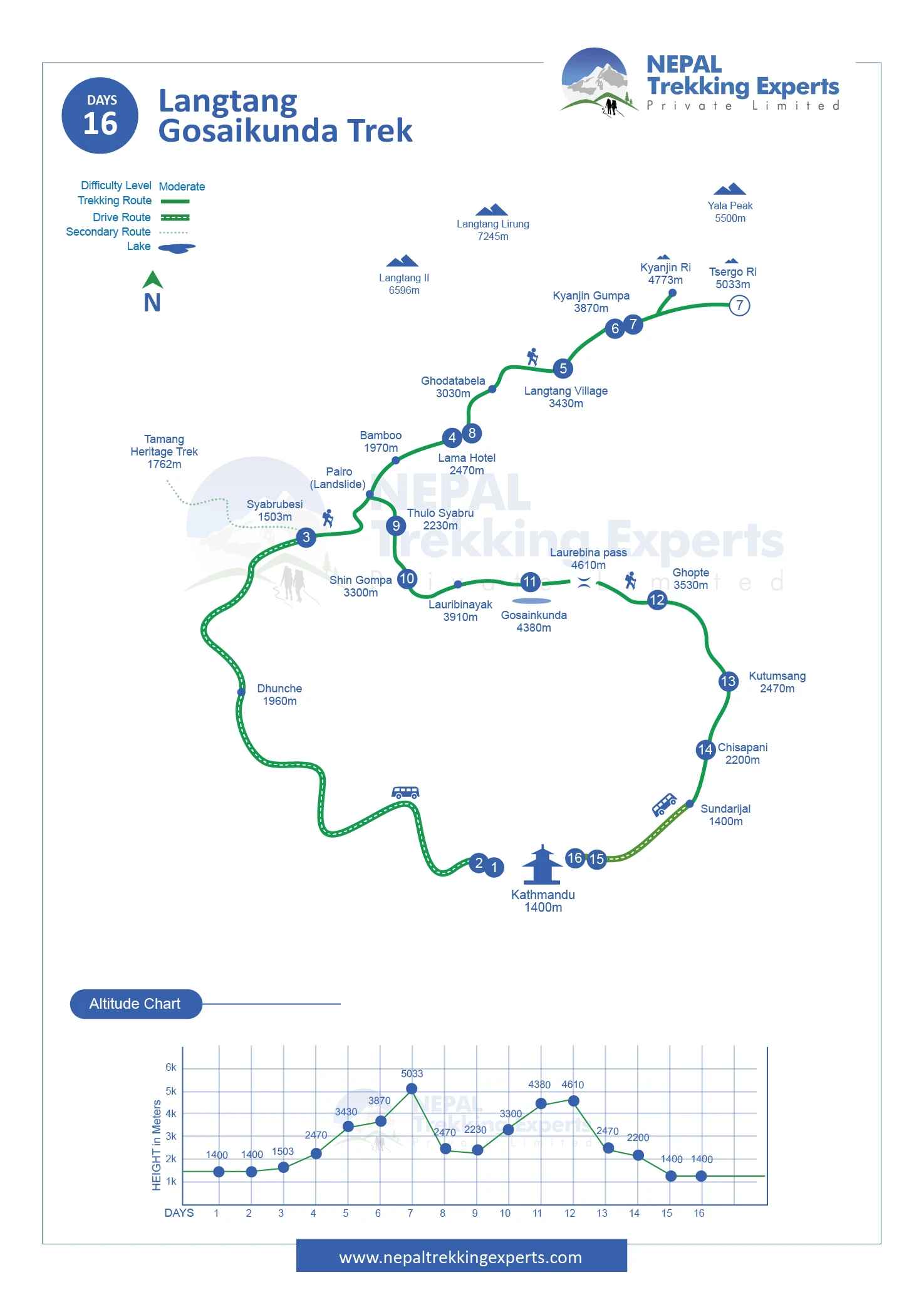
You start this adventure from Kathmandu, enjoying a scenic drive along the Trisuli River to Syabrubesi before diving into the trail that meanders past river crossings, suspension bridges, and charming villages. As you climb deeper into Langtang Valley, you get to explore the rebuilt village of Langtang and its serene yak pastures, which set the stage for your Himalayan adventure.
While here, you also get an opportunity to explore Kyanjin Gompa, which is a remote monastery where you can explore local culture and even sample yak cheese from the famed Swiss-supported factory. From here, you then take a short hike to Tsergo Ri, which rewards you with panoramic views of Langtang Lirung and the surrounding peaks.
Following it, the journey seamlessly transitions into the Gosaikunda trail, where terraced hillsides, sweeping ridgelines, and sacred alpine lakes create an awe-inspiring landscape. Here, you also see Gosaikunda Lake, along with Saraswotikunda and Bhairavkunda, deeply rooted in Hindu and Buddhist traditions and celebrated especially during Janai Purnima.
Moving on, you then cross the Lauribina La Pass at 4,610 meters before descending into the Helambu region. This section of the trail takes you back through open meadows, forested ridges, and traditional villages, with sunrise views that feel almost cinematic from spots like Thadepati and Chisapani. If you'd like an alternative to Thadepati, there is a Langtang Gosaikunda Helambu Trek that takes you via Melamchi Gaun and Tarkeghyang.
All in all, the Langtang Valley with Gosaikunda Lake Trek is ideal for those seeking a moderate-to-challenging Himalayan experience that balances cultural immersion, spiritual landmarks, and stunning mountain panoramas. It’s a chance to explore Nepal’s natural beauty and support local Tamang communities still recovering from the 2015 earthquake, all without the crowds of Everest or Annapurna. If you have limited holiday, you won't be disappointed visiting the Langtang Valley Trek or the Tamang Heritage Trek, too.
What Makes The Langtang Gosaikunda Trek Unique?
The Langtang Valley Trek with Gosaikunda Lake is a perfect scenic adventure journey, along with a cultural blend such as:
Kyanjin Gompa & Yak Cheese Factory Experience
Situated at 3,870 meters in the upper Langtang Valley, Kyanjin Gompa is the heart of the valley and a perfect blend of culture, nature, and Himalayan adventure. As the highest permanent settlement along the Langtang route, it serves as a hub for explorers aiming for high viewpoints like Tsergo Ri and Kyanjin Ri.
The trek up here is a treat for the senses: you pass through lush rhododendron forests, cross pristine river valleys, and gradually step into open yak pastures, all while dramatic peaks, like Langtang Lirung (7,234 meters), Langtang Himal, Yala Peak, and Dorje Lakpa dominate the skyline.
The Kyanjin Gompa is a Buddhist monastery that is surrounded by fluttering prayer flags. Nearby, you also get to visit the yak cheese factory, which was originally started with Swiss support to boost the local economy.
Here, you also get an opportunity to witness the process of cheesemaking from fresh yak milk to traditionally made, richly flavored cheese. You must try this goodness here. The cheese here is quite creamy, earthy, and slightly tangy. Every bite you enjoy also directly supports the Tamang villagers, making it a delicious way to give back while savoring authentic Himalayan flavors.
Side Trek to Tsergo Ri
Rising to an impressive 4,984 meters, Tsergo Ri is one of the Langtang Valley’s most iconic viewpoints and a must-do side hike from Kyanjin Gompa. The trek itself is a steep but incredibly rewarding climb, starting through open yak pastures and glacial moraine, gradually giving way to a more rugged alpine landscape with minimal vegetation. The trail conditions are rocky and uneven, with loose scree near the summit, so careful footing is essential.
As you gain altitude, the crisp mountain air sharpens your senses, and the panoramic vistas start to unfold: Langtang Lirung (7,234 meters), Langtang II, Yala Peak, Dorje Lakpa, and Gonje dominate the skyline. From here, the glaciers, ridgelines, and valley floor shrink into the distance, giving you that awe-inspiring sense of high-altitude isolation. At the top, Tsergo Ri rewards you with arguably the best 360° views of the entire Langtang trek.
Crossing the Lauribina Pass
Crossing the Lauribina Pass is a true highlight of the Langtang Valley with Gosaikunda Lake Trek, perched at a striking 4,610 meters and marking one of the trek’s highest and most dramatic points. The pass connects the sacred Gosaikunda region with the rolling landscapes of Helambu and Kutumsang.
The trail here is a steady, sometimes steep climb, weaving through rocky moraines, open alpine slopes, and exposed high-altitude terrain. Now, loose gravel, stone steps, and occasional snow patches can make footing a bit tricky, but every step rewards you with stunning 360° views of surrounding Himalayan ridgelines, valleys, and distant peaks.
Also, the scenery changes dramatically along the way, from the serene Gosaikunda lakes to stark, windswept alpine expanses. Weather can be unpredictable, but the experience of crossing the pass and soaking in the vast Himalayan panorama is unforgettable. Following it, you then descend into Ghopte and the lush forests of Helambu.
Explore Sacred Gosaikunda Lakes: Saraswotikunda, Bhairavkunda, & Gosaikunda
Situated at around 4,380 meters, the Gosaikunda Lakes feel like the spiritual soul of the Langtang Valley with Gosaikunda Lake Trek. It is a sacred alpine lake system deeply revered in both Hindu and Buddhist traditions.
According to Hindu belief, Lord Shiva created Gosaikunda by striking the ground with his trident to release cool water after consuming poison. Every year during Janai Purnima (in August), thousands of pilgrims visit here to perform rituals, holy baths, and circumambulations, while Buddhist pilgrims come seeking quiet meditation and reflection.
Visually, you get to witness turquoise, crystal-clear waters cradled by rocky alpine terrain, snow-dusted ridges, and wide-open skies, with prayer flags fluttering in the thin mountain air. The three main lakes each carry their own identity: Saraswotikunda is named after the goddess Saraswoti, Bhairavkunda is linked to Bhairava (Shiva’s fierce form), and Gosaikunda is the largest and holiest of them all.
Sunrise and sunset here can be jaw-dropping, with calm reflections on still mornings and distant views of Ganesh Himal and even the Annapurna range on clear days. While here, you can walk the lake shores, observe pilgrims during sacred rituals, or simply sit quietly with the mountains for company.
Tamang Heritage & Culture along the Trail
One of the most rewarding parts of the Langtang Valley with Gosaikunda Lake Trek is the people you meet along the way. The trail runs straight through the heartland of the Tamang community, the primary ethnic group of the Langtang region.
Their culture has been shaped by centuries of life along historic Nepal-Tibet trade routes. As you move beyond Langtang toward Gosaikunda and Helambu, you also cross paths with Hyolmo and Sherpa communities.
Now, daily life here is deeply tied to Buddhist traditions, and you notice it everywhere with colorful prayer flags, carved mani walls, spinning prayer wheels, and small gompas tucked into villages. Here, most families still depend on agriculture and livestock, especially yaks and goats.
They live in stone or mud-brick homes with slate roofs, which are perfectly adapted to the harsh Himalayan climate. If you are lucky, you might hear the rhythmic beat of Tamang Selo music or the deep sound of the Damphu drum during local gatherings or celebrations.
As you explore the villages, you can expect genuine smiles, curious questions, and easy conversations over cups of butter tea in teahouse kitchens with the locals.
Scenic Trekking Routes & Mountain Panorama
The Langtang Valley with Gosaikunda Lake Trek is easily one of the most visually diverse and rewarding routes in Nepal. The journey starts in lush subtropical and temperate forests, where the trails wind through rhododendron, oak, pine, and bamboo, which is especially vibrant in spring.
During the journey, you pass by river valleys, suspension bridges, and shaded woodland. If you pay attention during this section, you might spot langur monkeys, wild boar, or even a musk deer slipping into the trees. You will even witness birdlife too, from the colorful Himalayan Monal (Danphe) to blood pheasants, blue whistling thrushes, woodpeckers, and warblers.
As you climb higher beyond Langtang Village toward Kyanjin Gompa, the landscape opens dramatically. The tree line fades, which is replaced by alpine meadows, yak pastures, glacial moraines, and wide-open valleys. Now, this is where the mountains really start to dominate the view. You see Langtang Lirung (7,234 meters) tower above everything, joined by Langtang II, Yala Peak, Dorje Lakpa, and the Ganesh Himal range as you move toward Gosaikunda.
Later, around the sacred lakes and near Lauribina Pass, the trail crosses windswept ridgelines and vast alpine basins with big, uninterrupted horizons. On clear days, distant giants like Manaslu (8,163 meters) and even the far-off Annapurna range come into view, with the Tibetan plateau stretching out to the north.
Permits Required For Langtang Valley With Gosaikunda Lake Trek In Nepal
For the Langtang Valley with Gosaikunda Lake Trek, you need three permits, and yes, this trek must be done with a government-licensed trekking guide as per current Nepal trekking regulations. These permits help manage trail safety, conserve protected areas, and support local communities across Langtang, Gosaikunda, and Helambu.
Required permits and costs:
- TIMS Card (Trekkers’ Information Management System): It costs NRs 2,000 per person.
- Langtang National Park Entry Permit: It costs you NRs 3,000 per person.
- Shivapuri Nagarjun National Park Entry Permit: It costs you NRs 1,000 per person.
You can obtain these permits in Kathmandu from the Nepal Tourism Board, Bhrikutimandap, Kathmandu, and Dhunche (Langtang National Park Ticket Counter), but the easiest and most hassle-free option is to let your trekking company handle it. To issue the Langtang Gosaikunda Trekking permits, you need a passport copy, and then your trekking agency, like Nepal Trekking Experts, arranges it in advance.
How Can I Book The Langtang Gosaikunda Trek?
To book your Langtang Gosaikunda trek with us, you have to send a deposit of 10% of the total cost of the trek. Please also forward a copy of your passport, and flight details if and when available. For your convenience, you may forward the deposit to us online through our website. It is completely safe, and as soon as you make it, you get an automatic receipt in your inbox. The rest of the payment can be paid upon arrival.
For more details, do not hesitate to contact our experts now.


.webp)