How Much Does The Manaslu Nar Phu Valley Trek Cost?
The cost of the Manaslu Nar Phu Valley Trek is USD 2195 per person, covering the essential services and logistics required to complete this 23-day journey through two of Nepal's most remote and restricted Himalayan regions.
The package is designed to minimize logistical concerns so that you can focus on the trekking experience itself. From the moment you arrive in Kathmandu, arrangements typically include airport transfers, hotel accommodation before the trek, permit processing, transportation to and from the trailheads, accommodation throughout the trek, and the support of a professional government-licensed trekking guide. Meals during the trek, basic hot drinks with meals, trekking essentials such as a sleeping bag and down jacket (if required), staff insurance, and government taxes are also included to provide a smoother and more organized experience in the mountains.
While most major trekking expenses are covered, there are a few costs that you should plan for separately. International flights, Nepal visa fees, meals in Kathmandu outside the included breakfasts, personal travel insurance, porter services, sightseeing activities, snacks, beverages, charging facilities, WiFi access, hot showers, and staff tips are generally not included in the package price. Similarly, any additional expenses arising from weather delays, natural events, or other unforeseen circumstances are your responsibility.
Manaslu Circuit And Nar Phu Trek Permit Requirements And Costs
The Manaslu Circuit and Nar Phu Valley pass through some of Nepal's most protected and regulated trekking regions, requiring you to obtain multiple permits before entering the trail. These permit systems help manage visitor access, support conservation efforts, and protect the unique cultural and natural heritage of the remote Himalayan communities.
Under the latest Nepal trekking regulations, all permits for the Manaslu Circuit and Nar Phu Trek must be arranged through a registered trekking agency and accompanied by a licensed guide. While solo travelers are now permitted under this guided trekking system, independent trekking without a licensed guide is not allowed in these restricted areas.
To complete the trek legally, you must obtain three separate permits:
- Restricted Area Permit (RAP): It is the most important permit as it covers the controlled section of the Manaslu and Nar Phu region. The permit is issued only through registered trekking agencies in Kathmandu or Pokhara and is priced according to the trekking season:
- September to November: USD 100 per person for the first 7 days, plus USD 15 per person for each additional day.
- December to August: USD 75 per person for the first 7 days, plus USD 10 per person for each additional day.
- Manaslu Conservation Area Permit (MCAP): It is required for entry into the Manaslu Conservation Area and costs NRs 3,000 per person. It is issued by Nepal Tourism Board offices in Kathmandu or Pokhara.
- Annapurna Conservation Area Permit (ACAP): It is needed because the route passes through the Annapurna region and costs NRs 3,000 per person. It is issued by Nepal Tourism Board offices in Kathmandu or Pokhara.
Is It Mandatory To Hire A Guide And Porter For Restricted Area As Manaslu And Nar Phu? What's The Cost Of Hiring Them?
Yes, it is mandatory to hire a licensed trekking guide for both the Manaslu Circuit and Nar Phu Valley regions, as both are classified as restricted areas in Nepal. According to current trekking regulations, solo trekking is permitted in these regions, but you must be accompanied by a registered guide through a licensed trekking agency.
Hiring a porter is not strictly mandatory, but it is strongly recommended, especially for a long and high-altitude expedition. This terrain involves multiple long trekking days, high passes, and remote sections with limited infrastructure, so a porter significantly reduces physical strain by carrying your main luggage (up to approximately 20 kg). Therefore, you are able to focus on the trekking experience itself.
In terms of cost, a professional licensed trekking guide typically costs around USD 35 per day, while a porter costs around USD 25 per day. These rates generally include their insurance, food, accommodation, and basic trekking expenses during the journey. This ensures that both guide and porter are properly supported throughout the expedition while operating in high-altitude and remote conditions.
However, these costs do not include their tips, which are an important part of trekking culture in Nepal. Tipping is not mandatory but is highly appreciated and considered a standard practice for good service. A general guideline is to tip around 15% to 20% of the total trip cost, or more depending on their service quality, trek difficulty, and your personal satisfaction.
At Nepal Trekking Experts, we provide a trustworthy local guide and porter team who are all trained in altitude safety. Our guides and porters are fully insured, certified in wilderness first aid, and trained to handle high-altitude emergencies.
How Can I Book The Manaslu Round And Nar Phu Valley Trek With Nepal Trekking Experts?
Booking the Manaslu and Nar Phu Valley Trek with Nepal Trekking Experts is a straightforward process.
To secure your booking, you are required to pay a 10% advance deposit of the total trek cost. This initial payment confirms your trip and allows the team to begin arranging permits, along with transportation, accommodation, and guide assignments. Along with the deposit, you will need to provide a copy of your passport and, if available, your flight details, so all necessary travel arrangements can be properly coordinated.
For convenience and security, the deposit can be made online through the official website payment system. The process is safe and verified, and once the payment is completed, you will automatically receive a confirmation receipt in your email. The remaining balance of the trek cost can be paid upon your arrival in Kathmandu before the journey begins.
Once your booking is confirmed, our team will assist you with pre-trek guidance, packing advice, and itinerary preparation to ensure you are fully ready for the Manaslu Circuit and Nar Phu Valley expedition. For any questions or personalized assistance, you can contact our trekking experts at any time.
Preparation Tips For The Manaslu Circuit Nar Phu Trek
- Build your endurance with regular hiking, stair climbing, running, cycling, or other cardiovascular exercises at least 8 to 12 weeks before the trek.
- Train for consecutive long walking days, as the itinerary includes multiple 6 to 9-hour trekking days over more than three weeks.
- Prioritize leg strength, core stability, and balance training to prepare for steep ascents, descents, and uneven mountain terrain.
- Break in your trekking boots well before arrival.
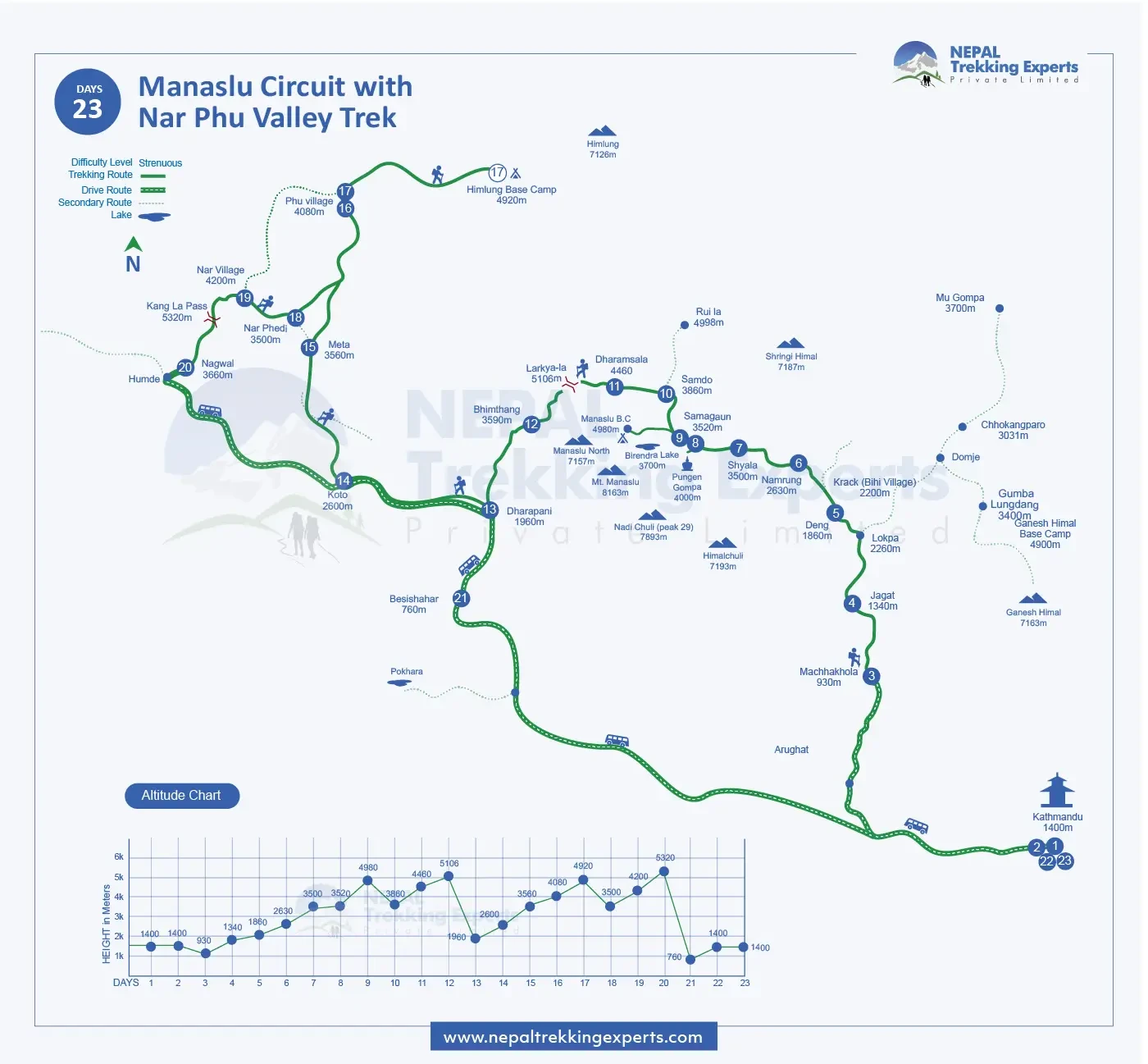
- Prepare for high-altitude conditions, as the trek reaches Manaslu Base Camp (4,980 meters), Larkya La Pass (5,106 meters), Himlung Base Camp (4,920 meters), and Kang La Pass (5,320 meters).
- Learn the early symptoms of altitude sickness and understand when to rest, descend, or inform your guide.
- Pack clothing using a layering system.
- Carry a comfortable daypack.
- Use trekking poles to reduce strain on knees and improve stability.
- Pack a reusable water bottle or hydration bladder along with a water purification method.
- Include a personal first-aid kit containing any prescribed medications, blister treatment, pain relief, and basic medical supplies.
- Obtain comprehensive travel insurance that specifically covers high-altitude trekking and emergency helicopter evacuation.
- Prepare mentally for remote conditions.
- Carry sufficient cash from Kathmandu.
- Expect limited WiFi, charging facilities, and mobile network coverage in many high-altitude villages.
- Pack a power bank and spare batteries.
- Keep important documents, permits, insurance information, and passport copies organized and easily accessible.
- Arrive in Kathmandu at least a day or two before departure to finalize gear checks, permit arrangements, and last-minute preparations.
- Maintain a slow and steady pace throughout the trek.
- Respect local customs, monasteries, religious sites, and traditional Tibetan-influenced communities encountered throughout Manaslu and Nar Phu.
How Difficult Is The Manaslu Circuit With Nar Phu Valley Trek?
The Manaslu Circuit Nar Phu Valley Trek is a challenging high-altitude expedition in Nepal, mainly due to its long duration, remote terrain, and the combination of two demanding trekking regions connected through high Himalayan passes and isolated valleys.
This trek takes around 23 days, with continuous walking, gradual altitude gain, and very few rest gaps once the trek begins. The journey starts with a drive to Machha Khola and immediately enters a multi-day trekking section through Jagat, Deng, and Namrung, where you will need to start adjusting to longer walking hours of 6 to 7 hours per day on uneven Himalayan trails.
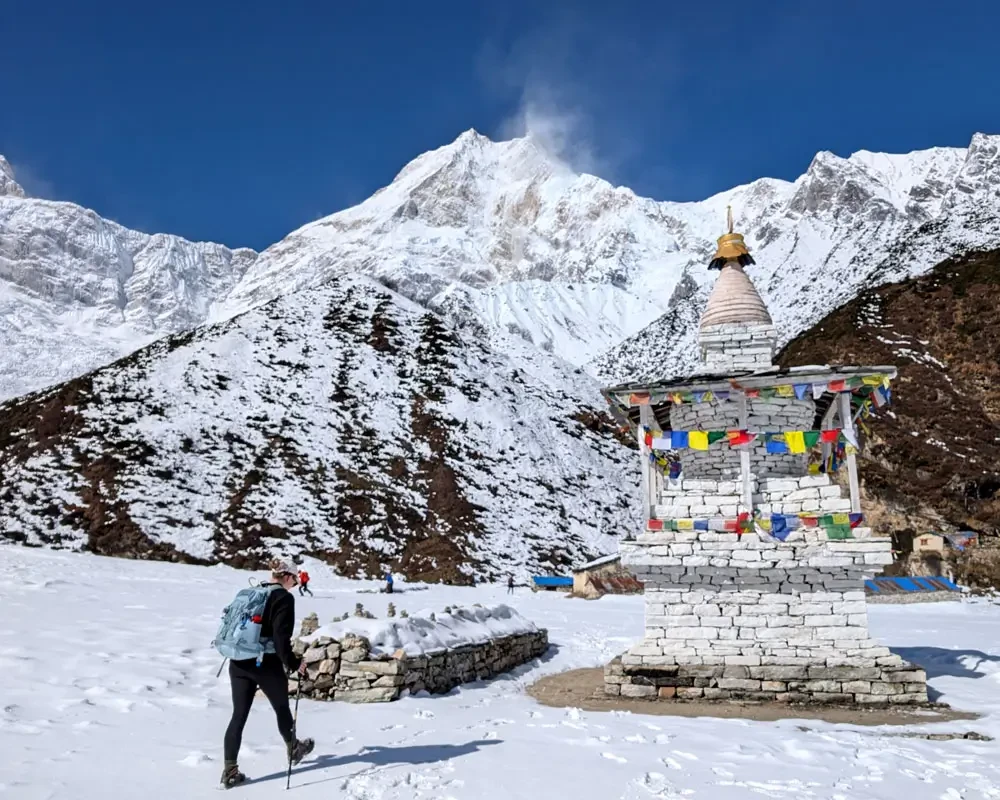
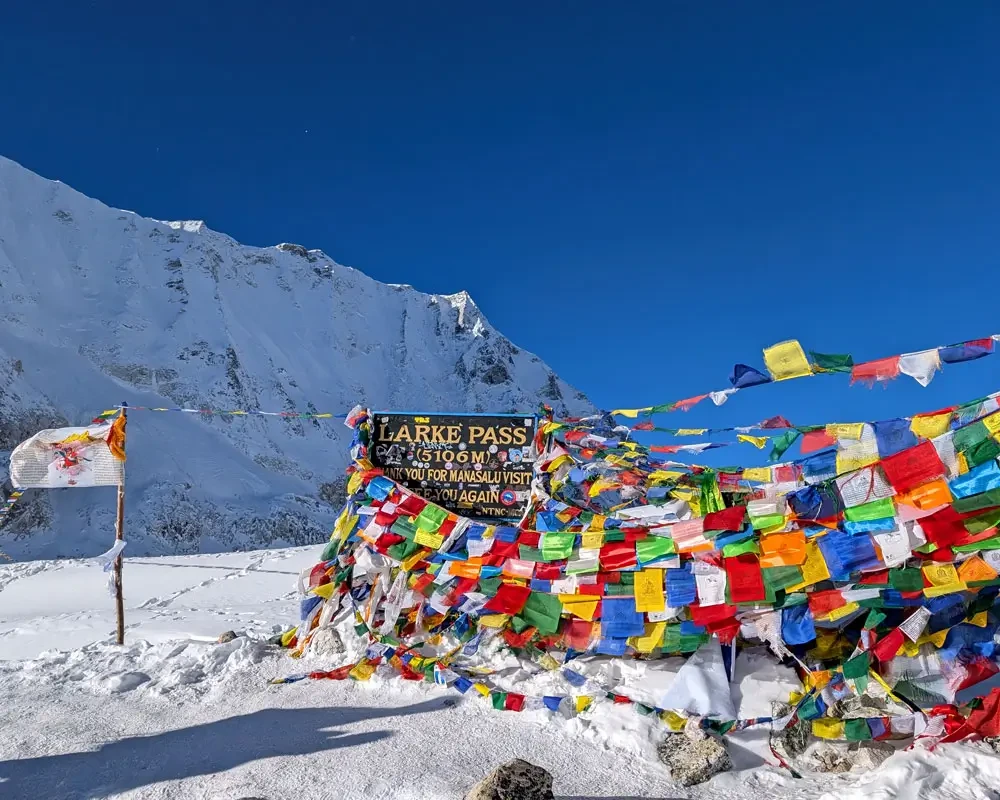
As the route climbs higher toward Shyala, Samagaun, and Samdo, the altitude increases significantly, and the trekking becomes more demanding due to thinner air and colder conditions. One of the key challenges here is the hike to Manaslu Base Camp (4,980 meters), followed by continued acclimatization in high-altitude terrain before crossing Larkya La Pass (5,106 meters). This pass day is one of the most physically intense sections of the entire Manaslu Circuit due to its long duration, steep ascent, and extreme elevation.
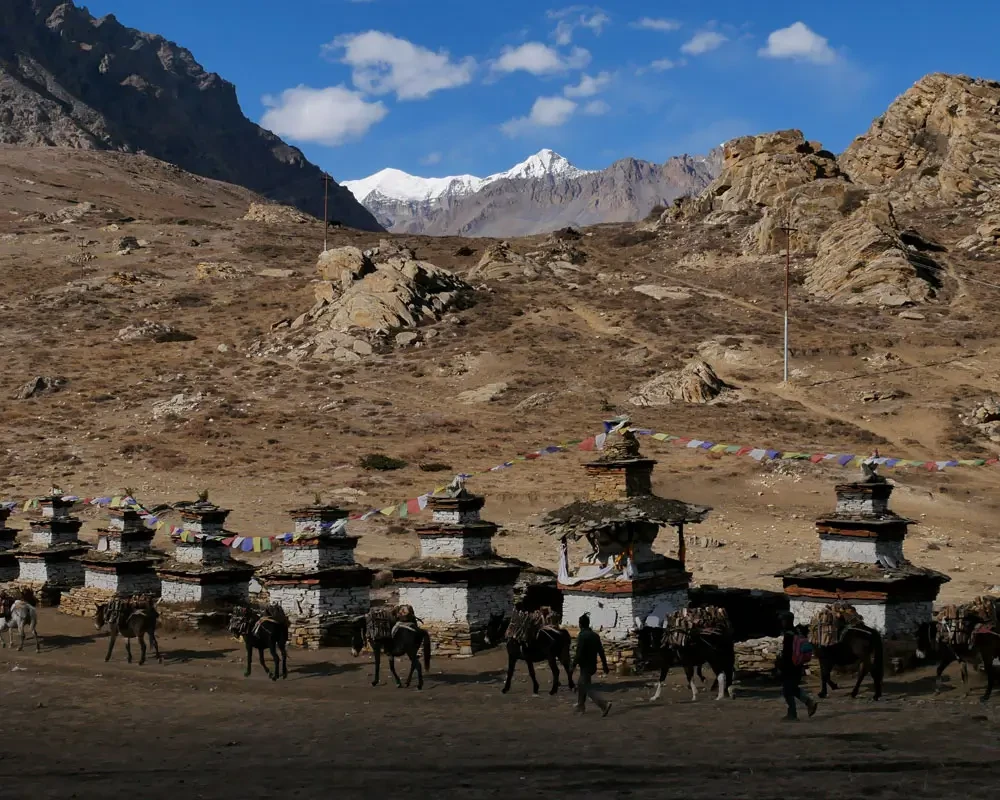
Here onwards, the trek continues into the Nar Phu Valley section, which introduces a new level of difficulty. From Koto to Meta, and then onward to Phu village, the trails become more remote, less developed, and physically demanding, with longer walking hours and fewer settlements along the way.
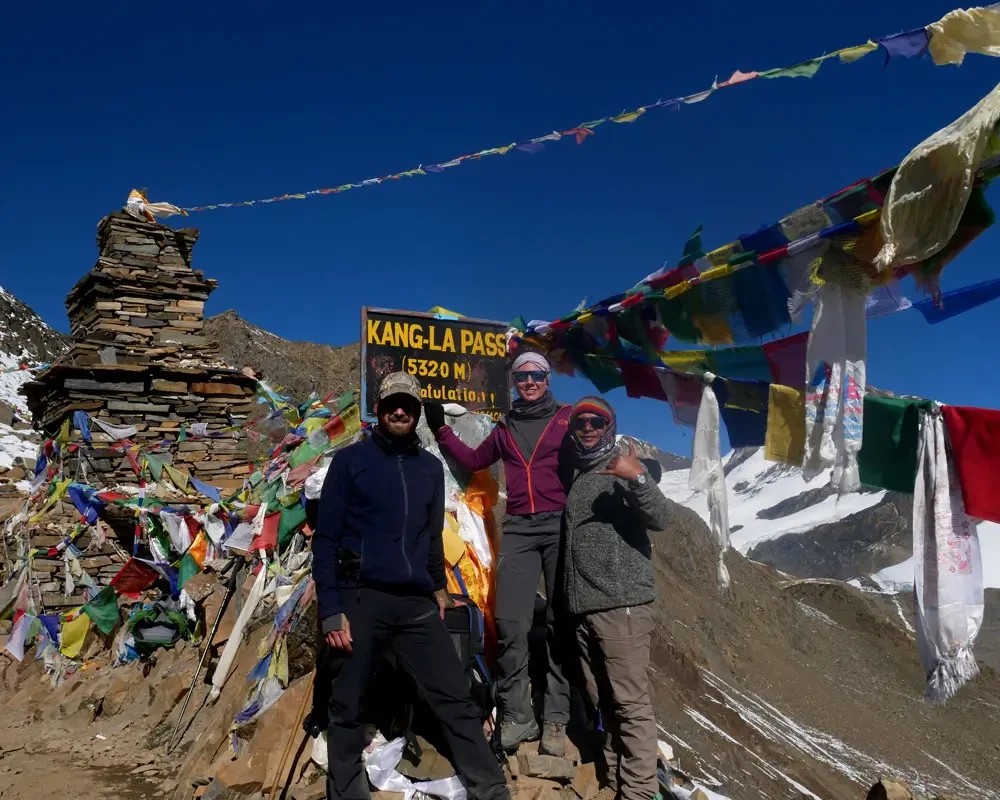
The Nar Phu section also includes a side trip to Himlung Base Camp (4,920 meters) and a high crossing of Kang La Pass (5,320 meters). This part of the trek is particularly challenging due to its isolation, rugged terrain, and significant altitude gain in a short period of time.
Overall, the difficulty of this trek comes from a combination of factors:
- Long trekking duration (over 3 weeks)
- Consecutive 6 to 9-hour trekking days
- Two major high passes above 5,000 meters
- Remote and less-developed trails in Nar Phu Valley
- High altitude exposure with limited infrastructure
However, the trek does not require technical climbing skills. With proper physical fitness, strong endurance, and good acclimatization days built into the itinerary, most experienced trekkers can complete it successfully. The structured progression of the route, especially the acclimatization stop in Samagaun, helps the body adjust before the most demanding sections.
Altitude Sickness Risks and Acclimatization Guide For Manaslu Circle with Nar Phu Trek
Altitude sickness is one of the most important considerations on the Manaslu Nar Phu Valley Trek, as the route consistently rises above 3,000 meters and crosses major high passes such as Larkya La Pass (5,106 meters) and Kang La Pass (5,320 meters). At these elevations, oxygen levels decrease significantly, and the body needs time to adjust, making acclimatization a critical part of a safe trekking experience.
Altitude sickness, also known as Acute Mountain Sickness (AMS), can affect you when ascending too quickly without proper rest at higher elevations. Common symptoms here include headache, dizziness, nausea, loss of appetite, fatigue, and difficulty sleeping. In more severe cases, conditions such as HAPE (fluid in the lungs) or HACE (swelling in the brain) can occur, which require immediate descent and medical attention.
Our itinerary for this trek is designed with natural acclimatization built into the journey. Key rest and adaptation points, such as Samagaun and Samdo in the Manaslu region, allow your body to adjust gradually before attempting Larkya La Pass. A major acclimatization hike to Manaslu Base Camp (4,980 meters) also helps improve oxygen adaptation before the highest crossing.
After entering the Nar Phu Valley, the terrain becomes more remote and steadily gains altitude again toward Phu village and Kang La Pass. Thus, you are encouraged to follow the “climb high, sleep low” principle wherever possible, and also maintain a slow walking pace and stay well hydrated throughout the journey.
During this journey, you need to acclimatize properly, avoid alcohol, maintain hydration, and recognize early symptoms. Most importantly, you must communicate any discomfort to your guide. Also, our local guides carry pulse oximeter and Diamox with them to help with any alitude-related emergencies.
With the right pacing and awareness, you successfully complete the Manaslu Circuit Nar Phu Valley without serious altitude issues.
The Best Time, Season, And Month For The Manaslu Nar Phu Valley Trek
Why Are Autumn And Spring The Prime Trekking Seasons In Nepal?
Autumn and spring are widely considered the best trekking seasons in Nepal because they offer the most reliable weather, safest trail conditions, and the clearest Himalayan visibility across both the Manaslu and Nar Phu regions.
Spring (March to May) is ideal if you want a mix of comfortable weather, vibrant landscapes, and cultural richness. During this season, temperatures remain moderate, and the trails are mostly dry, making long trekking days more comfortable. The hills and valleys come alive with rhododendron blooms, especially in the Manaslu Conservation Area and lower Nar Phu sections.
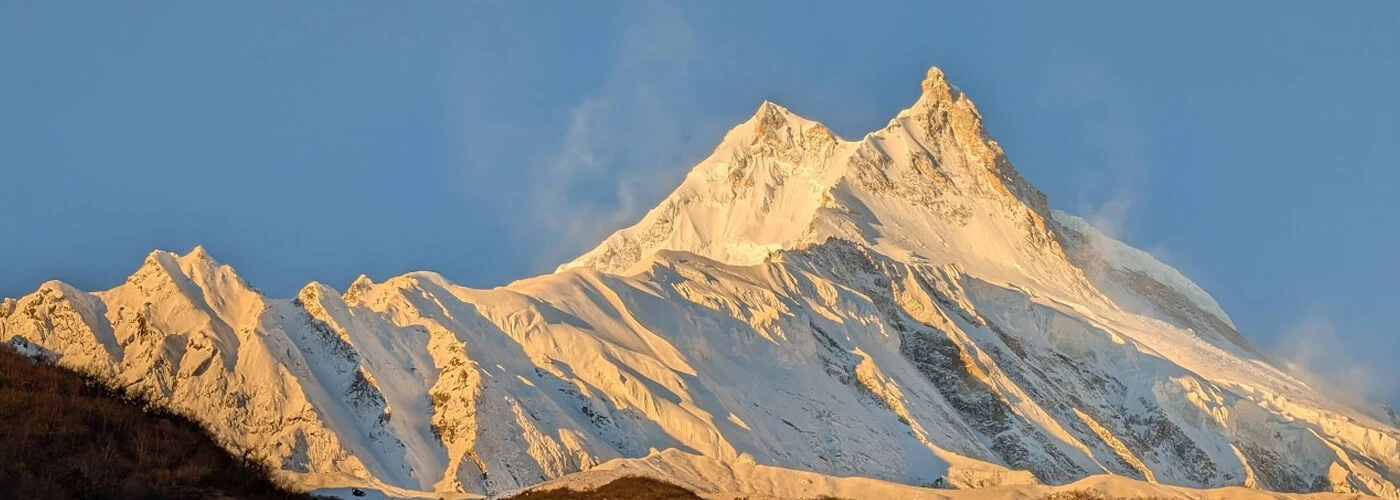
Wildlife activity also increases, with chances to spot Himalayan langur monkeys, red pandas, Himalayan blue sheep, marmots, and a variety of alpine birds along the route. One of the highlights of spring is the cultural atmosphere, as Tibetan Buddhist festivals such as Saga Dawa are celebrated in villages like Shyala and Samagaun. Mountain visibility is also excellent, with clear views of Manaslu, Himalchuli, and Ganesh Himal ranges, especially in the early mornings.
In the Nar Phu Valley during spring, March brings a dramatic contrast of lingering snow at higher elevations, while lower sections begin to show early spring life with budding flowers and stronger river flows.
April is the peak of the season, when trails are covered in full rhododendron bloom, and villages become active again after winter. By May, the entire route is fully open, with snow-free passes, longer daylight hours, lush green valleys, and frequent sightings of wildlife such as Himalayan tahr, blue sheep, marmots, and soaring lammergeiers.
Autumn (September to November), on the other hand, is known for delivering the most stable and crystal-clear trekking conditions in Nepal. The weather is cool, dry, and highly predictable, making it the most reliable season for crossing high passes like Larkya La and Kang La. The skies are exceptionally clear, offering uninterrupted views of Manaslu, Himalchuli, Ganesh Himal, Kang Guru, Himlung Himal, and the Annapurna range throughout the journey.
Early autumn in September begins with lush green landscapes left behind by the monsoon, flowing waterfalls, and gradually improving trail conditions. Wildlife such as Himalayan blue sheep, marmots, and migratory birds like Himalayan griffon vultures and blood pheasants become more active as the season stabilizes.
By October, conditions reach their peak with perfect trekking weather and a festive atmosphere during celebrations like Dashain and Tihar in nearby regions. This is also the best time to attempt Kang La Pass and side trips like Himlung Base Camp due to stable weather and excellent visibility. November brings quieter trails, colder temperatures, golden lighting for photography, and continued clear mountain views.
Can You Trek The Manaslu Nar Phu In Winter Or Monsoon Seasons?
The Manaslu Nar Phu trekking route is not recommended during monsoon and winter seasons due to extreme weather conditions, high-altitude risks, and limited accessibility in both regions.
During the monsoon season (June to August), heavy rainfall affects the lower sections of the trail, particularly around the Budhi Gandaki Valley in the Manaslu region. Trails often become muddy, slippery, and prone to landslides, which can disrupt trekking routes and transportation access. River crossings become more challenging, and continuous rainfall reduces visibility of the Himalayan peaks.
In addition, leeches and humidity in forested areas can make trekking uncomfortable. Although Nar Phu lies in a rain-shadow region and receives less rainfall, reaching it still requires passing through monsoon-affected zones.
In the winter season (December to February), the challenge shifts from rain to extreme cold and heavy snowfall. High-altitude areas experience freezing temperatures and deep snow accumulation. These conditions can block passes entirely, making certain sections impassable or highly dangerous without specialized winter mountaineering experience.
Teahouses in higher regions may close, and long trekking days in sub-zero temperatures increase the risk of altitude-related complications and frostbite. While the lower regions of Manaslu and some parts of Nar Phu may still be accessible, the complete circuit experience is often not feasible.
Because of these challenges, both monsoon and winter seasons are generally avoided for the Manaslu Nar Phu trek. The route is best experienced in spring and autumn.
Food Options In Manaslu And Nar Phu Valley
Food on the Manaslu Circuit With Nar Phu Valley Trek is simple, freshly prepared, and designed to provide the energy required for long trekking days across high-altitude terrain. While menus vary slightly from village to village, especially as you move into more remote areas like Nar Phu Valley, the overall food structure remains consistent and centered around warm, carbohydrate-rich meals.
Across the entire route, breakfast options generally include a combination of eggs (omelet, boiled, fried, or scrambled), Tibetan bread, chapati, pancakes, porridge (oats or corn-based), muesli, toast with jam or peanut butter, and seasonal fruits where available. These are paired with hot beverages such as tea and coffee to start the day with warmth and energy.
For main meals, the most important staple throughout the trek is dal bhat, Nepal’s traditional energy-rich dish. It consists of steamed rice served with lentil soup, seasonal vegetable curries, pickles (achar), and sometimes greens or potatoes. What makes dal bhat especially valuable is that it is nutritious, refillable, and balanced with carbohydrates, protein, and essential nutrients. It is the most reliable fuel source at high altitude. It is often described locally as “dal bhat power, 24 hours,” reflecting its ability to keep you energized for long days on the trail.
Alongside dal bhat, you also find a wide range of filling lunch and dinner options such as momo (steamed or fried dumplings filled with vegetables or meat), thukpa (Tibetan noodle soup rich with vegetables and broth), chowmein (stir-fried noodles), fried rice, vegetable curry with rice or chapati, pasta, and sometimes simple Western-style dishes like pizza or potatoes prepared in different styles in larger villages. In higher and more remote sections, menus become simpler but still focus on warm, energy-dense meals.
Beverages are also widely available throughout the trek and include black tea,milk tea, ginger tea, lemon tea, and herbal teas, all of which are especially popular in colder sections of the route. Coffee is also available in most tea houses, though it is typically instant-style.
In addition, you can find soft drinks, soda, bottled water, and occasionally juice or cold drinks in lower and mid-altitude villages, while higher regions tend to focus more on hot beverages due to the cold climate. In traditional areas like Nar Phu, you may also encounter yak butter tea, a salty, calorie-rich drink that is deeply rooted in Tibetan-influenced mountain culture.
Because this is a long and physically demanding high-altitude trek, we highly recommend you to carry personal snacks such as energy bars, chocolate, nuts, dried fruits, and trail mix. These provide quick energy boosts when needed and help maintain stamina during steep ascents or remote sections.
One of the key advantages of trekking with us is that most dietary preferences can be accommodated with prior notice. Whether you are vegetarian, vegan, gluten-intolerant, or have specific food allergies, your guide can communicate your requirements to tea house kitchens in advance. While options may be limited in very remote villages, local cooks are generally flexible and willing to adjust meals based on available ingredients and dietary needs.
Is Safe Drinking Water Easily Available Along The Route?
Yes, safe drinking water is available throughout the trekking route, but the method of access changes as you move from lower villages to higher and more remote Himalayan settlements.
In the lower and mid-altitude regions such as Machha Khola, Jagat, Deng, and Namrung, you can find bottled water, boiled water, and refill options at tea houses. As the trek progresses toward higher villages like Samagaun, Samdo, and further into the Nar Phu Valley, bottled water becomes less frequent, and the safest drinking water is provided either as boiled water in tea houses or from natural sources.
While bottled and boiled water is available throughout the route, it is important to note that both can become expensive over time, especially at higher altitudes where transportation is difficult and supply costs increase. Over a long trek like this, the daily cost of purchasing bottled water or repeatedly paying for boiled water can gradually add up.
Because of this, the most practical and sustainable option for you is to use water purification methods such as purification tablets, portable filters, or UV sterilizers. These allow you to safely treat natural water sources along the trail, making it a more cost-effective and environmentally friendly solution for the entire journey.
In more remote sections like Phu, Nar, and near Kang La Pass, where access to treated water is limited, carrying a reliable purification method becomes especially important.
Tea House Accommodation Options During Manaslu Circuit And Nar Phu Route
Accommodation on the Manaslu Circuit and Nar Phu Valley trail is based on traditional Himalayan tea houses that offer a simple, warm, and culturally immersive stay throughout the journey. As both regions pass through remote mountain villages and high-altitude settlements, lodging gradually becomes more basic with increasing elevation, but always remains welcoming and functional for you.
In the Manaslu Circuit region, tea house rooms are generally simple but comfortable enough for resting after long trekking days. Most rooms are twin-sharing, furnished with basic wooden beds, foam mattresses, pillows, and thick blankets. The interiors are minimal, often with wooden or stone walls, small windows, and very limited insulation.
At lower elevations such as Jagat or Namrung, rooms may feel slightly more developed and sometimes offer better bedding or extra blankets, but as you ascend toward places like Samagaun and Samdo, facilities become more basic and colder at night. Heating inside individual rooms is generally not available, so you rely on layered clothing and sleeping bags for warmth.
In the Nar Phu Valley region, accommodation becomes even more remote and rustic, reflecting the isolated nature of the valley. Rooms are simple, often built with stone and wood, and designed strictly for shelter and rest. You still find twin-sharing beds and basic mattresses, but the interiors are more minimal compared to the Manaslu side.
At lower points of Nar Phu, such as Koto or Meta, there may be slightly better comfort with occasional electricity or limited modern touches, but as you move higher into Phu and Nar villages, rooms become colder and more basic, with no heating and limited insulation against the mountain climate.
Despite these differences, both regions share one essential and important feature: the communal dining hall experience. In both the Manaslu Circuit and Nar Phu Valley, the dining hall is the central gathering space of each tea house. It is the only heated indoor area in most lodges, warmed by a stove or fireplace, and serves as the place where you eat, relax, and socialize after trekking hours.
What Facilities Can You Expect In Remote Himalayan Tea Houses?
Bathroom And Toilet Facilities In Manaslu And Nar Phu Region
Bathroom facilities are basic and shared. Most tea houses provide common toilets, which are typically squat-style, while western-style toilets are more common in lower villages. As you move higher into remote regions such as Samdo, Dharamshala, Phu, and Nar, squat toilets become the standard.
Private bathrooms are generally not available anywhere along the route. As for the hygiene standards, they vary depending on altitude and water availability, so carrying essentials like toilet paper, sanitizer, and wet wipes is strongly recommended. These facilities are simple but functional.
Hot Shower Availability On The Trek
Hot showers are available in select villages, especially in lower and mid-altitude sections of the trek, but they become less frequent as altitude increases. In accessible areas, hot water is usually provided through gas or solar heating systems for an additional cost.
However, in higher villages such as Samagaun, Samdo, Phu, and Nar, hot showers are often unavailable or inconsistent due to limited fuel resources and extreme temperatures. In these sections, you commonly have to rely on bucket baths with heated water when available or simply skip showers for a few days. This is a normal part of high-altitude trekking in remote Himalayan regions.
WiFi And Mobile Connectivity Along The Route
WiFi and mobile network access are limited throughout the Manaslu and Nar Phu regions. In lower villages, some tea houses may offer basic WiFi services, but speeds are slow, and connectivity is unreliable.
As you ascend toward higher settlements, especially in Nar Phu Valley and the upper Manaslu areas, network coverage becomes weak or completely unavailable. Mobile signals may appear occasionally in certain points, but cannot be depended on for regular communication. You generally experience a natural digital disconnect.
Electricity And Charging Facilities In Tea Houses
Electricity is available in most villages along the route, but it is limited and often dependent on solar power or small local systems. Lower regions generally have a more stable supply, while higher altitude villages experience frequent fluctuations or reduced availability.
Charging electronic devices such as phones, cameras, or power banks is usually possible in tea houses, but it comes at an additional cost that increases with altitude. Because of these limitations, you should carry a high-capacity power bank or backup charging solution.
How Do You Get To The Trailhead: Transportation Options & Cost Guide
Your journey begins with the drive from Kathmandu to Machha Khola, the official starting point of the trek. This scenic but rugged journey covers approximately 157 kilometers and usually takes 8 to 9 hours, depending on road conditions, weather, and traffic. Along the way, you pass through traditional villages, terraced farmland, fast-flowing rivers, and dramatic mountain valleys that offer an authentic glimpse into rural Nepal.
For this section, you have two transportation options: the local bus and a private jeep.
The local bus is the most budget-friendly option, costing around USD 10 per person and is commonly used by both trekkers and locals. While affordable, it is important to know what to expect. Buses are often crowded, especially during peak travel periods, with limited legroom and narrow seating. Frequent stops are made to pick up and drop off passengers, load supplies, and take meal breaks, which can significantly extend travel time. However, if you are seeking a more local and authentic Nepalese travel experience, it offers a fascinating window into everyday life in the hills.
On the other hand, a private jeep is the most comfortable and convenient option for reaching Machha Khola and it costs USD 200 for a jeep. Although the cost is higher, it is usually shared among group members.
Compared to the local bus, a private jeep provides significantly more legroom, cushioned seating, luggage space, fewer passenger stops, and a much more flexible schedule. The journey is generally faster and more comfortable, particularly on rough mountain roads where the jeep's suspension and four-wheel-drive capability make a noticeable difference. It is the preferred choice if you want to arrive fresher and more relaxed before beginning several weeks of trekking.
Later, after completing both the Manaslu Circuit and Nar Phu Valley sections, your return journey starts from Ngawal or Humde.
This section is typically completed by a shared jeep, as public transportation options are extremely limited in the area. The drive covers approximately 98 kilometers and takes around 6 hours, costing NRs 3,500 per person. Here, you wind through mountain roads, deep valleys, riverside settlements, and agricultural terraces.
The route is rugged and includes sections of rough off-road terrain, river crossings, and narrow mountain tracks. While the ride can be bumpy, the constantly changing scenery helps make the journey enjoyable. You can expect spectacular views of valleys, forests, waterfalls, and traditional villages as you gradually descend from the high Himalayas.
From Besisahar, you can either return to Kathmandu or continue to Pokhara, depending on your travel plans.
A local bus costs approximately NPR 1,000 per person and remains the most economical option. Similar to the Kathmandu to Machha Khola bus journey, it can be crowded, slower, and involves multiple stops along the highway.
For greater comfort and flexibility, you can opt for a private jeep transfer. Private vehicles offer more personal space, faster travel times, direct hotel drop-offs, and the flexibility to stop whenever needed for meals, photos, or rest breaks.
Practical Travel Information For The Manaslu Circuit Nar Phu Trek
Travel Insurance Requirements
Travel insurance is a mandatory and essential part of the Manaslu and Nar Phu Valley Trek due to the remote terrain, high altitude, and limited access to medical facilities along the route. This journey crosses restricted and high-altitude regions such as Larkya La Pass and Kang La Pass, where emergency support is limited and evacuation options are primarily dependent on helicopters.
A comprehensive travel insurance policy for this trek must specifically cover high-altitude trekking above 5,000 meters, as many standard travel insurance plans exclude coverage beyond certain elevations. It should also include emergency helicopter evacuation, which is the most important safety requirement in case of altitude sickness, injury, or unforeseen weather-related emergencies.
In addition to high-altitude coverage, the insurance should ideally include protection for medical treatment, hospitalization, trip cancellation or interruption, baggage loss, and travel delays, as transportation in this region can be affected by weather, landslides, or road conditions. Since both Manaslu and Nar Phu regions are classified as restricted trekking areas, having valid insurance is also often required by trekking agencies before permit processing and trip confirmation.
It is strongly recommended to verify the policy wording carefully before purchasing, ensuring that trekking in Nepal’s restricted and high-altitude zones is clearly included. Policies that only cover trekking up to lower elevations are not suitable for this journey.
Before starting the trek, you should provide your insurance details to the trekking agency or guide, including emergency contact numbers and policy documents.
Nepal Visa Requirements For Trekkers
You are required to obtain a valid Nepal entry visa. The visa process is straightforward and can be completed upon arrival at Tribhuvan International Airport in Kathmandu or at designated land border entry points.
Nepal offers a Tourist Visa on Arrival, which is the most common option for trekkers. It is available for multiple durations, typically 15, 30, or 90 days, depending on your travel plan. Since the Manaslu and Nar Phu combined trek is a longer expedition, you can choose the 30-day or 90-day visa to ensure sufficient time for trekking, acclimatization, and travel flexibility.
To apply for the visa on arrival, you must carry a valid passport with at least six months of validity, a completed arrival form (which can also be filled out online in advance), and the applicable visa fee in USD or other accepted foreign currency. The process at the airport is generally efficient, although queues may be longer during peak trekking seasons such as autumn.
For most trekkers, the visa cost structure is approximately USD 30 for 15 days, USD 50 for 30 days, and USD 125 for 90 days. These fees may vary slightly depending on official updates, so it is always recommended to check the latest Nepal Immigration guidelines before travel.
Once issued, the visa allows multiple entries within its validity period, which is useful if your travel itinerary includes entry and exit adjustments or side trips before or after the trek. Visa extensions are also possible through the Department of Immigration in Kathmandu if additional trekking or travel time is required.
It is important to ensure that your visa duration covers the entire trekking period, including buffer days for weather delays, road conditions, or acclimatization.
Currency, Money Exchange, Digital Payments & ATMs In Nepal
Nepal uses the Nepalese Rupee (NPR) as its official currency, and it is the primary medium of exchange. While Kathmandu offers full financial convenience with banks, exchange counters, and ATMs, access becomes increasingly limited as you move toward remote trekking regions.
Currency exchange is widely available in Kathmandu and Pokhara, where licensed money exchange counters and banks offer competitive rates for major currencies such as USD, EUR, and GBP. It is recommended to exchange your money in the city before beginning the trek, as exchange services are not available in the trekking villages along the Manaslu and Nar Phu routes. You should also carry small denominations of NPR.
As for the ATMs, they are easily accessible in Kathmandu, but their availability becomes extremely limited once you leave the city. On the trekking route itself, ATM access is unreliable or non-existent in most sections. Even in larger trail towns such as Besisahar, ATM reliability can vary. For this reason, you are strongly advised to withdraw sufficient cash in Kathmandu before starting the trek.
Also, digital payment systems such as mobile wallets, credit cards, or international payment apps are generally not accepted along the trekking route. While some hotels, restaurants, and shops in Kathmandu and Pokhara may support card payments, the trekking region operates almost entirely on a cash-only basis.
Because of this limited financial infrastructure in the mountains, carrying cash in a secure and organized manner is essential. It is also advisable to keep emergency backup cash separately in case of unforeseen delays or route changes.
Why Book The Manaslu Circuit With Nar Phu Valley Trek With Nepal Trekking Experts?
Choosing the right trekking company plays a crucial role in shaping your experience on a remote and demanding journey. With long trekking days, high-altitude passes, and restricted-area regulations, having an experienced and reliable team ensures both safety and a smooth overall adventure.
Nepal Trekking Experts brings deep local expertise to the journey, with guides and porters who are born and raised in the Himalayan regions, giving them first-hand knowledge of the trails, weather patterns, villages, and altitude conditions. This local insight becomes especially valuable in remote sections where conditions can change quickly, and decisions must be made with experience rather than assumption.
Our company is registered and certified by TAAN, the Nepal Tourism Board, and the Nepal Mountaineering Association (NMA), ensuring that all operations follow official safety and trekking standards in Nepal. In addition, the team is trained in high-altitude safety, first aid, and emergency response, with continuous training to stay updated on mountain safety protocols.
Also, we feature real traveler feedback with strong 5-star ratings on platforms like TripAdvisor, based on genuine trekking experiences across Nepal’s major Himalayan routes. These reviews highlight our consistent service quality, guide professionalism, and reliable trip management in remote conditions.
On the trail, we maintain strong local relationships with tea houses and village hosts; thus, we are able to ensure better coordination for accommodation, meals, and logistics, even in the most remote settlements of Manaslu and Nar Phu.
Similarly, our itinerary is also carefully designed with proper acclimatization, balanced trekking pace, and built-in buffer days, helping you adjust safely to altitude changes while maintaining a rewarding trekking rhythm. This is especially important on a combined route that covers two high-pass crossings and extended remote valley exploration.
To support trekkers, we also offer essential gear such as sleeping bags, down jackets, trekking poles, and crampons when needed, without unnecessary extra cost or hassle.
Now, communication is our other key strength, with quick responses to inquiries, clear pre-trek guidance, and flexible options between group departures and private trekking arrangements.
Most importantly, we follow a transparent pricing approach with no hidden costs, ensuring that you can focus entirely on the journey without unexpected financial surprises along the way.
Packing List For The Manaslu Circuit And Nar Phu Trek
Clothing:
- Moisture-wicking base layers (thermal tops and bottoms)
- Insulating mid-layers such as fleece or down jackets
- Waterproof and windproof outer shell jacket and pants
- Lightweight trekking shirts (quick-dry)
- Trekking trousers (convertible or quick-dry)
- Warm insulated jacket (down or synthetic)
- Warm hat/beanie
- Sun hat or cap
- Thermal gloves (light and heavy pair recommended)
- Warm socks (multiple pairs, wool or thermal)
- Buff or neck gaiter
- Sleepwear
Footwear:
- Waterproof trekking boots with good ankle support
- Comfortable trekking socks (wool or synthetic blend)
- Lightweight camp shoes or sandals
Gear:
- Backpack (30 to 40L for daily use)
- Duffel bag (carried by porter if using one)
- Sleeping bag (rated for sub-zero temperatures)
- Trekking poles
- Headlamp with extra batteries
- Reusable water bottles or hydration bladders
- Water purification tablets or a filter system
- Sunglasses with UV protection
- Sunscreen and lip balm (high SPF)
- Power bank or solar charger
- Basic first aid kit (personal medication included)
Personal Items:
- Passport and permits (copies recommended)
- Cash in Nepalese Rupees (small denominations)
- Quick-dry towel
- Toiletries (toothbrush, toothpaste, biodegradable soap)
- Wet wipes and hand sanitizer
- Toilet paper
- Personal medication and altitude sickness medication, if prescribed
- Lightweight snacks (energy bars, nuts, dried fruits)
 based on 1 review