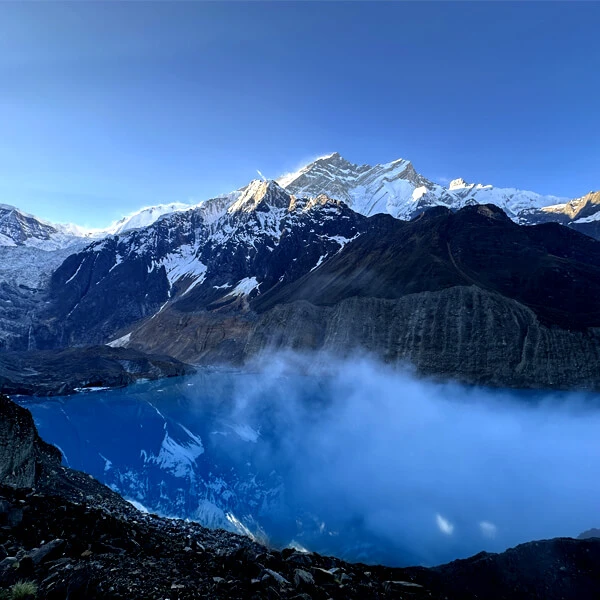
North Annapurna Base Camp Trek

Maurice Herzog Trailratingbased on 1 review
  • Duration9 Days
  • Difficulty Level Moderate
  • Activity Trekking/Hiking
  • Max. Altitude 4,190 meters / 13,746 feet
  • Starts Kathmandu
  • Ends Kathmandu
  • Group Size 1-12
  • Best Season March to May and September to November
Group Discount Prices
  
1 paxUS$845
2 - 3 paxUS$690
4 - 7 paxUS$645
8 - 12 paxUS$590
North Annapurna Base Camp Trek Highlights
  • Trek to the remote North Annapurna Base Camp (4,190 meters) beneath the towering north face of Annapurna I (8,091 meters), the world's tenth-highest mountain.
  • Follow the historic Maurice Herzog Trail, tracing the legendary route of the 1950 French expedition that achieved the first successful ascent of an 8,000-meter peak.
  • Marvel at the crystal-clear turquoise waters of the sacred Panch Kunda Lake, surrounded by glaciers, rugged cliffs, and dramatic Himalayan panoramas.
  • Escape the crowds on one of Nepal's least-visited trekking routes, offering a peaceful alternative to the Everest Base Camp, Annapurna Base Camp, Annapurna Circuit, and Langtang Valley treks.
  • Experience an authentic Himalayan camping adventure beneath star-filled skies in an untouched alpine wilderness where permanent tea houses are absent.
  • Walk through lush rhododendron, oak, and pine forests alive with birdsong, cascading waterfalls, alpine meadows, and pristine mountain streams.
  • Witness breathtaking views of the Annapurna massif, including Annapurna I, along with neighboring Himalayan giants that dominate the northern skyline.
  • Journey from subtropical valleys to high alpine terrain within just a few days.
  • Immerse yourself in the warm hospitality and rich cultural traditions of the Thakali communities in the Kali Gandaki Valley.
  • Disconnect completely from phone calls, Wi-Fi, social media, and everyday distractions as you reconnect with nature in one of the Annapurna region's most secluded corners.
  • Relax your muscles in the natural Tatopani Hot Springs after completing the trek.
  • Travel through scenic mountain roads, remote valleys, and hidden trails rarely visited by mainstream trekkers, revealing a quieter side of the Annapurna region.
  • Capture exceptional photography opportunities featuring glacial lakes, waterfalls, dense Himalayan forests, dramatic moraines, and the imposing north face of Annapurna I.

Annapurna North Base Camp Trek Overview

The Annapurna North Base Camp Trek, also known as the Maurice Herzog Trail, is a remote camping trek in Nepal's Annapurna region that follows the historic route to Annapurna I North Base Camp (4,190 meters). Situated within the Annapurna Conservation Area, this off-the-beaten-path adventure leads to the foot of  (Annapurna I 8,091 meters), the world's tenth-highest mountain and the first mountain above 8,000 meters ever successfully climbed. 

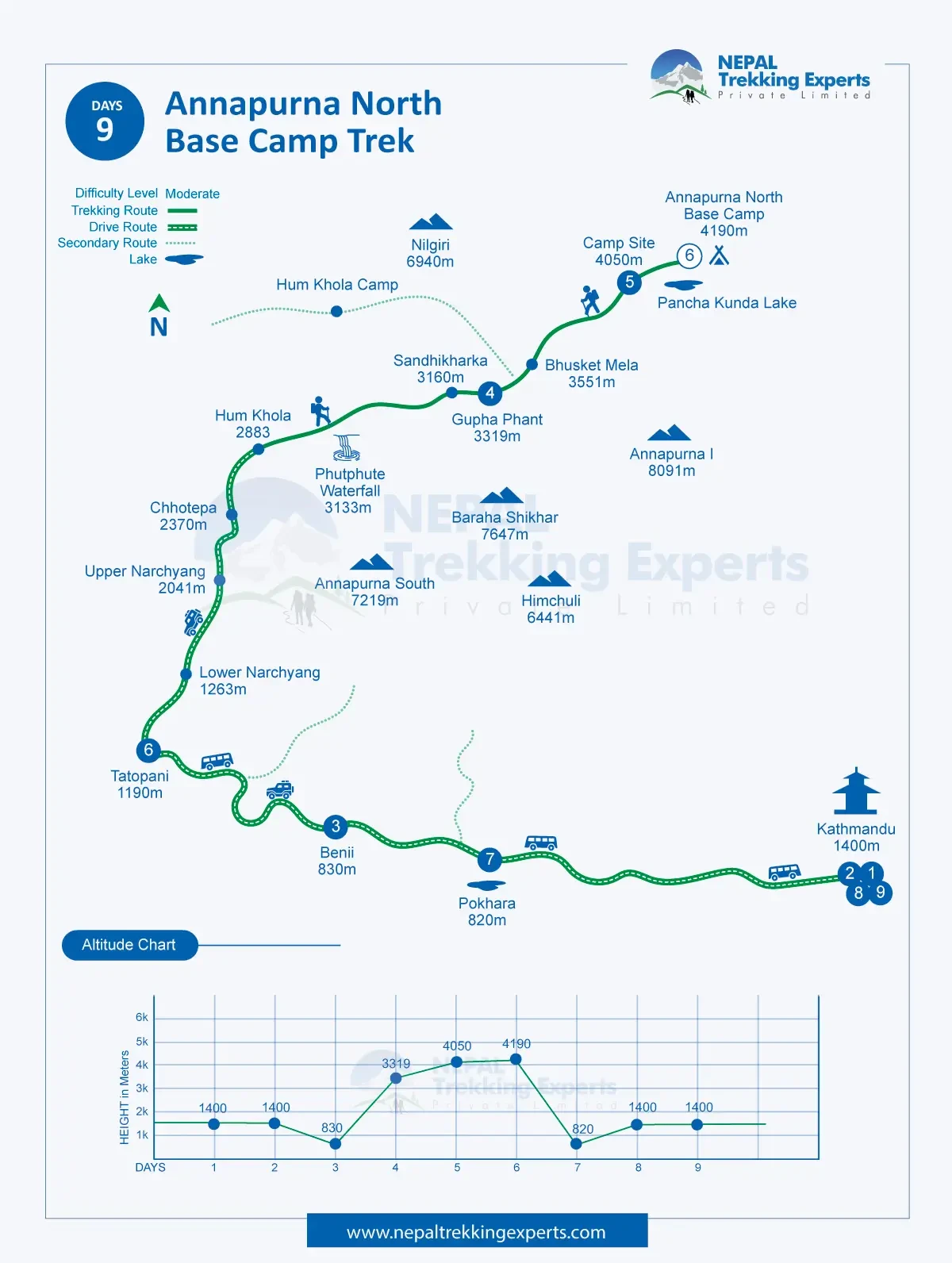
The trail begins with a scenic drive from Kathmandu to Beni before continuing to Narchyang, the gateway to Annapurna North, and onward to Hum Khola, where the trekking section starts. From here, the route leaves roads and settlements behind, following the Short Maurice Herzog Trail through dense rhododendron, oak, and pine forests, cascading waterfalls, rushing mountain rivers, and rugged alpine valleys. 

One of the first major highlights is the spectacular Phutphute Waterfall, where glacial water plunges into a deep rocky gorge beside a colorful suspension bridge draped with prayer flags. As you walk past, the thunder of the cascading water echoes through the valley while cool mist rises into the crisp mountain air. Every day brings a noticeable change in scenery as the trail climbs from lush lower hills into glacial landscapes dominated by the immense north face of Annapurna I.

This route carries extraordinary historical significance. In 1950, French mountaineers Maurice Herzog and Louis Lachenal, together with Nepali climber Ang Tharki Sherpa and their expedition team, approached Annapurna I from this very side of the mountain before making the first successful ascent of an 8,000-meter peak in human history. Their achievement marked a turning point in Himalayan mountaineering and established Annapurna I as one of the world's most legendary summits. 

Inspired by this historic expedition, Nepal's Ministry of Culture, Tourism and Civil Aviation, the Annapurna Conservation Area Project (ACAP), and the local community of Narchyang officially developed the trekking route in 2011. It allowed trekkers like you to experience the same remarkable landscape that shaped one of mountaineering's greatest achievements.

Along the journey through Narchyang and the lower Myagdi District, you experience the warm hospitality of local Magar, Thakali, and Gurung communities. If timed right, you may come across locals celebrating festivals such as Dashain, Tihar, Lhosar, and Maghe Sankranti.

Unlike Nepal's popular tea house routes, there are no permanent trekking villages or mountain lodges along the main trail beyond the roadhead. Instead, each night is spent in comfortable tents at designated campsites, with freshly prepared meals. Even twin-sharing private tents are limited and you will spend most of your nights usually at dormitory tents. However, we try to secure your twin-sharing private tents if and when available. Accommodation and facilities are intentionally basic, creating an authentic camping experience that lets you appreciate the Himalayas without the distractions of commercial trekking infrastructure.

Also, the destination itself is equally rewarding. At the foot of Annapurna I lies the sacred Panch Kunda Lake, which is a striking turquoise glacial lake surrounded by towering Himalayan peaks, including Nilgiri, Tilicho Peak, and Baraha Shikhar (Fang). Standing beside these crystal-clear waters beneath the dramatic north face of Annapurna I is a moment only a few trekkers experience, as this region remains one of the least-visited corners of the Annapurna Himal.

Beyond its spectacular scenery, the Annapurna North Base Camp Trek offers something increasingly rare in today's connected world: a genuine digital detox. Mobile networks quickly disappear after leaving the roadhead, Wi-Fi is unavailable along the camping section, and the absence of busy villages allows you to immerse yourself in nature without constant notifications or crowds.

Although the trek reaches an altitude of 4,190 meters, it is a relatively short Himalayan expedition that combines rich mountaineering history, remote camping, dramatic glacial scenery, and cultural encounters in the Narchyang and Myagdi region. 

Looking for a different Annapurna experience? If you prefer a classic tea house trek with lively mountain villages, consider the Annapurna Base Camp Trek. For a longer high-altitude adventure crossing the iconic Thorong La Pass, explore the Annapurna Circuit Trek.

Why Choose The North Annapurna Base Camp Trek Over The Popular Annapurna Base Camp Trek?

Stand Beneath Annapurna I (8,091 Meters), The World's Tenth-Highest Mountain

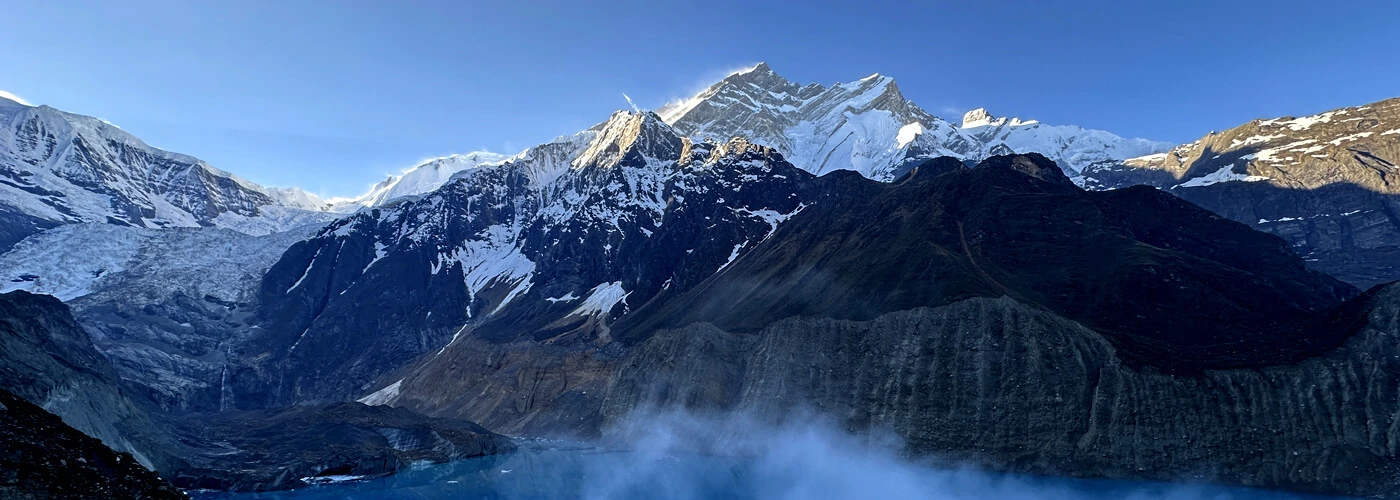
While thousands of trekkers visit the classic Annapurna Base Camp each year from the southern side, the North Annapurna Base Camp offers a completely different perspective, revealing the mountain's wild, rugged, and far less-explored northern face. As you approach the base camp, the landscape gradually transforms from forested hills and alpine meadows into glacial terrain, where towering rock walls, hanging ice formations, and vast moraines showcase the immense scale of the Himalayas.

This particular journey brings you into the heart of Annapurna I's northern amphitheater. Every step closer to North Annapurna Base Camp makes the mountain feel larger and more imposing, with its snow-covered ridges rising dramatically above the valley. The sheer size of the peak is difficult to comprehend until you are standing at its base, surrounded by glaciers, rugged cliffs, and the silence of an untouched alpine wilderness.

Here, the trail rewards you with constantly changing perspectives of the mountain. Early sections weave through dense rhododendron, pine, and oak forests before opening into high-altitude landscapes where the north face of Annapurna I dominates the skyline. Along the way, glacial streams, cascading waterfalls, and rugged river valleys create a dramatic approach that builds anticipation with every kilometer. By the time you reach base camp, the journey feels like entering the mountain's own world.

Standing beneath Annapurna I is visually rewarding and also deeply humbling. This is the very mountain that forever changed the history of Himalayan mountaineering. Knowing that the legendary 1950 French expedition once stood in this same valley adds another layer of meaning to the experience.

Follow The Historic Maurice Herzog Trail

The Maurice Herzog Trail is a journey through one of the most significant chapters in Himalayan mountaineering history. Long before this trail became a trekking destination, it served as the approach route for the 1950 French expedition led by Maurice Herzog, whose team pioneered the first successful ascent of an 8,000-meter mountain. 

Today, every step along this historic trail offers a rare opportunity to experience the same valleys, ridgelines, and glacial landscapes that once challenged some of the world's greatest mountaineers.

Here, the path winds through remote forests, river valleys, and alpine terrain with no modern development, allowing you to appreciate the landscape much as the early explorers did decades ago. The absence of commercial infrastructure and heavy foot traffic preserves the trail's authenticity, making it feel like a genuine Himalayan expedition.

The trail officially opened to trekkers in 2011. Beginning near Narchyang in Myagdi District and continuing toward North Annapurna Base Camp, the route follows the Short Maurice Herzog Trail, while the original approach from Lete and Kalopani remains part of the historic trail network. 

Walking on this trail invites you to reflect on the determination, resilience, and spirit of exploration that defined the earliest Himalayan expeditions. Every forest trail, glacial stream, and mountain campsite contributes to a narrative of the event that shaped modern mountaineering.

If you value history as much as Himalayan landscapes, the Maurice Herzog Trail offers an experience that few routes in Nepal can match.

Witness The Turquoise Panch Kunda Lake Beneath Annapurna's North Face

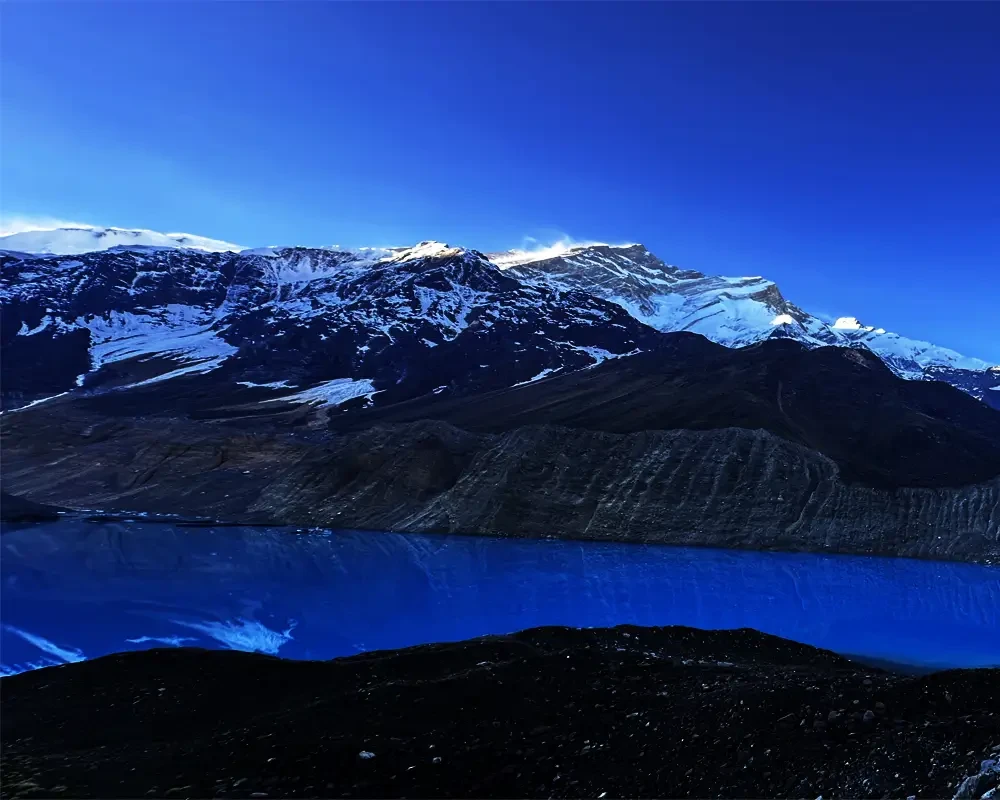
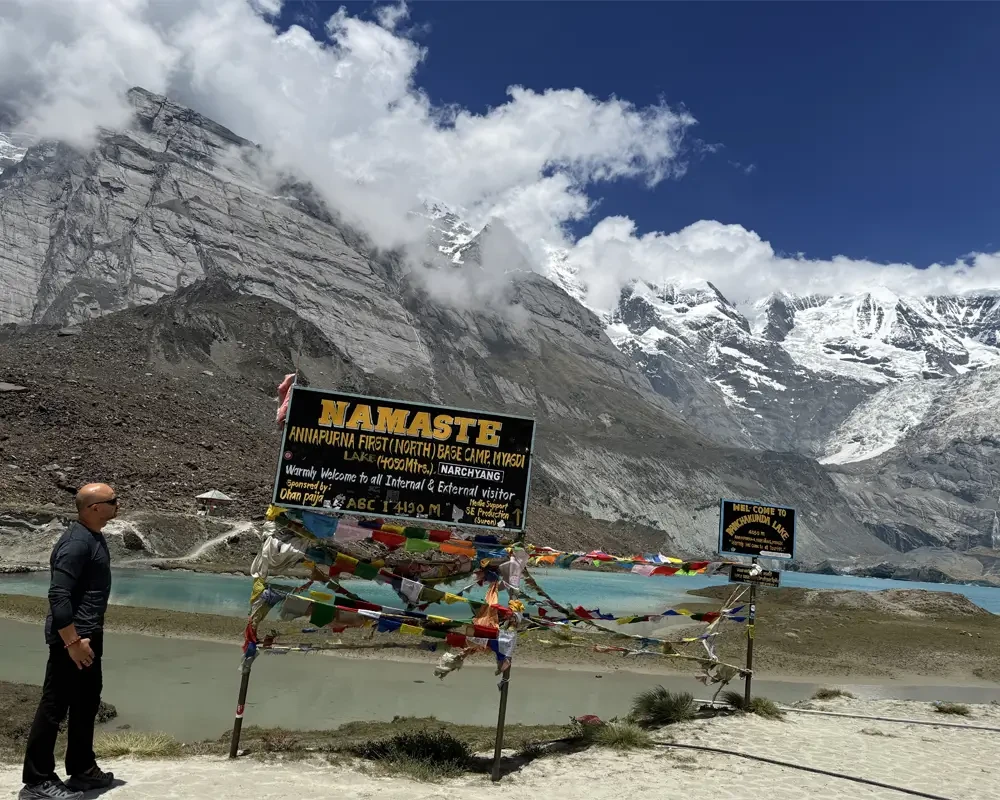
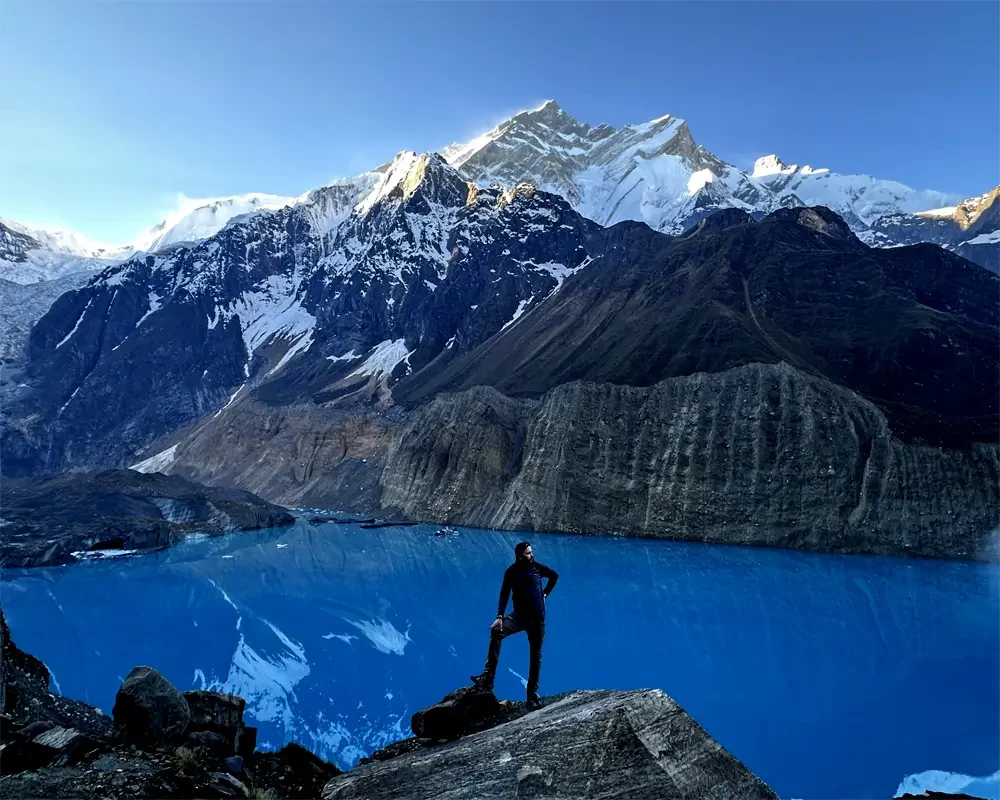
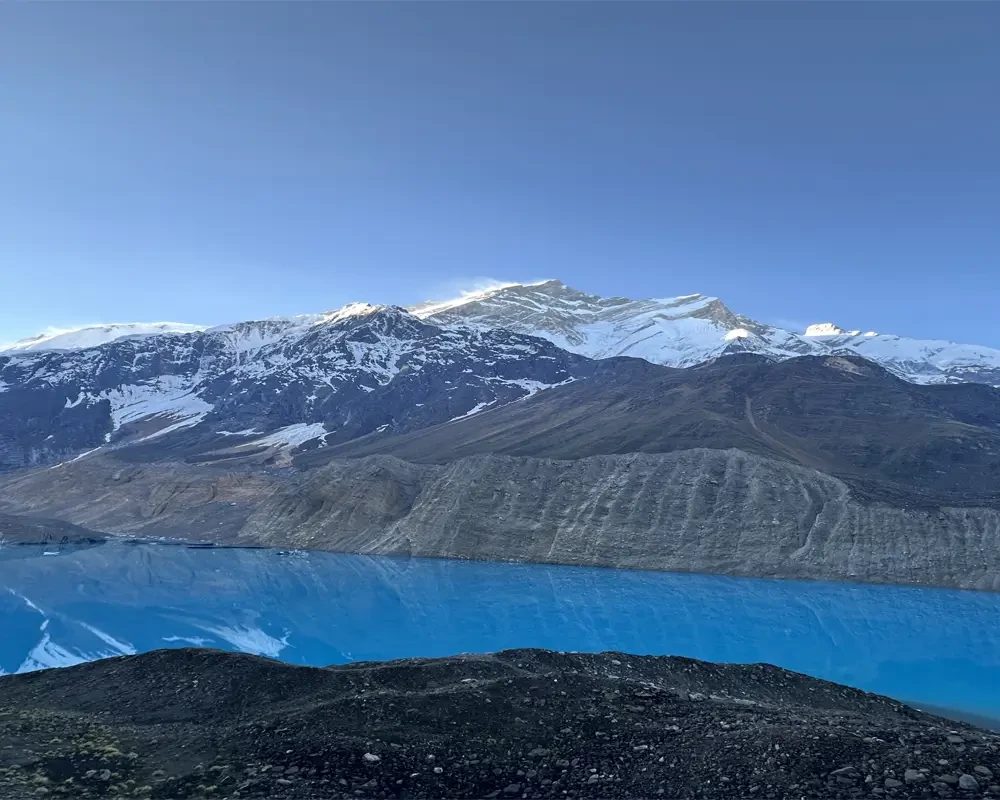
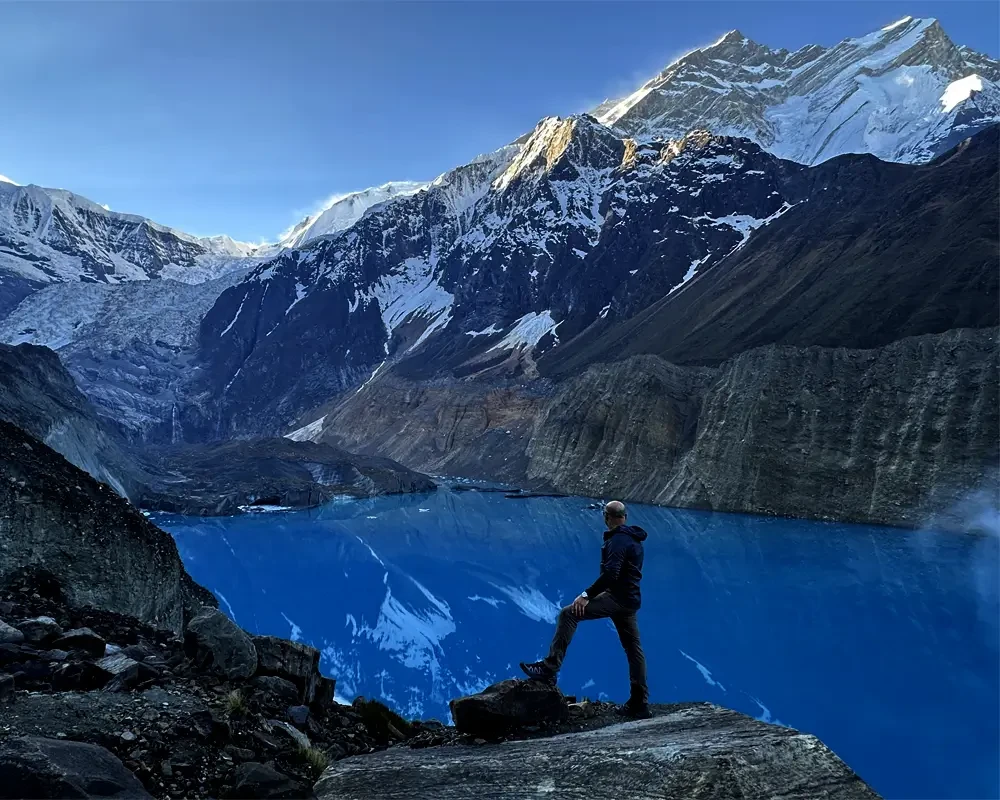
Nestled beneath the towering north face of Annapurna I, this sacred glacial lake marks the final highlight before arriving at North Annapurna Base Camp (4,050 meters). The approach is particularly magical in the morning, when the first rays of sunlight illuminate the surrounding peaks and the calm, crystal-clear waters reflect the rugged Himalayan landscape.

As the trail climbs beyond the forests into glacial terrain, the scenery changes dramatically. Rocky moraines, alpine meadows, cascading streams, and towering cliffs gradually replace the lush vegetation of the lower valleys. Then, almost unexpectedly, the brilliant turquoise waters of Panch Kunda emerge from the wilderness. Fed by glacial meltwater, the lake's striking blue-green color contrasts beautifully with the snow-covered slopes.

Covering an area of approximately 20,000 square meters, Panch Kunda consists of five interconnected glacial ponds, which give it the name Pancha Kunda, meaning "Five Sacred Lakes." In recent years, however, the rapid melting of the North Annapurna Glacier has gradually merged into what now appears as a larger interconnected glacial lake. The lake was historically known as Dikicho Tal among the Sherpa community, a name believed to reference its high Himalayan setting, where the water remained frozen for much of the year. 

Near the lakeshore, you can also see a sacred Shiva temple and a Buddha statue, making the area a place of worship for both Hindu and Buddhist devotees. Out of respect for its religious significance, animal sacrifices are strictly prohibited around the lake. 

From the lake, breathtaking views stretch across some of the Annapurna region's most iconic peaks, including Annapurna I, Nilgiri, Tilicho Peak, and Baraha Shikhar (Fang). The immense north face of Annapurna dominates the skyline, while glaciers and rugged mountain walls surround the valley on every side. 

Experience Nepal's Untouched Himalayan Wilderness

Unlike the country's more commercial trekking routes, the Maurice Herzog Trail winds through a remarkably pristine environment where dense forests, roaring rivers, towering waterfalls, alpine meadows, glacial valleys, and rugged mountain terrain remain largely undisturbed. Every stage of the journey reveals a different side of the Annapurna region.

The adventure begins in the lush foothills of the Annapurna Conservation Area, where the trail meanders through forests of rhododendron (Nepal's national flower), oak, pine, Himalayan fir, walnut, katus, and simal. During spring, the hillsides burst into shades of red, pink, and white as rhododendrons bloom across the mountains. 

As you gain altitude, the vegetation gradually changes, giving way to hardy alpine shrubs, dwarf rhododendrons, Himalayan birch, and windswept meadows before the landscape transitions into glacial moraines and exposed mountain terrain.

Also, the trail follows crystal-clear mountain streams, crosses rushing rivers, and passes numerous cascading waterfalls flowing from the glaciers high above. Near the trailhead, you also encounter the spectacular Narchyang Waterfall, which is one of the tallest and most impressive waterfalls in western Nepal. Along the route, dramatic river gorges, glacial meltwater channels, and natural rock formations add to the wilderness experience.

As you move deeper into the valley, you walk across ancient glacial deposits, rugged moraine fields, and sections influenced by seasonal avalanche paths. Another fascinating feature of the trail is its collection of natural caves and rock overhangs, including the region's distinctive Sky Caves. 

The North Annapurna wilderness is equally rich in biodiversity. In the lower forests, you may spot Himalayan black bears, barking deer, monkeys, leopards, foxes, and wild boars, while the higher alpine zone provides habitat for elusive species such as the musk deer, the rarely seen snow leopard, and soaring Himalayan vultures. 

The region is also home to a remarkable diversity of Himalayan plant life and medicinal herbs. Depending on the season, the forests and alpine slopes support rare species such as Yarsagumba (Ophiocordyceps sinensis), Kutki (Kutuki), Panch Aule, and Nirmasi. 

Experience A True Himalayan Camping Adventure

The Maurice Herzog Trail passes through a remote wilderness with no established trekking villages or mountain tea houses beyond Hum Khola. Instead, local communities have developed tent tea houses that provide you with simple yet comfortable shelter while preserving the expedition-like character of the route.

Rather than sleeping in conventional lodges, you stay in twin-sharing or dormitory tent rooms set up at designated campsites along the trail. These fixed tents serve as basic mountain accommodation. While the facilities are modest, they provide the essentials needed for a comfortable overnight stay in one of the most remote corners of the Annapurna region

Staying in a tent tea house offers a very different atmosphere from Nepal's busier trekking routes. There are no crowded dining halls, long queues for rooms, or bustling mountain villages. Instead, evenings are peaceful and unhurried in a remote wilderness setting.

Embrace A True Digital Detox In The Himalayas

The North Annapurna Base Camp route offers something increasingly difficult to find: a genuine opportunity to disconnect. Once you leave Hum Khola and venture deeper into the Maurice Herzog Trail, mobile reception and Wi-Fi are unavailable along the trekking section. 

Without constant digital distractions, the experience becomes more intentional. Your mornings begin with crisp mountain air and panoramic Himalayan views rather than alarm notifications, while each day is spent walking through forests, glacial valleys, and rugged alpine landscapes. The steady pace of the trail encourages you to focus on the journey itself and appreciate the ever-changing scenery that unfolds with every step.

Evenings take on a different meaning in the mountains. You gather in the shared dining tent, enjoy a freshly prepared meal, exchange stories with fellow trekkers, and reflect on the day's adventure. These simple moments often become some of the most memorable parts of the journey.

The absence of constant connectivity allows you to slow down, appreciate your surroundings, and develop a deeper connection with the mountains. Every conversation feels more meaningful, every viewpoint holds your attention a little longer, and every sunrise and sunset is experienced without the urge to immediately capture and share it online.

Experience The Culture And Hospitality Of The Thakali And Local Mountain Communities

As you travel through the surrounding settlements of Myagdi District, you experience the warm hospitality of the Thakali, Magar, Gurung, and other local mountain communities whose traditions have been shaped by the Himalayas for generations.

Among them, the Thakali people are especially renowned throughout Nepal for their genuine hospitality, rich culinary heritage, and deep connection to the mountains. They have long played an important role in supporting travelers along the Kali Gandaki Valley

The communities along the route reflect a harmonious blend of Hinduism and Buddhism, with daily life closely connected to nature and the surrounding mountains. Small temples, Buddhist shrines, prayer flags, and sacred sites can be found throughout the lower valleys. This respect for nature is also reflected at Panch Kunda Lake, where both a Shiva temple and a Buddha statue stand side by side. It symbolizes the coexistence of different faiths in the region.

Throughout the year, these mountain communities celebrate vibrant festivals such as Dashain, Tihar, Lhosar, Maghe Sankranti, and the traditional Bhume Puja. You may also encounter cultural performances featuring traditional Maruni and Madale dances during local celebrations.

Along the trail, Nepali is widely spoken, while many residents also converse in Thakali, Magar, and Gurung dialects. The locals here are focused on agriculture, livestock farming, and small family-run tourism businesses.

Rejuvenate In The Natural Tatopani Hot Springs

After days of trekking through rugged mountain trails, glacial valleys, and remote Himalayan wilderness, there is no better way to conclude the journey than with a relaxing soak in the natural Tatopani Hot Springs. Located along the banks of the Kali Gandaki River, Tatopani, named after the Nepali words tato (hot) and pani (water), has long been a popular stop for rest and rejuvenation in its naturally heated mineral-rich waters.

As you descend from the high mountains, the dramatic shift in landscape is immediately noticeable. Snow-capped peaks gradually give way to lush hills, subtropical forests, and warmer temperatures. Arriving at Tatopani feels like a well-earned reward, offering a chance to slow down, reflect on the journey, and let your body recover before continuing to Pokhara.

Immersing yourself in the warm outdoor pools is one of the trek's most enjoyable experiences. The naturally heated water helps soothe tired muscles, ease joint stiffness, and relieve the physical fatigue that often follows several days of trekking. Here, the peaceful riverside setting enhances the experience even further, allowing you to unwind while surrounded by the sounds of flowing water and the greenery of the Kali Gandaki Valley.

Explore The Lakeside City Of Pokhara

Before returning to Kathmandu, you travel through Pokhara, Nepal's vibrant lakeside city and the gateway to the Annapurna region. Surrounded by tranquil lakes, lush hills, and panoramic Himalayan views, Pokhara offers the perfect setting to relax, celebrate your achievement, or extend your holiday with a few extra days of exploration.

At the heart of the city lies the picturesque Phewa Lake, where you can enjoy a peaceful boat ride while admiring reflections of the Annapurna Range and the iconic Machhapuchhre (Fishtail Mountain). On a small island in the middle of the lake sits the sacred Tal Barahi Temple, one of Pokhara's most visited religious landmarks. The surrounding lakeside district is equally inviting, lined with cafés, restaurants, artisan shops, bakeries, live music venues, and outdoor gear stores.

If you are seeking more adventure, Pokhara is Nepal's premier destination for outdoor activities. You can experience paragliding above Phewa Lake, enjoy a scenic ultralight flight over the Annapurna range, or take a thrilling zipline ride through the surrounding hills. White-water rafting, kayaking, mountain biking, bungee jumping, and day hikes to nearby viewpoints are also popular options here.

Pokhara is equally rewarding for sightseeing. You can visit the peaceful World Peace Pagoda, explore the mystical Gupteshwor Mahadev Cave, or watch the powerful waters of Devi's Falls. Other attractions include the International Mountain Museum, which showcases Nepal's mountaineering history and Himalayan cultures, as well as the Bindhyabasini Temple, which is one of the city's oldest and most revered Hindu temples.
Useful Information

How Much Does It Cost To Trek The North Annapurna Base Camp?

The North Annapurna Base Camp Trek costs USD ... per person, offering exceptional value for an adventure that takes you to one of Nepal's most remote and least-visited Himalayan destinations. This package is designed to cover almost every essential aspect of the journey.

From the moment you arrive in Kathmandu until your departure, Nepal Trekking Experts takes care of the major logistics. The package includes complimentary airport pick-up and drop-off services, a traditional Nepali welcome dinner, hotel accommodation in the city, and all required trekking permits. Throughout the trekking portion of the journey, you stay in locally operated tent tea houses, with three freshly prepared meals each day and a cup of tea or coffee with meals.

To reduce the amount of equipment you need to bring, we also provide complimentary use of a duffel bag, sleeping bag, down jacket, and trekking map if required. Your adventure is led by a government-licensed, English-speaking, first-aid-trained local guide, who carries a comprehensive first-aid kit and remains with you throughout the journey. 

The package further covers all transportation mentioned in the itinerary. However, the package price does not include international airfare, the Nepal tourist visa fee, porter services upon request, personal travel insurance, sightseeing entrance fees, and personal expenses. As is customary throughout Nepal's trekking industry, tips for your guide, porter, and support staff are not included.

North Annapurna Base Camp Permit Fees And Requirements

The North Annapurna Base Camp lies entirely within the Annapurna Conservation Area; thus, you need an Annapurna Conservation Area Permit for this journey. This permit helps fund conservation initiatives, sustainable tourism, wildlife protection, trail maintenance, and community development projects throughout one of Nepal's most ecologically significant protected areas.

As of the latest regulations, the ACAP costs NPR 3,000 per person. Here, Nepal Trekking Experts handle all of your necessary trekking permits; thus, you will not have to worry about it. 

Overall, the North Annapurna Base Camp Trek has a relatively straightforward permit process. Once your ACAP permit has been issued, you are legally authorized to explore the Maurice Herzog Trail within the Annapurna Conservation Area, provided you follow the park's rules and environmental guidelines.

If you book your adventure through a registered trekking company, there is no need to worry about the paperwork. Most trekking packages include the Annapurna Conservation Area Permit and arrange its formalities on your behalf before the trek begins.

Cost Of Hiring A Guide And Porter For North ABC: Is It Mandatory?

Since the Maurice Herzog Trail passes through isolated valleys with limited infrastructure, basic camping accommodations, and fewer trekkers on the trail, we recommend that you hire a guide and porter. An experienced licensed guide leads the way and also coordinates logistics, shares insights into the region's history and culture, monitors your well-being at higher elevations, and assists in case of unexpected situations.

A licensed English-speaking trekking guide typically costs around USD 30 to 35 per day, although the rate may vary depending on the trekking agency, group size, and services included. If you book a trekking package, the guide's fee is usually included in the overall package price, so you won't need to arrange one separately.

While a porter is not mandatory, hiring one can make the trek significantly more enjoyable. The route involves several days of walking through remote mountain terrain, and carrying a heavy backpack can become physically demanding, particularly as you gain altitude. 

A porter generally costs around USD 25 per day and can carry up to 20 kilograms, which is usually shared between two trekkers. This allows you to hike with just a light daypack containing essentials such as water, snacks, a camera, and extra layers.

Beyond convenience, hiring local guides and porters also supports the communities that live along the route. Trekking provides an important source of income for many families in the Annapurna region, and choosing local professionals contributes directly to sustainable tourism while helping preserve the Maurice Herzog Trail for future visitors.

Although optional, tipping is customary and greatly appreciated by guides and porters in Nepal. A gratuity of around 10 to 20% of the total cost is generally considered a fair guideline. But you can tip the amount based on your satisfaction and personal preference.

How Can I Book The North Annapurna Base Camp Trek With Nepal Trekking Experts?

Whether you are planning months in advance or looking for a last-minute Himalayan adventure, our experienced Nepal Trekking Experts team is here to help you organize every aspect of your journey.

To secure your place, simply send us an inquiry through our website, email, WhatsApp, or any of our available contact channels. Once we receive your request, we will discuss your preferred travel dates, group size, trekking experience, and any special requirements to recommend the best itinerary for your adventure. We also answer any questions you have about the trek, including fitness requirements, packing lists, weather conditions, altitude, and travel logistics.

After confirming your itinerary, we provide a detailed trip proposal along with the package cost, inclusions, and booking information. To reserve your departure, you only need to complete the booking form and pay the required deposit, which is 10% of the total package cost. 

You can pay the deposit via our website, and upon completing the payment, you will get a confirmation email. As for the remaining balance, you can pay it once in Kathmandu before the journey.

If your preferred travel dates are not listed or you would like to customize the itinerary, we are happy to create a private or tailor-made North Annapurna Base Camp Trek based on your schedule, fitness level, and travel preferences. Simply contact our team, and we will help design an itinerary that perfectly matches your Himalayan adventure.

Preparation Tips For The North ABC Hike

  • Train for at least 6 to 8 weeks before your trek. Focus on building cardiovascular endurance through hiking, brisk walking, cycling, running, or stair climbing, as well as leg and core strengthening exercises.
  • Break in your trekking boots before arriving in Nepal. Avoid wearing brand-new boots on the trail, as they can cause painful blisters. 
  • Pack light but pack smart.
  • Prepare for basic camping conditions with essential toiletries, a headlamp, wet wipes, hand sanitiser, and a power bank.
  • Build your daypack carefully. Keep daily essentials easily accessible while trekking.
  • Drink plenty of water every day to help your body adapt to increasing altitude and reduce the risk of dehydration.
  • Acclimatise naturally by maintaining a steady pace. Although North ABC reaches a moderate altitude of around 4,050 meters, walking slowly, taking regular breaks, and avoiding unnecessary exertion will help your body adjust comfortably.
  • Carry personal medications and a basic first-aid kit. Include any prescription medicines along with blister treatment, pain relievers, altitude medication (if recommended by your doctor), and other personal essentials.
  • Purchase comprehensive travel insurance that covers trekking at high altitude, emergency helicopter evacuation, medical treatment, and trip interruptions.
  • Carry extra cash in NPR before leaving Kathmandu or Pokhara for the Himalayas. 
  • Expect no mobile network or Wi-Fi during the trekking section. Inform family and friends in advance that communication will be limited or completely off once you enter the remote wilderness.
  • Respect local culture and the natural environment. Dress modestly when visiting villages and religious sites, seek permission before photographing local people, and follow Leave No Trace principles by carrying your waste back whenever possible.
  • Choose the best trekking season as spring (March to May) and autumn (September to November).
  • Book your trek with a reputable local operator as Nepal Trekking Experts.

How Difficult Is The Trek To North Annapurna Base Camp?

The journey to North Annapurna Base Camp is considered a moderately challenging to challenging Himalayan trek. While it does not require technical climbing or mountaineering experience, it demands good physical fitness, endurance, and a willingness to trek through remote terrain with basic facilities. Reaching an altitude of approximately 4,050 meters, the journey is achievable for beginners with proper preparation, but it is better suited if you enjoy longer walking days and off-the-beaten-path adventures.

This particular journey is far more rugged and less developed. You hike through dense forests, rocky paths, glacial moraines, river valleys, and uneven mountain trails, with occasional steep ascents and descents. While this journey is doable all year round, we recommend trekking during spring and autumn due to mild temperature and stable weather that is hard to get during monsoon or winter.

The itinerary is designed to balance the journey with gradual altitude gain. Most trekking days involve 5 to 7 hours of walking, although the exact duration depends on the trail conditions, weather, and your walking pace. While the altitude is lower than many of Nepal's high-pass treks, the remote nature of the route and its camping-style accommodation make the experience more demanding than a typical tea house trek.

Also, one of the biggest challenges is the trek's limited infrastructure. Beyond Hum Khola, there are no permanent trekking villages or modern mountain lodges. Instead, you stay in simple tent tea houses, where facilities are basic and modern comforts are minimal. You must be prepared for shared tent accommodation, limited charging facilities, and little to no mobile network or Wi-Fi throughout the trekking section. 

The good news is that the trek does not require any technical skills, climbing equipment, or previous mountaineering experience. If you can comfortably walk for several consecutive days while carrying a light daypack, you already have the foundation needed for this trek. 

Is Altitude Sickness A Concern On The North ABC?

Yes, altitude sickness (Acute Mountain Sickness or AMS) is a possibility on the North ABC trail, as in just a few days, you reach approximately 4,050 meters at North Annapurna Base Camp and Panch Kunda Lake. Due to this gain in altitude, you need to be careful with your pacing and the principles of trekking in the Himalayas. However, compared to many of Nepal's high-altitude treks that cross mountain passes above 5,000 meters, the overall risk is relatively lower. With a well-planned itinerary, a gradual ascent, and sensible trekking practices, you can complete the journey without experiencing serious altitude-related problems.

Altitude sickness occurs when your body does not have enough time to adapt to reduced oxygen levels at higher elevations. It can affect anyone, regardless of age or physical fitness, making acclimatization far more important than strength or trekking experience. While some people notice no symptoms at all, others may begin to feel the effects once they ascend above 2,500 meters.

The most common symptoms of Acute Mountain Sickness include a persistent headache, nausea, loss of appetite, dizziness, unusual fatigue, difficulty sleeping, and shortness of breath during physical activity. These symptoms are often mild at first, but should never be ignored. 

If the signs become more severe or continue to worsen, immediate descent and medical attention may be necessary to prevent more serious conditions such as High Altitude Pulmonary Edema (HAPE) or High Altitude Cerebral Edema (HACE), both of which require urgent treatment.

Fortunately, there are several simple steps you can take to minimize the risk of altitude sickness during the trek. Walking at a comfortable pace, staying well hydrated, eating nutritious meals, avoiding excessive alcohol consumption before and during the trek, and getting adequate rest all help your body acclimatize naturally. It is equally important to listen to your body rather than rushing to reach the destination. 

Trekking with an experienced local guide also adds an extra layer of safety. Guides are trained to recognize the early signs of altitude sickness, monitor your condition throughout the journey, and make informed decisions if symptoms develop. 

Also, the best preparation begins before you arrive in Nepal. Building your fitness through regular hiking, stair climbing, and cardiovascular exercise, combined with purchasing travel insurance that covers high-altitude trekking and emergency helicopter evacuation, will help ensure you are well prepared for the adventure.

What Is The Best Season And Time To Trek The North Annapurna Base Camp?

Spring And Autumn: The Best Seasons On The North Annapurna Trail

Spring and autumn consistently offer the most favorable trekking conditions, combining stable weather, comfortable temperatures, excellent visibility, and safer trail conditions. Whether you are trekking to the historic Maurice Herzog Trail, standing beneath the towering north face of Annapurna I, or admiring the turquoise waters of Panch Kunda Lake, both seasons provide an unforgettable Himalayan experience.

Spring transforms the North Annapurna Trail into a vibrant landscape filled with life. As winter snow begins to melt, forests of rhododendron burst into bloom. Waterfalls and mountain streams flow more vigorously with fresh glacial meltwater, while the surrounding valleys become lush and green. The weather is generally mild, making long trekking days comfortable, and the clearer mornings often reward you with spectacular mountain panoramas before afternoon clouds gradually develop.

Autumn, on the other hand, is renowned for its exceptional mountain visibility. After the monsoon rains wash away dust and haze, the Himalayan skyline appears remarkably crisp, revealing uninterrupted views of Annapurna I, Nilgiri, Tilicho Peak, and Baraha Shikhar (Fang). The trails are typically dry and stable, humidity is low, and the cool, refreshing temperatures create ideal trekking conditions from start to finish. This season also coincides with Nepal's major festivals, including Dashain and Tihar.

Although spring and autumn share many similarities, such as reliable weather, comfortable daytime temperatures, and excellent trekking conditions, each season offers a distinctly different atmosphere. Spring is defined by colorful forests, fresh vegetation, flowing waterfalls, and a landscape awakening after winter. Autumn, by contrast, focuses on crystal-clear skies, long-distance Himalayan views, and consistently dry trails.

For most travelers, April, October, and November are widely considered the best months to trek the North Annapurna Base Camp. 

Winter And Monsoon: Challenges To Consider Before You Trek

While the North ABC journey is technically possible during winter (December to February) and the monsoon season (June to August), these periods present significantly greater challenges than the recommended spring and autumn months. 

During winter, the trail transforms into a quiet alpine wilderness covered in snow and ice. Higher sections near Panch Kunda Lake and North Annapurna Base Camp often experience freezing temperatures, while snowfall can make rocky paths slippery and more physically demanding. 

Depending on weather conditions, avalanche-prone sections may also become more hazardous. The shorter daylight hours and colder nights further add to the challenge, making winter a season better suited to experienced trekkers who are well-equipped for sub-zero mountain conditions.

Now, the monsoon season brings a different set of obstacles. Heavy rainfall can make forest trails muddy and slippery, while swollen rivers, waterfalls, and mountain streams become more powerful. Persistent rain also increases the risk of landslides and minor trail damage, particularly along the road sections leading to the trailhead. 

Dense cloud cover frequently obscures the Himalayan peaks, meaning you may miss the spectacular mountain panoramas that make this route so rewarding. In the lower forests, humid conditions also bring leeches and reduce overall trail comfort.

That said, both seasons have their own unique character. Winter offers peaceful trails, dramatic snow-covered landscapes, and a rare opportunity to experience the Himalayas in near solitude. Monsoon blankets the lower valleys in lush greenery, fills waterfalls with powerful glacial runoff, and creates a vibrant natural environment rarely seen during the drier months. 

If you plan to trek during winter or the monsoon, it is essential to travel with an experienced local guide, monitor weather forecasts closely, and remain flexible, as itinerary adjustments may be necessary to ensure a safe and enjoyable journey.

Transportation Facilities On The North Annapurna Base Camp Excursion

Your North ABC adventure begins with a 9 to 10-hour tourist bus ride from Kathmandu to Beni, the gateway to the Annapurna North region. The drive follows the scenic Prithvi Highway before tracing the Kali Gandaki River, passing charming villages, cultivated farmlands, lush green hills, and dramatic river gorges. 

The road is mostly paved, with scheduled stops for meals and refreshments, making the long drive both comfortable and enjoyable. This ride from Kathmandu to Beni by tourist bus costs USD 15 per person.

From Beni, you then continue with an exciting 3-hour private jeep ride to Hum Khola, which is the official starting point of the trek. As the road climbs deeper into the mountains, the scenery becomes increasingly wild and remote.

You can expect winding mountain roads, dense forests, waterfalls tumbling down steep cliffs, suspension bridges, and spectacular views of the surrounding valleys. While parts of the road are rough and unpaved, the four-wheel-drive jeep provides reliable access, and this drive from Beni to Hum Khola by private jeep costs USD 80 each way.

After completing your trek, you return to Hum Khola before boarding a private jeep to Tatopani. The drive descends through beautiful river valleys as the alpine landscape gradually gives way to subtropical forests and traditional mountain settlements. The cost of the Hum Khola to Tatopani jeep ride is USD 60 per person.

Your journey then continues with a comfortable 4-hour bus ride from Tatopani to Pokhara, costing you about USD 5 per person. Following the Kali Gandaki Valley, the road passes picturesque villages, terraced hillsides, rivers, and waterfalls before arriving in Nepal's beautiful lakeside city. 

Finally, you travel from Pokhara to Kathmandu by tourist bus. The route once again follows the Prithvi Highway alongside winding rivers, green hills, and rural settlements, providing one last opportunity to admire Nepal's diverse countryside before returning to the capital. This Pokhara to Kathmandu by tourist bus costs USD 10 per person.

Accommodation On The North Annapurna Trail

As this is a newly opened and less-explored trekking route, there are no permanent villages or traditional mountain lodges between Hum Khola and North Annapurna Base Camp. Instead, you stay in fixed tent tea houses that are operated year-round by local families from Myagdi District, allowing you to experience this remote Himalayan wilderness without the need for a full camping expedition.

Unlike traditional camping treks, there is no need to carry your own tent, cooking equipment, or food supplies from Kathmandu or Pokhara. Everything has already been arranged at the designated campsites, making the trek far more comfortable while preserving its adventurous character. The local tent tea houses provide accommodation, freshly prepared meals, and a welcoming place to rest after each day's hike.

The sleeping tents are simple, clean, and designed for mountain conditions. Most rooms are arranged on a twin-sharing basis, allowing you to comfortably share the space with another traveler. For couples seeking additional privacy, a limited number of private tents are also available, although these are subject to availability. Each tent is equipped with beds or sleeping platforms, mattresses, blankets, and pillows.

At the heart of every campsite is a communal dining tent, where you gather for breakfast before setting out each morning and return in the evening to enjoy freshly prepared meals with fellow adventurers. Beyond simply being a place to eat, the dining hall becomes the social hub of the trek, a warm and welcoming space to relax, exchange stories, and reflect on the day's journey while surrounded by the spectacular Himalayan wilderness.

Because the accommodation is locally managed, staying in these tent tea houses also directly supports the mountain communities of Myagdi District. 

What Facilities Are Available On The North Annapurna Base Camp Trail?

Bathroom And Hot Shower Facilities

Unlike Nepal's more developed trekking routes, where modern teahouses often provide attached bathrooms and hot showers, facilities on this trail are basic but functional, offering everything you need while preserving the wilderness experience.

The tent tea houses provide shared toilet facilities, which vary depending on the campsite. At lower elevations, you may find either a Western-style flush toilet or a traditional squat (pan) toilet. However, as you venture deeper into the mountains, facilities become more basic. For example, at Panch Kunda, only traditional pan toilets are available due to the area's high altitude and limited infrastructure.

You should also be prepared for no hot shower facilities during the trekking section. Heating water at high elevations is both challenging and resource-intensive, so hot showers are unavailable at the tent tea houses. So, you must rely on basic washing facilities.

If enjoying a long, hot shower is important to you, don't worry, you have comfortable hotel accommodation before and after the trek. Both Pokhara and Kathmandu offer modern hotels with private bathrooms and reliable hot showers, providing the perfect opportunity to freshen up after several unforgettable days in the mountains.

Mobile Network And Wi-Fi Availability

It's important to know that mobile network coverage and Wi-Fi are virtually unavailable along the main trekking route. Once you leave the lower settlements and begin trekking beyond Hum Khola, you enter one of Nepal's most remote Himalayan regions.

The Maurice Herzog Trail remains largely untouched by modern infrastructure. The tent tea houses along the route do not provide Wi-Fi, and mobile signals are either extremely weak or completely absent throughout the trekking section. As a result, you should expect to be offline for several days until you return to lower elevations.

While this may seem challenging at first, many trekkers consider it one of the journey's greatest rewards. Free from constant notifications, emails, social media, and phone calls, you have the opportunity to fully immerse yourself in the experience, appreciate the peaceful mountain surroundings, and enjoy a genuine digital detox.

Because communication is extremely limited, it's advisable to inform your family and friends before the trek that you may be out of contact for several days. In the event of an emergency, experienced trekking guides and agencies have established emergency communication procedures and can coordinate assistance through satellite phones when required.

In addition, the local tent tea houses maintain communication using walkie-talkies. The lodge owners regularly relay messages from one tea house to the next, creating an effective communication network across the trail. 

Electricity And Charging Facilities

This trail takes you into one of Nepal's most remote Himalayan regions, where access to electricity is extremely limited. Once you leave Hum Khola, there is no conventional electricity grid, so you should be prepared for a more basic experience than on Nepal's popular tea house routes.

The tent tea houses along the Maurice Herzog Trail rely primarily on solar power to meet their daily energy needs. Because solar energy is limited and depends on weather conditions, electricity is carefully managed. In most camps, charging facilities are only available for a couple of hours in the evening, when the solar batteries have stored enough power during the day. This electricity is shared among all trekkers, so charging opportunities are limited and cannot always be guaranteed.

If you plan to use your phone, camera, smartwatch, or other electronic devices throughout the trek, we strongly recommend bringing a fully charged, high-capacity power bank. Carrying spare camera batteries or additional power banks is also advisable, especially if you enjoy photography or videography.

Food, Drinks, And Dining Along The Maurice Herzog Trail

Despite the remote nature of the Maurice Herzog Trail, you won't need to carry your own food supplies during the trek. Every campsite has a locally operated tent tea house with a communal dining hall, where freshly prepared meals are served throughout your journey. While the menu is much simpler than those found on Nepal's popular trekking routes, the food is wholesome, nutritious, and carefully prepared to keep you energized for long days in the Himalayas.

Each morning begins with a hearty breakfast before setting out on the trail. Depending on availability, you can expect dishes such as Tibetan bread, chapati, porridge, omelets, boiled or fried eggs, and occasionally seasonal fruit. Breakfast is typically accompanied by a hot drink, including Nepali milk tea, black tea, ginger tea, or lemon tea, helping you warm up before the day's hike.

Lunch is served at a suitable campsite or tea house along the route, while dinner is enjoyed in the communal dining tent after reaching your overnight destination. Although there isn't a fixed menu with dozens of choices, you are served a selection of freshly cooked Himalayan favorites, including Dal Bhat, fried rice, vegetable noodles, thukpa (Tibetan noodle soup), potatoes, vegetable curries, and soups.

The highlight of the meals is undoubtedly the traditional Thakali Dal Bhat, a wholesome combination of steamed rice, lentil soup, seasonal vegetables, curry, and homemade pickle. Prepared by local families from Myagdi District, it is filling, nutritious, and also offers an authentic taste of the region's culinary traditions. After a full day of trekking, there's nothing quite as satisfying as enjoying a warm plate of Dal Bhat.

Throughout the trek, you also have access to a variety of hot beverages, including black tea, milk tea, ginger tea, lemon tea, and warm drinking water. These are especially welcome during chilly mornings and evenings at higher elevations.

Although all meals are provided during the trek, there are no shops or convenience stores along most sections of the trail. For this reason, we recommend bringing a few of your favorite energy bars, chocolates, trail mix, nuts, dried fruits, biscuits, or electrolyte tablets to enjoy between meals. 

How To Get Safe Drinking Water During The Trek?

As the route climbs to elevations of over 4,000 meters, your body loses fluids more quickly through increased breathing and physical exertion. Here, drinking water is available at the tent tea houses and campsites, where you can refill your bottles before continuing each day's hike. The safest and most commonly recommended option is boiled drinking water, which is freshly prepared by the local tea houses.

Natural water sources such as mountain streams and springs are found along parts of the trail and may appear crystal clear due to their glacial origin. However, they should never be consumed untreated, as they can still contain bacteria, viruses, or other microorganisms that may cause waterborne illnesses. If you plan to refill from a natural source, always purify the water using water purification tablets, a portable water filter, or a UV water purifier before drinking.

Because the route is remote, bottled mineral water is not consistently available, especially beyond Hum Khola. For this reason, carrying a reusable water bottle or hydration bladder is strongly encouraged as part of responsible trekking practices.

You should aim to drink 3 to 4 liters of water per day, or even more during warm, sunny conditions. You can also supplement your fluid intake with hot drinks such as black tea, ginger tea, lemon tea, or warm water, all of which are commonly available at the tent tea houses.

Important Information Before You Trek To North Annapurna Base Camp

Travel Insurance

Although the North ABC does not involve technical climbing, it takes you into a remote Himalayan region where medical facilities are limited, and emergency assistance can take time to reach. For this reason, comprehensive travel insurance is strongly recommended and should be arranged before arriving in Nepal.

When choosing a policy, make sure it specifically covers high-altitude trekking up to at least 5,000 meters. Your insurance should also include emergency helicopter evacuation, emergency medical treatment, hospitalization, trip interruption, trip cancellation, and personal accident coverage. These benefits can provide significant financial protection should an unexpected illness, injury, or severe weather event affect your trek.

Helicopter evacuation is particularly important on the Maurice Herzog Trail. Because the route passes through a remote area with limited road access and healthcare facilities, air rescue may be the fastest and safest option in the event of a serious injury or severe altitude-related illness. Without appropriate insurance, emergency evacuation and medical expenses can be extremely costly.

Before your trek begins, keep both a digital and printed copy of your insurance policy, along with your emergency contact details and policy number. It's also a good idea to share these documents with your trekking agency and guide so they can respond quickly if an emergency arises.

Nepal Visa Requirements

Most international travelers require a tourist visa to enter Nepal before beginning the North Annapurna Base Camp Trek. Fortunately, Nepal has a straightforward visa process, and citizens of many countries can obtain a Visa on Arrival at Tribhuvan International Airport in Kathmandu or at designated land border crossings.

To apply for a tourist visa, you generally need a passport that is valid for at least six months from your date of entry, a completed visa application form, and the applicable visa fee. While passport-sized photographs are sometimes requested, digital photographs are usually captured during the application process at the airport. 

To help speed up your arrival, you can also complete the online visa application before your flight and present the confirmation upon arrival. Nepal offers tourist visas for 15, 30, and 90 days, allowing you to choose the duration that best suits your travel plans. 

Currency, ATMs, And Card Payment Facilities

The official currency of Nepal is the Nepalese Rupee (NPR), and it is the primary form of payment. While major cities such as Kathmandu and Pokhara have excellent banking facilities, ATMs, and businesses that accept international debit and credit cards, cash quickly becomes essential as you travel into the remote Annapurna region.

Before leaving Kathmandu or Pokhara, it is highly recommended to withdraw enough Nepalese Rupees to cover your personal expenses for the entire trek. Although there are a few banking facilities in larger towns along the way, ATMs are not available on the trekking section beyond Beni, and you should not rely on finding one once you begin hiking.

Similarly, credit and debit card payments are generally not accepted at the tent teahouses or small local businesses along the Maurice Herzog Trail. All purchases must be paid in cash.

If you plan to buy souvenirs, tip your guide and porter, enjoy the Tatopani Hot Springs, or purchase extra drinks and personal items during the journey, carrying additional cash is advisable. Keeping your money in small denominations is also helpful, as remote teahouses may have limited change.

Why Hike To North Annapurna Base Camp With Nepal Trekking Experts?

As a locally owned and operated trekking agency, Nepal Trekking Experts offers first-hand knowledge of the North Annapurna region that only comes from years of operating in the Himalayas. Our team regularly works with local communities, experienced guides, and trusted service providers, allowing us to deliver a journey that is both authentic and well-organized while supporting the local economy.

We believe that exceptional trekking experiences shouldn't come with inflated prices. That's why we offer fair and transparent pricing, with carefully designed packages that provide excellent value without compromising on safety, comfort, or service. There are no hidden charges from beginning to end.

Also, every traveler has different expectations and travel plans, so we provide flexible itineraries whenever possible. Whether you would like to spend additional time exploring Pokhara, adjust your schedule, or combine the North Annapurna Trek with another Himalayan adventure, our team will gladly help create an itinerary that suits your interests.

Our greatest strength lies in our people. Backed by decades of experience in Nepal's trekking industry, our licensed guides possess extensive knowledge of mountain trails, local culture, weather conditions, and altitude management. Beyond simply leading the way, they enrich your journey by sharing stories of the region's history, traditions, and natural heritage while ensuring you feel supported throughout the trek.

Because this trail passes through a remote mountain environment, your safety is always our highest priority. From proper trip planning and permit arrangements to monitoring your health at altitude and preparing for emergencies, we take every precaution to ensure you can trek with confidence. Our guides are trained to recognize the early signs of altitude sickness and are prepared to respond quickly should unexpected situations arise.

We also understand that a successful trek is about enjoying the journey without unnecessary stress. From your airport arrival and transportation to accommodation, permits, meals, and daily logistics, our team handles every detail so you can fully immerse yourself in the spectacular landscapes of the Annapurna region.

Over the years, our commitment to personalized service, professionalism, and genuine hospitality has earned us excellent 5-star reviews from trekkers around the world.

North Annapurna Base Camp Trek Itinerary
  • Overnight Altitude:1400 meters/4593 feet
  • Accommodation:3 star hotel

Welcome to Nepal! As your flight descends into the Kathmandu Valley, you are greeted by panoramic views of rolling hills, terraced landscapes, and, on clear days, the distant Himalayan peaks.

Upon your arrival at Tribhuvan International Airport, a friendly representative from Nepal Trekking Experts is waiting to welcome you with a traditional Nepali flower garland. After a brief introduction, you are transferred to your hotel in a comfortable private vehicle.

As you drive through Kathmandu, you notice a fascinating blend of ancient temples, colorful prayer flags, bustling local markets, historic architecture, and lively streets where centuries-old traditions exist alongside modern city life. The city's energy offers an exciting contrast to the peaceful Himalayan wilderness you will soon experience.

Once you have checked into your hotel, the remainder of the day is yours to enjoy at your own pace. After a long international flight, you can relax, freshen up, and recover before the adventure begins. However, if you are feeling refreshed, it's the perfect opportunity to explore the surrounding neighborhood.

If your hotel is located in Thamel, Kathmandu's vibrant tourist district, you find yourself in the heart of the city's most popular cultural and commercial hub. Its lively streets are lined with trekking gear shops, artisan boutiques, bookstores, souvenir stores, cafés, bakeries, rooftop bars, and restaurants serving everything from authentic Nepali cuisine to international favorites. As evening approaches, Thamel comes alive with colorful lights, live music venues, and bustling streets filled with travelers and locals alike, creating a welcoming atmosphere that makes it easy to soak in Kathmandu's unique charm.

You may also choose to visit nearby landmarks such as the Garden of Dreams, enjoy a traditional Nepali dinner, sample local delicacies like momo or Dal Bhat, or simply stroll through the vibrant alleyways while taking in the sights, sounds, and aromas of the city. If you have extra time, your guide can also recommend short visits to nearby UNESCO World Heritage Sites, depending on your arrival schedule.

  • Overnight Altitude:1400 meters/4593 feet
  • Meals:Breakfast
  • Accommodation:3 star hotel

Today is dedicated to prepare for the upcoming trek, ensuring you have everything you need before leaving Kathmandu for the remote Himalayas. There is no rush to start the day, so you can enjoy a leisurely breakfast, recover from your journey, and soak in the lively atmosphere of the city before your adventure officially begins.

At the scheduled time, a representative from Nepal Trekking Experts will meet you at your hotel and escort you to our office in Thamel. Here, you receive a warm welcome from Mr. Rajesh, the founder and owner of Nepal Trekking Experts, who personally conducts the pre-trek briefing. During the meeting, you receive detailed information about the itinerary, daily walking hours, accommodation, meals, transportation, trail conditions, weather, altitude, safety measures, and other important aspects of the journey. This is also the perfect opportunity to ask questions, discuss any concerns, and clarify everything you need to know before heading into the mountains.

You also get to meet your licensed trekking guide, who will accompany you throughout the expedition. Taking the time to get acquainted before the trek begins helps build confidence and creates a comfortable atmosphere for the days ahead. Your guide will explain what to expect on the trail, offer practical trekking tips, and ensure you are fully prepared for the adventure.

After the briefing, you have time to organize your equipment. If you have forgotten any clothing or trekking essentials, Thamel is one of the best places in Nepal to purchase or rent outdoor gear. Its streets are lined with trekking shops selling everything from jackets and gloves to sleeping accessories, sunglasses, and hiking equipment. If you need recommendations, our team will gladly direct you to reliable stores offering quality products at reasonable prices.

To make your journey even more convenient, we provide complimentary gear rentals, including trekking poles, crampons (when seasonal conditions require them), and a duffel bag for your trek. If you are carrying extra luggage that you won't need in the mountains, you can safely leave it at our office or your hotel, where it will be securely stored until you return to Kathmandu.

If you need to withdraw cash, exchange foreign currency, or make any last-minute purchases, your guide will be happy to assist you. Since there are no ATMs or reliable card payment facilities along the trekking route, today is the ideal time to complete any financial preparations before departing for the Annapurna region.

With your preparations complete, the rest of the afternoon is free to explore Kathmandu at your own pace. If it's your first visit to Nepal, consider visiting some of the city's remarkable UNESCO World Heritage Sites. You can explore Kathmandu Durbar Square, which was once the royal palace complex of the Malla kings, where intricately carved temples, historic courtyards, and the residence of the Living Goddess, Kumari, showcase Nepal's rich cultural heritage. 

Another excellent option is Patan Durbar Square, renowned for its exquisite Newari architecture, traditional temples, artisan workshops, and the famous Patan Museum. If you are interested in medieval history, you may enjoy a visit to Bhaktapur Durbar Square, which is a beautifully preserved ancient city celebrated for its brick-paved streets, magnificent palaces, pottery workshops, and timeless atmosphere. 

There are also other site options such as Swayambhunath aka Monkey Temple, Boudhanath Stupa, or Pashupatinath Temple. If your schedule is tight before the trek, you can always extend your stay in Kathmandu after the expedition to fully appreciate these extraordinary cultural landmarks.

In the evening, you join us for a traditional welcome dinner. If you are travelling as part of a group, this is a wonderful opportunity to meet your fellow trekkers before the adventure begins. While enjoying authentic Nepali cuisine accompanied by live cultural music and dance performances, you also have time to share travel stories, get to know your guide better, and build friendships with the people who will accompany you into the Himalayas over the coming days.

  • Overnight Altitude:830 meters/2723 feet
  • Meals:Breakfast, Lunch and Dinner
  • Accommodation:Guest house

It's an early start today, as our team picks you up from your hotel and transfers you to the tourist bus station. After meeting your fellow travelers and settling into your seat, the scenic drive through central Nepal begins.

The journey follows the well-known Prithvi Highway, one of Nepal's principal highways connecting Kathmandu with western Nepal. The road is mostly paved, although you may encounter occasional rough patches and ongoing road maintenance, which are common on Nepal's mountain highways. Despite the long travel time, the drive is comfortable and offers a fascinating introduction to Nepal's diverse geography and everyday life.

As the bus gradually leaves the Kathmandu Valley, the landscape transforms from busy city streets into rolling green hills, terraced farmlands, traditional villages, and winding rivers. For much of the journey, you travel alongside the Trishuli River before eventually joining the magnificent Kali Gandaki River, which is one of the deepest river gorges in the world. Throughout the day, you pass colorful roadside settlements, suspension bridges, local markets, rice fields, waterfalls, and forested hills.

The drive includes several scheduled stops at clean roadside restaurants and rest areas, giving you plenty of time to stretch your legs, use the restroom, enjoy lunch, or grab a cup of tea, coffee, or light snacks before continuing the journey. These breaks help make the long drive more relaxed and comfortable while also offering a chance to experience authentic roadside hospitality.

As you travel farther west, traffic gradually decreases, the valleys become wider, and the towering hills begin hinting at the rugged Himalayan landscapes waiting ahead. The journey itself becomes part of the experience.

By late afternoon or early evening, you arrive in Beni, the administrative headquarters of Myagdi District and the traditional gateway to many trekking adventures in the Annapurna and Dhaulagiri regions. Situated at the confluence of the Myagdi Khola and Kali Gandaki River, Beni is a lively market town where trekkers, traders, and local communities come together. Although modest in size, it offers a welcoming atmosphere, local restaurants, shops, and comfortable lodges.

After checking into your accommodation, you can take a short stroll around the town, enjoy your first dinner in the Annapurna region, or simply relax after the day's journey.

  • Overnight Altitude:3250 meters/10662 feet
  • Meals:Breakfast, Lunch and Dinner
  • Accommodation:Tea house

After an early breakfast in Beni, your journey takes a dramatic turn as you leave the main highway behind and venture deeper into the remote northern side of the Annapurna region. Boarding a private four-wheel-drive jeep, you begin a scenic drive to Hum Khola.

The road gradually narrows as it winds through steep hillsides, dense forests, and traditional mountain landscapes. While sections are paved near Beni, the route soon becomes a rugged mountain road with gravel tracks, river crossings, and occasional uneven stretches. Along the way, you travel beside roaring rivers, pass terraced farmlands, cross suspension bridges, and witness countless waterfalls cascading down towering cliffs. As the settlements become fewer, the scenery grows increasingly wild.

Upon arriving at Hum Khola, you enjoy a short break. From this point onward, the sounds of vehicle engines disappear, replaced by rushing mountain streams, birdsong, and the peaceful silence of the high Himalayas. The trail immediately immerses you in pristine nature.

The hike to Gupha Phant follows a well-defined mountain trail through beautiful forests of rhododendron, pine, oak, and Himalayan fir. Depending on the season, the surrounding hillsides are decorated with colorful wildflowers, while moss-covered rocks and ancient trees create an enchanting atmosphere beneath the forest canopy. The route is mostly a gradual ascent with a few steeper sections.

You first arrive at Guranse Odar, which is a natural rock shelter nestled among dense rhododendron forests. This peaceful spot has long served as a resting place for local travelers and trekkers, while offering beautiful views of the surrounding woodland.

Following it, you find the spectacular Phutphute Waterfall, where powerful glacial water crashes down the cliffs before joining the river below. Long before it comes into view, you hear the thunder of the cascading water echoing through the valley. As you approach, a fine mist fills the cool mountain air, which provides a much needed refreshing break.

Here, the trail passes directly beside the waterfall, crossing the suspension bridge draped with colorful prayer flags above the fast-flowing glacial river. You are surrounded with towring rock walls, giant boulders, lush vegetation, and striking milky-blue waters. It is a perfect place to pause, capture pictures, and simply take in the scenario before you continue deeper. 

As the trail progresses, you reach the fascinating Sky Cave Viewpoint, where enormous natural rock formations and ancient caves rise dramatically above the valley. These so-called "sky caves" are among the region's unique geological features, creating a striking contrast against the lush forests and rugged mountain terrain. From here, you also begin to appreciate the sheer scale of the surrounding cliffs that define the northern side of Annapurna.

The trail then passes through a designated avalanche zone, one of the most dramatic sections of today's walk. Here, the dense forest briefly opens into a broad landscape. Your guide carefully assesses conditions before crossing this section, particularly during spring when snowmelt remains active. All in all, the crossing is straightforward under normal conditions.

Beyond the avalanche area, the trail returns to peaceful alpine woodland before gradually opening into the beautiful meadow of Gupha Phant, which is your overnight stop. Surrounded by towering mountains, dense forests, and pristine wilderness, the campsite provides a remarkable sense of solitude rarely found on Nepal's more popular trekking routes.

Tonight, you stay in one of the locally managed tent teahouses, where a warm meal and comfortable bed await after your first day on the trail. As darkness falls, the sounds of flowing streams replace the noise of everyday life, and the star-filled Himalayan sky signals that you have truly entered one of Nepal's most remote mountain landscapes.

  • Overnight Altitude:4050 meters/13287 feet
  • Meals:Breakfast, Lunch and Dinner
  • Accommodation:Tea house

Leaving Gupha Phant after an early breakfast, the trail gradually climbs through an increasingly alpine landscape, where dense forests slowly give way to rocky terrain, glacial valleys, and towering Himalayan cliffs. Every step brings you closer to the magnificent north face of Annapurna I.

The morning begins with a steady ascent through peaceful forests before reaching the fascinating Narchyang Cave, a natural rock formation that has long served as a shelter for shepherds, pilgrims, and travelers passing through this remote valley. Continuing onward, the trail follows the spectacular Mristi Khola Gorge, where the powerful glacial river carves its way through steep cliffs.

As you gain altitude, you arrive at Bhusket Mela, one of the botanical highlights of the trek. This area is home to two of the world's rarest rhododendron species: Rhododendron covanianum and Rhododendron lanatum, plants that are found only in limited parts of the high Himalayas. During spring, these rare alpine rhododendrons add subtle bursts of color to the rugged mountain landscape.

The trail then continues to Dharmasala, which is a traditional resting place where you often pause to catch your breath while taking in the increasingly dramatic mountain scenery. From here, the route passes Sun Khola, a pristine mountain stream fed by the glaciers high above Annapurna.

By afternoon, you arrive at the breathtaking Panch Kunda Lake, one of the spiritual and natural highlights of the Maurice Herzog Trail. Covering approximately 20,000 square meters, the lake was once made up of five distinct glacial ponds, giving it the name Panch Kunda, meaning "Five Lakes." Due to the rapid retreat of the North Annapurna Glacier, these individual ponds have gradually merged into a single larger glacial lake.

The lake is revered by both Hindu and Buddhist pilgrims, who visit its sacred shores throughout the year. Nearby, you find a small Shiva temple and a Buddha statue, reflecting the spiritual significance of this remarkable alpine sanctuary. Out of respect for these sacred beliefs, animal sacrifice is strictly prohibited in the surrounding area. 

Accommodation tonight is at the only tent teahouse available in the Panch Kunda area, where you spend the night surrounded by some of Nepal's most spectacular mountain scenery. If weather, daylight, and the group's pace allow, you may continue a little further to North Annapurna Base Camp later this afternoon for your first close-up views of the immense north face of Annapurna I. Otherwise, your guide will organize an early morning excursion the following day, when the clear mountain light often offers the best conditions for photography and panoramic views.

  • Overnight Altitude:1190 meters/3904 feet
  • Meals:Breakfast, Lunch and Dinner
  • Accommodation:Tea house

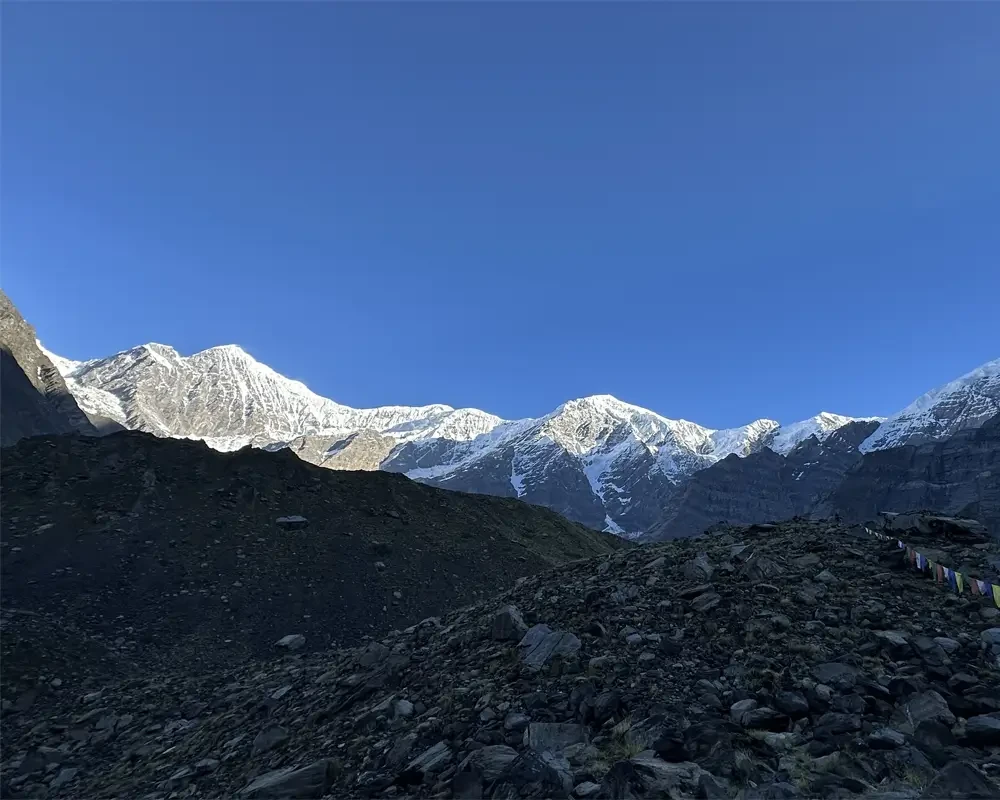
Wake before sunrise and step outside to witness the north face of Annapurna I slowly awaken with the morning light. As the first golden rays touch the towering walls of ice and rock, the snow-covered peaks shines brilliantly against the deep blue Himalayan sky. It is one of those rare moments where the entire landscape changes by minutes as daylight gradually reveals the immense scale of the mountain.

Unlike the more distant viewpoints found on many treks, here the mountain rises almost directly above you, with its towering rock walls, hanging glaciers, icefalls, and avalanche-carved slopes.The surrounding terrain is a rugged expanse of glacial moraine, scattered boulders, and snowfields.

As you turn toward the valley, another unforgettable sight unfolds. You see the turquoise waters of the Panch Kunda Lake in contrast with the dark rocky landscape and snow-covered peaks.

A short walk brings you to the spectacular Panch Kunda Lake, the jewel of North Annapurna Base Camp. Resting beneath the towering north face, the lake glows with a striking turquoise-blue color created by glacial minerals suspended in its crystal-clear waters. Against the stark grey moraines and rugged mountain slopes, its vibrant color feels almost unreal.

Standing beside the lake is an experience that photographs rarely capture. On calm mornings, the glass-like surface reflects the towering moraine walls and surrounding glaciers. Near the shoreline, the water is so clear that you can often see submerged rocks. Also, the prayer flags flutter gently in the mountain breeze adding a vibrant burst of color. 

Take your time to wander along the rocky shoreline, breathe in the crisp mountain air, and absorb the remarkable silence that surrounds you. You should also sit beside the laek, surrounded by towering Himalayan peaks and glacial landscapes.

After spending time at the base camp, you retrace your steps along the Maurice Herzog Trail toward Hum Khola. Descending through alpine meadows, rhododendron forests, waterfalls, mountain streams, rocky terrain, and the dramatic avalanche zone reveals new perspectives that were easy to miss on the ascent. 

At Hum Khola, your private jeep is waiting for the scenic two-hour drive to Tatopani. As the road gradually descends into greener valleys, the cool alpine air gives way to a milder climate, marking your return from the high Himalayas.

The day ends perfectly with a relaxing soak in the natural hot springs of Tatopani. Rich in naturally heated mineral water, these famous springs are the ideal reward after several days of trekking. Soaking your tired muscles while listening to the nearby river and reflecting on your achievement is the perfect conclusion to an extraordinary Himalayan adventure.

  • Overnight Altitude:820 meters/2690 feet
  • Meals:Breakfast and Lunch
  • Accommodation:3 star hotel

After a relaxing night in Tatopani and a hearty breakfast, it's time to bid farewell to the Annapurna region and begin your scenic drive to Pokhara, Nepal's picturesque lakeside city. This ride is considerably shorter and more relaxed than the previous long drives.

The route follows the Kali Gandaki Valley, one of the deepest river gorges in the world, with the rushing Kali Gandaki River accompanying much of the journey. As the bus gradually descends in altitude, you notice the scenery transform once again. On clear days, you may still catch occasional glimpses of the Annapurna and Dhaulagiri mountain ranges.

The road is a combination of well-paved highways and sections of winding mountain roads. Along the way, you pass waterfalls tumbling down steep cliffs, suspension bridges spanning roaring rivers, roadside fruit stalls, and small settlements.

By early afternoon, you arrive in Pokhara, widely regarded as Nepal's adventure capital and one of the country's most beautiful cities. Nestled beside the tranquil Phewa Lake and surrounded by spectacular Himalayan views, Pokhara offers a refreshing contrast to the remote wilderness you have just experienced. The relaxed atmosphere, vibrant cafés, lakeside restaurants, boutique shops, and scenic waterfront provide the perfect setting to unwind after completing the historic Maurice Herzog Trail.

The remainder of the day is yours to enjoy at your own pace. You may choose to take a leisurely stroll along the lakeside promenade, relax at one of the many cafés overlooking Phewa Lake, enjoy a peaceful boat ride, or simply reflect on the incredible journey.

  • Overnight Altitude:1400 meters/4593 feet
  • Meals:Breakfast
  • Accommodation:3 star hotel

If your international flight or schedule allows, you can return to Kathmandu as planned, or choose to extend your stay in Pokhara for one or several nights. We can happily arrange your transportation according to your preferences, ensuring your journey remains smooth and stress-free.

If you decide to spend more time in Pokhara, you quickly discover why it is considered Nepal's adventure and leisure capital. Nestled beside the tranquil Phewa Lake and framed by the Annapurna and Machhapuchhre mountain ranges, Pokhara offers the perfect place to unwind after your trek. You can enjoy a peaceful boat ride across Phewa Lake to the Tal Barahi Temple, stroll along the lively Lakeside promenade, relax in waterfront cafés, or sample local and international cuisine at one of the many restaurants overlooking the lake.

If you are looking to continue exploring, Pokhara has no shortage of attractions. Visit the dramatic Devi's Fall and the mysterious Gupteshwor Mahadev Cave, admire the unique limestone formations of Mahendra Cave, or explore the fascinating exhibits at the International Mountain Museum, where you learn about the history of Himalayan mountaineering and the cultures of Nepal's mountain communities. 

You can also rise early and drive to the World Peace Pagoda or Sarangkot to witness a spectacular sunrise over the Annapurna and Dhaulagiri ranges. But if you love adventure, you can experience paragliding, zip-lining, ultralight flights, bungee jumping, mountain biking, kayaking, or even short hiking excursions around the valley. Whether you choose to stay for one extra day or several, Pokhara offers enough experiences to make extending your trip well worthwhile.

If you are ready to return to the capital, you board a comfortable tourist bus for the scenic 6 to 8-hour drive back to Kathmandu. The journey follows the Prithvi Highway, passing through lush hills, terraced farmlands, riverside villages, forested valleys, and the winding Trishuli River for much of the route. The road is mostly paved, although, like many highways in Nepal, you may encounter occasional rough sections, ongoing road improvements, and winding mountain roads. Comfortable rest stops are also scheduled throughout the day, allowing you to enjoy lunch, refreshments, and bathroom breaks while taking in the beautiful countryside.

As the bus gradually climbs back into the Kathmandu Valley, you notice the landscapes shifting once again from peaceful rural scenery to the vibrant energy of Nepal's capital. By late afternoon or evening, you arrive at your hotel in Kathmandu, bringing your remarkable journey through the remote Maurice Herzog Trail to a close.

  • Meals:Breakfast

Your adventure in Nepal comes to an end today. Depending on your flight schedule, you can enjoy a relaxed morning at your hotel, have one final Nepali breakfast, or take a short stroll around the nearby streets before it's time to leave for the airport.

At the designated time, a representative from Nepal Trekking Experts picks you up from your hotel and provide a comfortable transfer to Tribhuvan International Airport. We recommend arriving at the airport at least three hours before your international departure to allow sufficient time for check-in, security screening, and immigration procedures.

As you make your way through Kathmandu, you have one last glimpse of the vibrant city where your Himalayan adventure began just over a week ago. If you are not quite ready to leave Nepal, we are happy to help you extend your holiday. 

You may choose to spend additional days exploring Kathmandu, relax by the lakeside in Pokhara, join another trekking adventure, visit Chitwan National Park, or continue your travels to destinations such as Lumbini, Bandipur, or other remarkable regions of Nepal. Our team will gladly assist you in planning the next stage of your journey.

On behalf of everyone at Nepal Trekking Experts, thank you for choosing us to be part of your Himalayan adventure. We wish you a safe journey home and look forward to welcoming you back to Nepal for another adventure in the future.

Got a question about this tour?

Or looking for customize trip, reach out to our travel experts.

Customize Trip

Note

This itinerary is just a guideline. If you have different plan or want to customize, please feel free to let us know.

What's Included
Cost Includes
  • Complimentary airport pick-ups and drop-offs
  • Complimentary welcome dinner
  • Three-night accommodation in Kathmandu with Breakfast included.
  • One-night accommodation in Pokhara with breakfast included.
  • All necessary trekking permits, such as the Annapurna Conservation Area Permit, TIMS Card, etc.
  • All accommodations during the trek (tents)
  • Three meals a day during the trek (Breakfast, Lunch, and Dinner)
  • A cup of tea or coffee each time with the meal
  • Fresh fruit each day, if and when available
  • Complimentary duffel bag, down jacket, trekking map, and sleeping bag if needed
  • Government-registered and first-aid-trained professional local guide who speaks English
  • First-aid kit with an oximeter
  • Kathmandu to Beni by tourist bus.
  • Tatopani to Pokhara by bus.
  • Return travel by tourist bus between Kathmandu and Pokhara
  • Return travel by car/jeep between Beni and Hum Khola/Tatopani.
  • Staff insurance, meals, accommodation, equipment, transportation, etc.
  • Rescue arrangements, if necessary
  • Agency service charge and government tax (VAT)
  • Certificate of achievement
Cost Excludes
  • International airfare and Nepal visa fee
  • Lunch and dinner in Kathmandu/Pokhara
  • Porters to carry your backpacks (Normally, a porter works for two people and he carries 20 kilos. If you choose a shared porter you can give 10 kilos per person. A porter costs $180 in total. A porter enhances your experience in the Himalayas and adds extra value on the journey.)
  • Personal insurance, personal expenses, loss of property, theft, etc.
  • Sightseeing fees in the city. (temples, monasteries entrance fees, etc.)
  • All beverages, snacks, and additional expenses such as laundry, hot showers, battery charging, wifi, etc.
  • Additional cost due to natural calamities and unforeseen circumstances
  • Tips for staff
Route MapDownload Map
North Annapurna Base Camp Trek map
Dates & Availability
Start:SaturdaySep 12, 2026
End:SundaySep 20, 2026
PriceUS$845
StatusGuaranteed
Start:SaturdaySep 19, 2026
End:SundaySep 27, 2026
PriceUS$845
StatusGuaranteed
Start:SaturdaySep 26, 2026
End:SundayOct 04, 2026
PriceUS$845
StatusGuaranteed

Note

Apart from our tailor made departure, you are welcome to choose any day on your convenience.

Photos & Videos
FAQs for North Annapurna Base Camp Trek
  • The North Annapurna Base Camp Trek is a remote camping trek in Nepal that follows the historic Maurice Herzog Trail to the base of Annapurna I, the world's tenth-highest mountain.

  • The trail is named after French mountaineer Maurice Herzog, who led the first successful ascent of Annapurna I in 1950, the world's first climbed 8,000-meter peak.

  • North Annapurna Base Camp lies in Myagdi District within the Annapurna Conservation Area on the northern side of Annapurna I.

  • North Annapurna Base Camp's elevation is at approximately 4,190 meters above sea level.

  • Yes, beginners with good physical fitness and proper preparation can complete the trek with the support of an experienced guide.

  • Previous trekking experience is helpful but not mandatory, as the trail of North ABC is technically straightforward despite its remote location.

  • No. It is one of Nepal's least-visited trekking routes, making it ideal for trekkers seeking solitude and an off-the-beaten-path experience.

  • No. You stay in locally operated tent tea houses, so there is no need to carry camping equipment or cook your own meals.

  • No. Wi-Fi is generally unavailable after Hum Khola.

  • No. After Hum Khola, there are no permanent villages until you return.

  • Yes. Nepal Trekking Experts can customize the itinerary, transportation, accommodation, and trip duration to match your schedule and preferences.

  • Yes. You can extend your holiday by exploring Pokhara, Kathmandu, Chitwan National Park, Lumbini, or joining another trekking adventure.

You may also like
Related Packages
1Travelers' Reviews
  • logo
    rating star

    The Best Trekking Company in Nepal

    I did the North Annapurna Base Camp Trek solo with Nepal Trekking Experts in May 2026. On day one, I landed in Kathmandu, and the North ABC trek experience through the end of my journey was incredible. I have visited many countries so far, and the service, from communication to the end of the trek, was 10/10.

    My guide was Arjun; he picked me up from the airport and transfer to the Hotel. He was a welcoming, friendly, and informative person. He knew what he was doing. While I was trekking solo, he was always near me and kept an eye on me. He ensured my meals, drinks, and comfort as much as possible during the Trek. I really enjoyed the combination of waterfalls, jungle walks, the Panchakunda Lake, and, of course, the towering Himalayan surroundings, which I had never seen in my life.

    The accommodation and toilet/bathroom were basic in the mountains. I often slept in tents, which was fantastic. The meal was nice. I mostly had Dal Bhat, and it has a famous slogan: Dal Bhat Power 24 hours. If you are looking for a short hike with stunning scenery, the North ABC trek with Nepal Trekking Experts won’t disappoint you. I would definitely love to go back for my next adventure with Nepal Trekking Experts!

    M
    Marco MargalefSep 07, 2026Spain
Call us on WhatsApp+977 9841917136OrChat with us
Consult with a Travel Expert

Do you have any questions about the trips? Contact our travel experts in various countries.

Plan Your TripJoin Our Newsletter